
What is the P0118 Code?
The P0118 trouble code is a generic powertrain code. It indicates that the Powertrain Control Module (PCM) has detected an abnormally high voltage in the Engine Coolant Temperature (ECT) sensor circuit. This code applies to most vehicles built from 1996 onwards (Honda, Toyota, Volkswagen, Ford, BMW, etc.). Although generic, specific diagnostic procedures may vary by make and model.
ECT Sensor Operation
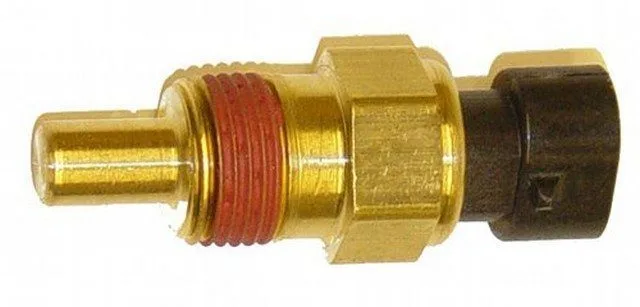
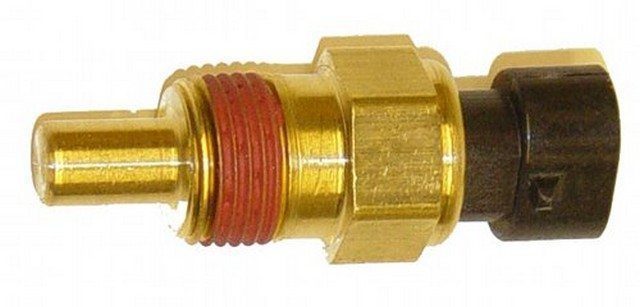
The ECT sensor is a thermistor located in a coolant passage, typically on the engine cylinder head. Its principle is simple: its electrical resistance is high when the engine is cold and decreases as the coolant temperature rises.
The PCM sends a 5-volt reference voltage to the sensor and monitors the return voltage. This measurement allows it to calculate the temperature in real-time. If the received signal indicates a constantly very low temperature (below freezing) when the engine is hot, or if the resistance is out of specifications, the PCM logs the P0118 code and illuminates the Malfunction Indicator Lamp (MIL).
Symptoms of the P0118 Code
A fault in the ECT sensor circuit can cause several symptoms:
- ⛽ Poor fuel economy: The PCM, receiving incorrect information, excessively enriches the air-fuel mixture.
- 🚗 Starting problems: Difficulty starting when cold or hot.
- ⚡ Poor engine performance: Rough idle, hesitation, misfires, and black smoke emissions.
- ⚠️ Warning light: Illumination of the check engine light on the dashboard.
Possible Causes of the Fault
Several elements can be the cause of the P0118 code:
- 🔌 Connection problem: Loose, corroded, or oxidized sensor connector.
- ⚡ Circuit problem: Short to voltage in the signal wire between the sensor and the PCM, or an open ground circuit.
- 🔧 Faulty sensor: Internally shorted ECT sensor (most common cause).
- 🤖 PCM failure: An internal problem with the control module is rare but possible.
Diagnosis and Solutions
To diagnose and resolve a P0118 code, follow this step-by-step procedure:
1. Verification with a Diagnostic Tool
Connect an OBD2 scan tool and observe the live temperature value displayed. If it is logical (increases gradually as the engine warms up), the problem is likely intermittent. Wiggle the sensor harness and connector while monitoring the scan tool. A sudden drop in the reading confirms a bad connection.
2. Sensor Test
If the reading is illogical (e.g., constant -40°C), unplug the sensor and measure its resistance with a multimeter. Compare the measured value to the manufacturer’s specifications for ambient temperature. An out-of-spec resistance indicates a faulty sensor that needs replacement.
3. Circuit Test
If the sensor seems good, the problem is in the circuit. With the engine off, disconnect the sensor connector. Using a jumper wire, short the two pins of the connector on the harness side. If the scan tool now displays a very high temperature (above 120°C), the circuit and PCM are functional, confirming the sensor is faulty.
4. Voltage and Ground Check
With the ignition on, use the multimeter to check for the presence of the 5V reference voltage and a good ground at the sensor connector (wires disconnected).
- If the 5V and ground are absent at the connector, check for their presence directly at the PCM connector.
- If they are present at the PCM, there is a break or short in the wiring that needs repair.
- If the 5V is absent at the PCM even after disconnecting the connector, the PCM is likely faulty.
Important Note: Although a bad sensor is the most common cause of the P0118 code, it is essential to check the circuit before replacing it to avoid an ineffective repair. If you are not comfortable with these electrical procedures, entrust the diagnosis to a professional mechanic.
Related Codes
Codes related to the engine coolant temperature sensor circuit: P0115, P0116, P0117, P0119, P0125, P0128.
💡 Need help? Can’t resolve the P0118 code on your vehicle? Share your measurements and symptoms in the comments or consult a partner garage for a professional diagnosis.