
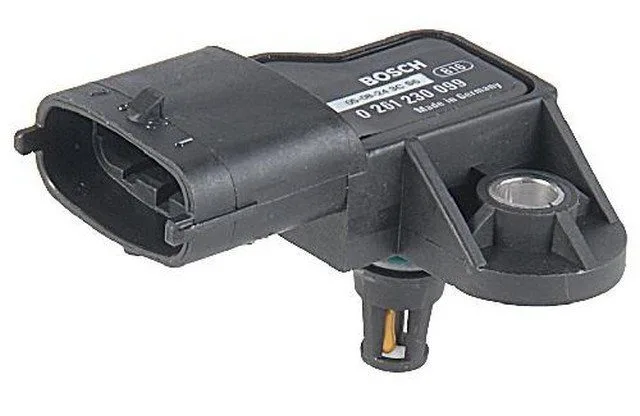
What is the P0108 Code?
The P0108 trouble code is a generic powertrain code (OBD-II) that indicates a high input in the Manifold Absolute Pressure (MAP) sensor circuit. Although generic, specific diagnostic procedures may vary by vehicle make and model.
Role of the MAP Sensor
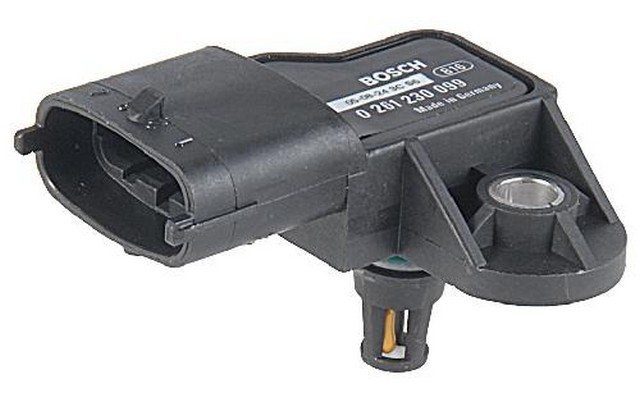
The MAP sensor measures the air pressure (vacuum) in the intake manifold. It sends an electrical signal to the Powertrain Control Module (PCM), which uses it, along with other data, to regulate the air-fuel mixture and ignition timing.
It is typically a three-wire sensor:
- A ground.
- A 5-volt reference supply from the PCM.
- A signal wire that returns a variable voltage to the PCM.
The higher the vacuum in the manifold (at idle), the lower the signal voltage (approximately 1 to 1.5 V). At wide-open throttle (WOT), the pressure approaches atmospheric pressure, and the voltage rises to about 4.5 to 5 V.
The P0108 code is triggered when the PCM detects an abnormally high MAP sensor signal voltage, above the expected range.
Symptoms of the P0108 Code
- Check Engine Light (MIL) illuminated.
- Engine malfunction: stalling, rough idle.
- Loss of power and difficulty accelerating.
- Increased fuel consumption.
- Black smoke from the exhaust (overly rich mixture).
- In severe cases, the engine may not start.
Possible Causes of the P0108 Code
- Faulty MAP sensor (most common cause).
- Electrical circuit issue: short circuit in the signal wire or 5V supply, open ground circuit.
- Vacuum leaks: in the engine or the intake hose connecting the manifold to the MAP sensor.
- Faulty PCM (less common).
- Worn engine generating low vacuum.
How to Diagnose and Fix a P0108?
⚠️ Warning: This guide is for informational purposes. For accurate diagnosis, use a scan tool and a multimeter. Consult your vehicle’s technical data.
- Basic Check (KOEO – Key On, Engine Off): Compare the MAP sensor reading on the scan tool with the barometric pressure (BARO). They should be the same (atmospheric pressure). A difference greater than 0.5 V may indicate a faulty MAP sensor.
- Idle Test: Start the engine and observe the MAP reading. It should be around 1 to 1.5 V (varies with altitude).
- If the reading is normal: The problem is intermittent. Check the condition of hoses and connectors for leaks or poor connections.
- If the reading is abnormally high (> 4.5 V): Check the actual engine vacuum with a vacuum gauge.
- If the vacuum is low (< 16 inches Hg): Look for a vacuum leak or an engine issue (cylinder head, timing).
- If the vacuum is normal (>= 16 inches Hg): The problem is likely with the sensor or its circuit.
- Sensor and Circuit Test:
- With the key on (KOEO), disconnect the MAP sensor connector. The reading on the scan tool should drop to 0 V.
- If the voltage remains present, there is likely a short circuit in the wiring harness or a faulty PCM. To isolate the fault, disconnect the PCM connector and check for continuity and absence of voltage on the signal wire.
- If the voltage disappears when the sensor is disconnected, replace the MAP sensor.
Tip: Always visually inspect the MAP sensor connector and wiring for signs of corrosion, damage, or loose wires before replacing any parts.
Related Codes
Other codes related to the MAP sensor circuit may appear: P0105 (MAP circuit), P0106 (range/performance), P0107 (low input), P0109 (intermittent circuit).
Need Help?
Electrical diagnosis can be complex. If you are not comfortable with these procedures, consult a professional mechanic for accurate diagnosis and reliable repair.