
What is the P0106 trouble code?
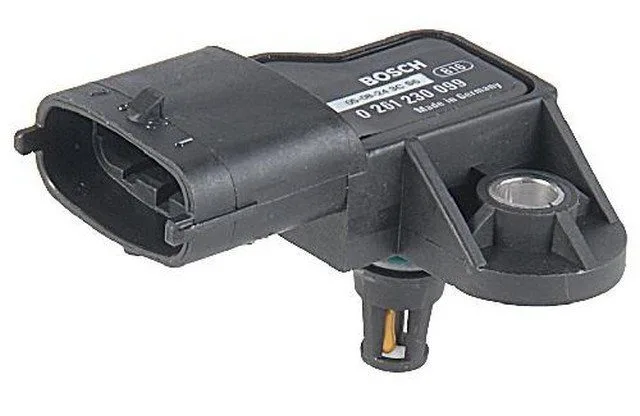
The P0106 trouble code is a generic OBD-II code related to the powertrain. It indicates a performance or circuit range problem with the Manifold Absolute Pressure (MAP) sensor or the Barometric Pressure (BARO) sensor. Although generic, specific diagnostic procedures may vary depending on the vehicle’s make and model.
Function of the MAP/BARO Sensor
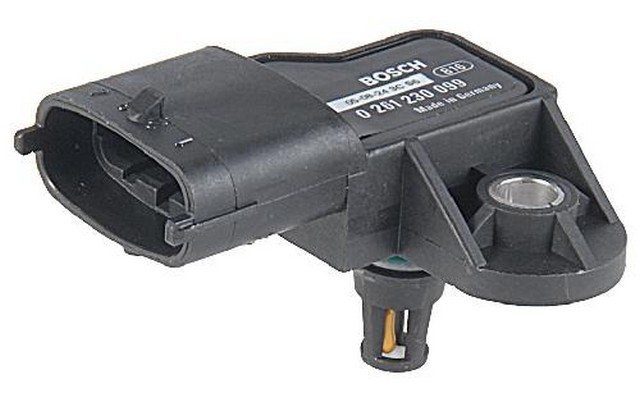
The Powertrain Control Module (PCM) uses the MAP sensor to monitor engine load by measuring the air pressure in the intake manifold. The PCM sends a 5-volt reference voltage to the sensor. The return voltage varies depending on the pressure: it is typically low (1-1.5 V) at idle and high (around 4.5 V) at wide-open throttle (WOT).
Note: Some vehicles use a BARO sensor integrated into the Mass Air Flow (MAF) sensor and do not have a separate MAP sensor. Others have both, with the MAP sensor serving as a redundancy in case of MAF failure.
The PCM expects a change in manifold pressure to be preceded by a change in engine load (throttle angle, RPM, EGR valve). If the PCM detects an abnormal and rapid change in the MAP value without a change in engine load, it logs the P0106 code.
Symptoms of the P0106 Code
A vehicle displaying the P0106 code may exhibit one or more of the following symptoms:
- Poor idle quality or engine stalling
- Black smoke from the exhaust (overly rich mixture)
- Hesitation and power loss during acceleration
- Poor fuel economy
- The Malfunction Indicator Lamp (MIL) is illuminated
Possible Causes of the P0106 Fault
Several factors can cause this trouble code:
- Faulty MAP Sensor: The sensor itself is malfunctioning.
- Wiring Issues: Short circuit or open circuit in the power (5V), ground, or signal wires.
- Damaged Connector: Water intrusion, dirt, or corrosion on the electrical connector.
- Air Intake Problem: A leak or cracked air duct between the Mass Air Flow (MAF) sensor and the manifold.
- Poor Ground: Corrosion causing an intermittent ground.
- Faulty PCM (rare): The Powertrain Control Module itself is the cause (diagnose as a last resort).
How to Diagnose and Fix a P0106?
Here is a step-by-step diagnostic procedure to identify and correct the cause of the P0106 code.
1. Visual Inspection
Start with a thorough visual inspection. Check the condition of the MAP sensor, its electrical connector, and the vacuum hoses. Look for obvious signs of damage, corrosion, debris, or air leaks.
2. Testing with a Diagnostic Tool
Connect a diagnostic tool (OBD-II scanner) and observe the live data from the MAP sensor.
- Engine off, ignition on: The MAP reading should be equal to or very close to the barometric pressure (BARO). The voltage should be around 4.5 V.
- Engine at idle: The MAP value should drop significantly (voltage around 1-1.5 V), indicating the sensor is responding to the manifold vacuum.
3. Vacuum Test
If the value does not change at idle:
- Engine off, ignition on.
- Disconnect the vacuum hose from the MAP sensor.
- Using a manual vacuum pump, apply about 20 inches of Hg (inches of mercury) of vacuum to the sensor port.
- On the diagnostic tool, the MAP value (or voltage) should drop. If it does not, inspect the sensor orifice or hose for a possible obstruction. If everything is clear, the sensor is likely faulty.
4. Electrical Test
If the sensor does not respond to vacuum, perform electrical tests:
- Engine off, ignition on, MAP sensor disconnected.
- Using a digital multimeter, check for the presence of the 5-volt reference voltage on the correct pin of the sensor connector.
- Check the ground continuity on its pin.
- If the 5V or ground is missing at the connector, check the wire continuity back to the PCM to identify an open circuit or short circuit.
- If the power and ground are correct, replace the MAP sensor.
Related Codes
Other trouble codes related to the MAP sensor circuit may appear, including: P0105, P0107, P0108, and P0109.
Conclusion and Call to Action
The P0106 code is often resolved by replacing a faulty MAP sensor or repairing a simple wiring issue. However, a methodical diagnosis is essential to avoid replacing parts unnecessarily.
Not comfortable with these procedures? Electrical diagnosis can be complex. Entrust your vehicle to a professional mechanic equipped with the proper tools for an accurate diagnosis and reliable repair.