
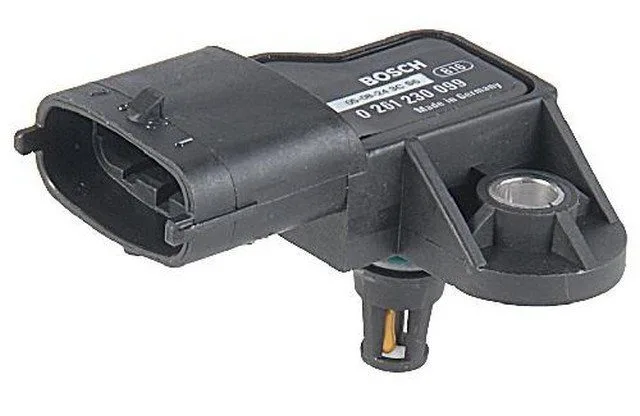
What is the P0105 Code?
The P0105 trouble code is a generic OBD-II code that indicates a malfunction in the Manifold Absolute Pressure (MAP) sensor circuit. This sensor is a crucial component of the fuel management system. It measures pressure variations in the intake manifold and sends a voltage signal to the Powertrain Control Module (PCM). This data allows the PCM to precisely adjust the air-fuel mixture and ignition timing based on engine load.
To verify the consistency of the MAP sensor signal, the PCM continuously compares it with other data, including that from the Throttle Position Sensor (TPS). If the PCM detects an inconsistency (for example, the TPS indicates acceleration but the MAP signal does not change), it logs the P0105 trouble code and illuminates the Malfunction Indicator Lamp (MIL).
Symptoms of the P0105 Fault
The appearance of the P0105 code is often accompanied by noticeable symptoms:
- Poor engine performance and unstable idle
- Overly rich air-fuel mixture (increased fuel consumption, black smoke)
- Hesitation and misfires, especially under load
- Backfiring in the exhaust
- Illumination of the check engine light (MIL)
- In some cases, no symptoms other than the illuminated check engine light
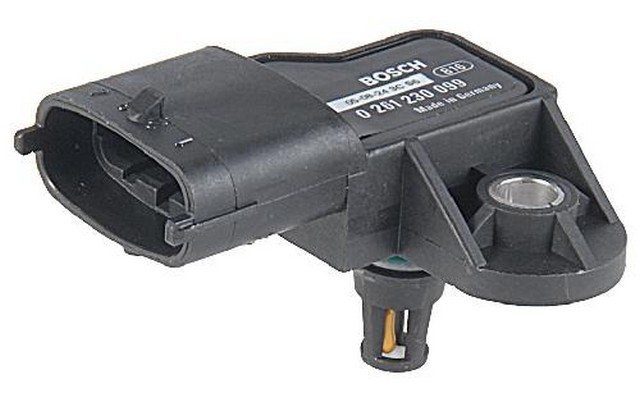
Possible Causes of the P0105 Code
Several components can be the source of this fault:
- Faulty MAP sensor
- MAP sensor vacuum hose disconnected, punctured, or clogged
- Wiring problem (short circuit, open circuit, poor connections)
- Corroded or damaged MAP sensor or TPS connector
- Problem with the Throttle Position Sensor (TPS)
- Loss of ground or 5V reference voltage
- Powertrain Control Module (PCM) failure – rare
Diagnosis and Solutions to Fix the P0105 Code
1. Visual Inspection
Start with a thorough inspection: check the condition of the MAP sensor vacuum hose (disconnected, cracked, blocked). Examine the MAP sensor connector and wiring for signs of corrosion, damage, or loose wires.
2. Reading Live Data with an OBD2 Scanner
Connect an OBD2 scanner to observe the MAP sensor’s live data:
- Ignition on, engine off: The voltage should be approximately 4 V to 4.6 V (atmospheric pressure).
- Engine at idle: The voltage should drop to around 0.8 V – 1.5 V (high vacuum).
- Acceleration: The voltage should gradually increase to reach 4.5 V to 5 V at wide-open throttle (WOT).
Compare these values with the manufacturer’s specifications. Use the freeze frame data recorded by the PCM to analyze the exact conditions when the fault occurred.
3. Testing the MAP Sensor
Disconnect the MAP sensor hose and manually apply a vacuum (using a vacuum bulb or pump) to its port. Using a multimeter, measure the signal voltage. It should increase linearly and steadily with the application of vacuum. A lack of change indicates a faulty sensor.
4. Checking the Electrical Wiring
Using a multimeter, check the integrity of the circuits between the MAP sensor and the PCM:
- 5V Power Supply (Ref Volt): Must be present on the dedicated terminal.
- Ground: Verify continuity with a good ground.
- Signal Circuit: Check for the absence of a short circuit to +5V or ground, and the absence of a break (open circuit).
5. Replacement and Conclusion
If the wiring and power supply are correct but the signal is faulty, replace the MAP sensor. After any repair, clear the trouble codes with your scanner and perform a road test to ensure the fault does not reappear.
Need help diagnosing your vehicle? Check out our guide for or find all our to become an expert in repairs!