
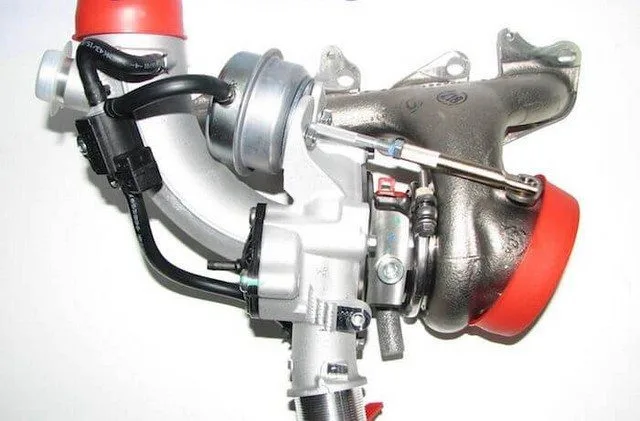
Code P003A: Turbo/Supercharger – Boost Control Limit Exceeded
The fault code P003A is a generic OBD-II code that indicates a critical problem within the boost control system of your turbocharged or supercharged engine. It signifies that the engine control module (ECM) has detected that the position of the “A” boost control arm (which actuates the turbine vanes) is outside its normal operating parameters, often triggering a limp mode to protect the engine.
Severity and Risks of Code P003A
- Severity Level: Moderate to High
- Ignoring this code can lead to:
- An unbalanced air/fuel mixture (too rich or too lean).
- Excessive boost, risking engine knock and damage to pistons or seals.
- Insufficient boost, causing power loss and increased fuel consumption.
- Ultimate Consequences: Severe engine damage, complete turbocharger failure, and failing emissions tests.
Symptoms of Code P003A
- 🚨 Check Engine Light illuminated.
- 🐢 Limp mode activated (reduced power, limited engine RPM).
- 📉 Sudden power loss and weak acceleration.
- 🔥 Abnormal smoke (black or blue) from the exhaust.
- 🔧 Unusual noises (turbo whistling, metallic rattling).
Possible Causes of Fault P003A
- Mechanical Failures
- Faulty, stuck, or broken wastegate or variable geometry turbo (VGT) solenoid.
- Turbocharger vanes clogged with carbon deposits (soot).
- Exhaust system leak (insufficient pressure to operate the turbo).
- Electrical Problems
- Damaged wiring, frayed wires, short circuits, or corrosion.
- Oxidized or loose connectors at the solenoid or ECM.
- Electronic Malfunctions
- Internal failure of the boost control module.
- Software error or incorrect ECM calibration.
Diagnosis and Repair: How to Fix P003A?
1. Preliminary Checks (Safety First!)
- ⚠️ Allow the engine to cool completely (turbo components can exceed 600°C).
- 🔍 Visual inspection: Look for exhaust leaks, damaged cables, corroded or loose connectors.
2. Control Solenoid Test
- Disconnect the connector and measure the resistance with a multimeter (normal value typically between 10 and 30 Ω).
- Check the mechanical lever: it should move freely (if allowed by the manufacturer). If stuck, cleaning or replacement is necessary.
3. Turbo Vane Cleaning (VGT)
- Use a specific turbo cleaner (e.g., CRC Turbo Cleaner) to dissolve carbon deposits. Never use metal tools to scrape.
4. Wiring and ECM Testing
- Check the solenoid’s supply voltage (12V with ignition on).
- Use an advanced OBD-II scanner to analyze live data for vane position and ECM signals.
5. Replacement and Reset
- Prefer quality OEM parts for replacing the solenoid or sensors.
- After any repair, reset the ECM with your scanner to clear old adaptations and the fault code.
Practical Tips and Prevention
- 🔧 Invest in a high-performance OBD-II scanner (Autel, Snap-On) for accurate diagnosis.
- 💧 Use turbo cleaning additives preventatively during oil changes.
- 📚 Always consult the manufacturer’s manual for resistance values and vehicle-specific procedures.
- 🛠️ Seek professional help if basic checks are insufficient. Incorrect diagnosis can be costly.
Conclusion: Do Not Ignore P003A
Code P003A is a serious warning that should not be ignored. Prompt diagnosis and repair are essential to avoid catastrophic and very expensive engine damage. Start with simple checks (wiring, connectors) before considering costly part replacements. If you are unsure of your diagnosis, promptly consult a mechanic specialized in turbo systems.
💡 Need help diagnosing your vehicle? Share your scanner data in the comments or contact an expert for a personalized diagnosis.