
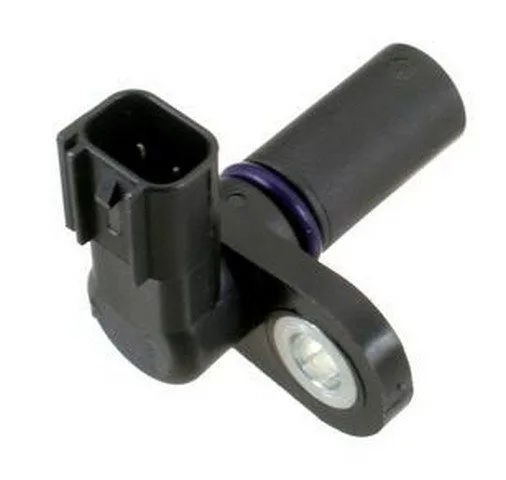
What is the P000A Code?
The error code P000A, also known as “A Camshaft Position Slow Response, Bank 1,” is a generic code related to the powertrain. It applies to vehicles equipped with a Variable Valve Timing (VVT) system and indicates that the Powertrain Control Module (PCM) has detected a slow response from the intake camshaft (bank 1) during phase changes.
VVT System Operation
Modern vehicles use Variable Valve Timing (VVT) to optimize performance and reduce fuel consumption. The PCM controls a solenoid that directs engine oil to an actuator located on the camshaft. This actuator then adjusts the angular position (phase) of the camshaft. A Camshaft Position (CMP) sensor monitors this position in real time. Code P000A is triggered when the actual position does not match the position desired by the PCM with an abnormal delay.
Decoding the P000A Code
- A: Refers to the intake camshaft (or left/front).
- Bank 1: The side of the engine where cylinder number 1 is located.
This code is often associated with codes P000B, P000C, and P000D.
Severity and Symptoms of Code P000A
The severity of this code is moderate to severe. It is recommended to perform diagnostics as soon as possible to avoid potential engine damage.
Common Symptoms
- Illuminated check engine light
- Reduced performance and hesitation during acceleration
- Abnormally high fuel consumption
- Start-up noise or abnormal sounds
- Increased pollutant emissions
Possible Causes of Code P000A
- Low engine oil level or poor-quality oil
- Faulty Camshaft Position (CMP) sensor
- Clogged or malfunctioning VVT control solenoid
- Stuck or worn VVT actuator (phaser)
- Voltage or wiring issue
- Excessive play or timing chain problem
- Rare PCM failure
How to Diagnose and Repair Code P000A?
Important Tip: Procedures vary by model. Always consult the specific wiring diagrams and diagnostic flowchart for your vehicle (via ALLDATA or a repair manual).
1. Preliminary Checks
- Check the engine oil level and condition. Dirty oil or a low level is a common cause.
- Visually inspect the wiring and connectors of the CMP sensor and VVT solenoid for any signs of damage or corrosion.
- Check the Technical Service Bulletins (TSB) for your vehicle.
2. Testing the Camshaft Position (CMP) Sensor
Hall Effect Sensor (3 wires): Connect a digital multimeter (DMM) to the signal wire. With the engine running, the voltage should fluctuate. A steady reading indicates a faulty sensor.
Magnetic Sensor (2 wires): Measure the AC voltage across the sensor terminals. It should fluctuate at idle. If not, replace the sensor.
3. Testing the VVT Solenoid
- Disconnect the connector and measure its internal resistance with a multimeter. Compare the reading to the manufacturer’s specifications.
- Remove the solenoid and clean or replace its internal filter if it is clogged with metal debris.
4. Checking the Timing Chain and Actuators
If electrical tests are good, the problem may be mechanical. It may be necessary to disassemble components to inspect:
- The play of the timing chain.
- The condition of the guides and tensioners.
- The wear of the VVT actuator (phaser) teeth.
Call to Action
Diagnosing code P000A can be complex. If you do not have the necessary equipment or expertise, consult a professional mechanic for accurate diagnosis and reliable repair.