
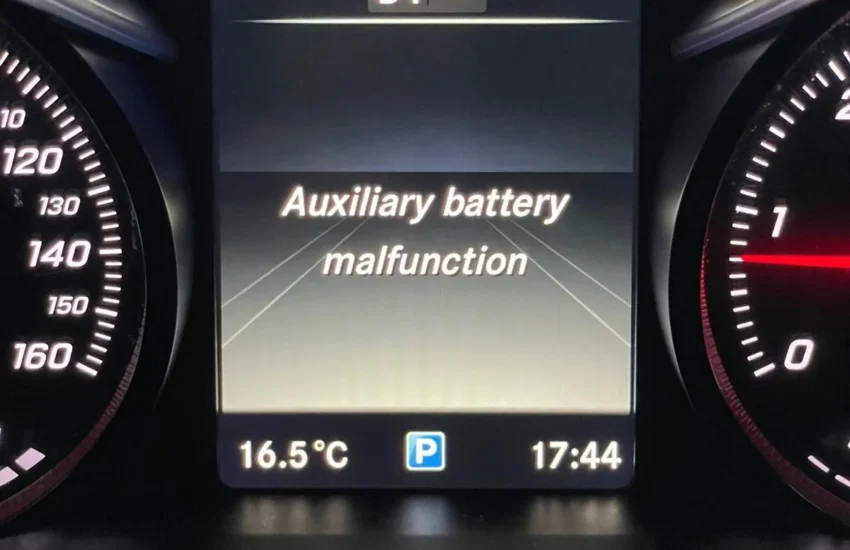
If the auxiliary battery fails in a Mercedes, it can lead to a series of problems, such as loss of memory settings, dimming of interior lights, and even difficulties starting the main engine in some cases.
Anatomy of the Auxiliary Battery System
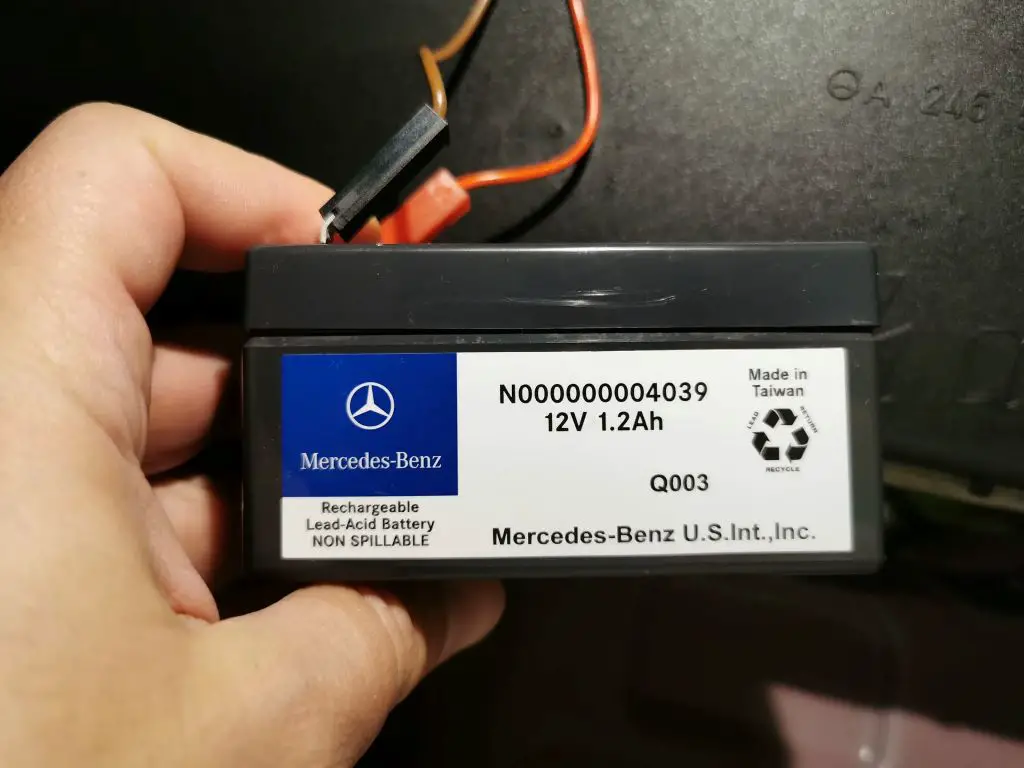
The auxiliary battery system in Mercedes-Benz vehicles comprises several essential components. The auxiliary battery itself is a secondary power source that stores energy for specific electrical components.
A Battery Management System (BMS) monitors the auxiliary battery’s state of charge, voltage, and temperature, ensuring optimal performance and preventing overcharging or deep discharging.
The charging circuit, consisting of the alternator and voltage regulator, is responsible for recharging the auxiliary battery. The alternator generates electricity, while the voltage regulator ensures the battery is charged at the appropriate voltage.
A network of wires and connections links the auxiliary battery to the various electrical components it powers, ensuring adequate communication and energy flow.
The auxiliary battery system works in conjunction with the main battery to power specific electrical components and maintain memory settings.
It is typically charged by the main battery or by the alternator when the vehicle is running. Once charged, it stores energy for use when the vehicle is off or when the main battery power is insufficient.
Common Causes of Auxiliary Battery Malfunctions
Battery Age and Degradation
Like any other battery, the auxiliary battery has a natural lifespan. Over time, the battery’s internal chemical composition can degrade, leading to reduced capacity and performance.
Factors such as extreme temperatures, frequent charge cycles, and deep discharges can accelerate this degradation process.
Charging System Issues
A faulty charging system can prevent the auxiliary battery from charging correctly. Problems with the alternator, voltage regulator, or charging circuit can hinder the battery’s ability to store and supply energy.
Faulty alternator diodes, defective regulators, or loose connections can all contribute to charging problems.
Electrical System Malfunctions
Electrical faults in the wiring, connections, or other components can also impact auxiliary battery performance. Corrosion, short circuits, or damaged cables can disrupt the flow of electricity to and from the battery, leading to various issues.
Excessive Battery Drain
Excessive use of electrical accessories, leaving lights on, or faulty components can drain the auxiliary battery faster than it can be recharged.
A faulty alarm system, interior lights left on, or a defective electrical component can put a strain on the battery, leading to premature discharge or failure.
Symptoms of an Auxiliary Battery Malfunction
Loss of Comfort Features
A faulty auxiliary battery can lead to various issues related to comfort functions. You may notice that your power seats, windows, sunroof, or other electrically controlled functions no longer work correctly.
Additionally, the radio and navigation system may not be operational.
Memory Loss
The auxiliary battery is responsible for storing memory settings for various vehicle functions. If the battery malfunctions, you risk losing seat memory settings, radio presets, climate control settings, or other customized vehicle settings.
Dashboard Warning Lights
While there is no specific warning light dedicated solely to a Mercedes-Benz auxiliary battery malfunction, you may notice other warning lights illuminating on the dashboard if the battery is faulty.
Slow Cranking
A depleted auxiliary battery can also affect the main battery’s ability to start the engine. If the auxiliary battery is not functioning correctly, it may not be able to provide the necessary support to the main battery, which can lead to slow or difficult starting.

Solutions and Repair Options for Auxiliary Battery Malfunction in Mercedes
Battery Replacement
If the auxiliary battery is worn out, damaged, or irreparable, it will need to be replaced. Using a compatible and approved battery is essential to ensure optimal performance and compatibility with your Mercedes-Benz vehicle.
When selecting a replacement battery, consider factors such as the battery’s Cold Cranking Amps (CCA), reserve capacity, and overall quality.
Consulting a qualified mechanic or your local Mercedes-Benz dealer can help you choose the right battery for your vehicle.
Charging System Repair
To repair or replace faulty charging system components, such as the alternator or voltage regulator, seek professional assistance. A qualified mechanic can accurately diagnose car problems and perform the necessary repairs.
Electrical System Repairs
Faulty wiring, connections, or other electrical components in the auxiliary battery circuit can also contribute to battery problems.
It is essential to address these issues promptly to avoid further damage and ensure the proper functioning of the auxiliary battery system.
FAQ on Auxiliary Battery Malfunctions in a Mercedes
- What is the purpose of the auxiliary battery in a Mercedes?
The auxiliary battery in a Mercedes powers secondary systems like the start-stop function, Electronic Stability Control (ESC), and other convenience features.
Its primary role is to relieve the main battery of these smaller tasks, thus ensuring the proper functioning of the vehicle’s main electrical systems.
- Can I drive my Mercedes with an auxiliary battery malfunction?
In most cases, the vehicle will continue to operate because the main battery handles essential functions. However, some features like the start-stop system or electronic parking brake may be disabled.
- What is the average lifespan of an auxiliary battery in a Mercedes?
The auxiliary battery’s lifespan is typically between 4 and 6 years, but this can vary depending on driving conditions, climate, and general usage. Frequent short trips or extreme weather conditions can reduce the battery’s lifespan.
- Can a faulty auxiliary battery cause the check engine light to come on?
While rare, a faulty auxiliary battery can sometimes trigger warning lights on the dashboard, including the check engine light, especially if the issue affects systems connected to the battery, such as the start-stop function or power steering.
- What happens if I ignore an auxiliary battery malfunction in my Mercedes?
Ignoring an auxiliary battery malfunction can lead to the failure of specific functions like the automatic start-stop system, power supply to electronic stability systems, or even the parking brake on some models.
Even though the car may still be drivable, over time, the strain on the main battery may increase, which can lead to further electrical problems.
- Can I replace the auxiliary battery myself, or should I seek professional help?
Replacing the auxiliary battery is relatively straightforward on some Mercedes models and can be done by an experienced DIYer.
However, some models require special tools or access, so if you are not familiar with car repairs, it is best to let a professional handle it to avoid damaging the vehicle’s electrical systems.
- Is an auxiliary battery malfunction more common on certain Mercedes models?
While auxiliary battery malfunctions can occur in any Mercedes, they tend to be more frequently reported in models with advanced electronic systems, such as the S-Class, E-Class, and some SUVs that rely heavily on the auxiliary battery.
- Will disconnecting the auxiliary battery affect other vehicle systems?
Yes, disconnecting the auxiliary battery without proper precautions can reset or disable certain vehicle systems like the clock, radio presets, and navigation settings.
- Can a software update fix an auxiliary battery malfunction?
In some cases, a software issue in the vehicle’s control module may misinterpret the auxiliary battery’s status, triggering a malfunction warning.
A software update from a Mercedes dealer can resolve this issue, although it is always good to check the actual battery condition first.
- Does the auxiliary battery affect Mercedes hybrid or electric models?
While auxiliary batteries are present in both Mercedes hybrid and electric models, their role is even more crucial as they help manage many electronic systems.
A malfunction could potentially cause more disruptions in hybrid or electric models, thereby affecting the vehicle’s overall performance.
Conclusion
By understanding the common causes, symptoms, and solutions related to auxiliary battery malfunction in Mercedes, take proactive steps to maintain your vehicle’s auxiliary battery system health and ensure a smooth driving experience.