
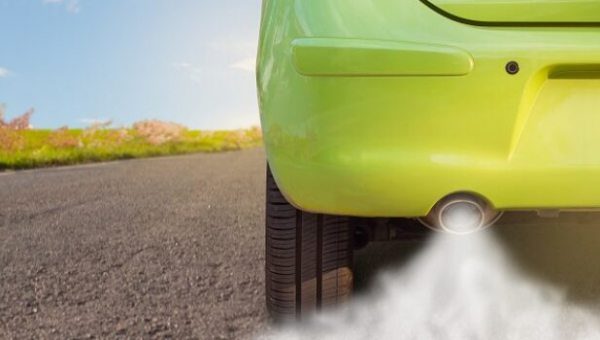

One of the signs of engine and related systems malfunction is exhaust smoke. Many problems can be diagnosed by its color and structure. In this article, we explain the colors of exhaust smoke and explain the reasons for its appearance.
- 1 Why is my car smoking when being started
- 2 Why is white smoke coming from exhaust
- 2.1 If my car is smoking white, can I keep driving it?
- 3 Why is my car smoking black
- 3.1 Can I keep driving if there’s black smoke from the exhaust?
- 4 Why is blue smoke coming out of the exhaust
- 4.1 What happens if I keep driving when there’s blue smoke from the engine?
WHY IS MY CAR SMOKING WHEN BEING STARTED
If there is smoke from the engine only when you start it, especially in cold or dry weather, and it disappears after the engine warms up, this does not indicate a malfunction: this is how condensate evaporates from the exhaust system.
WHY IS WHITE SMOKE COMING FROM THE EXHAUST
If the exhaust smoke does not disappear after the power unit warms up, and this happens in dry and warm weather, it indicates that water is entering the engine. Usually, this happens in two ways: either when it is mixed with coolant, which indicates the loss of tightness of the cylinder head gasket or the cooling system, or with fuel if it is of poor quality.
How to get rid of white smoke from the exhaust? Follow these steps:
- Check the coolant level in the reservoir. Its sharp decrease indicates that the tightness of the cooling system is lost.
- Inspect the engine compartment: leaks can often be detected at the junction between the engine block and the cylinder head.
- Look in the coolant reservoir. The presence of oil in it is an indirect sign of the loss of tightness of the cylinder head gasket and, combined with white smoke, may indicate that coolant is entering the engine’s combustion chambers.
- Inspect the oil filler neck. There should be no white foam on it.
- If at least one of the above signs is detected, take your car to a garage to have it diagnosed by a professional. As part of the repair, replacing the cylinder head gasket and, possibly, grinding the contact surfaces of the engine block and cylinder head will be necessary.
- If there are no problems with the cooling system, try using a different gas station.
- Check if the fuel tank is tight. Have it repaired or replaced if necessary.

WHY IS MY CAR SMOKING BLACK
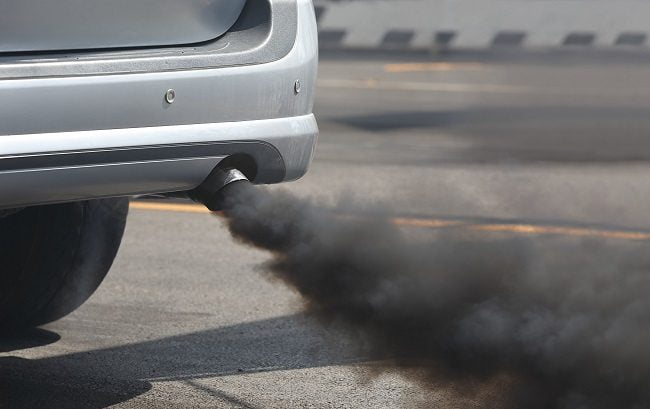
Thick black smoke from the exhaust pipe is a sign of an overly rich air-fuel mixture. This can be caused by a clogged air filter, due to which less air is supplied to the engine, malfunctions of the fuel pump or regulator, which leads to an increase in pressure in the fuel line.
If you have noticed a problem, proceed as follows:
- Measure the pressure of the fuel system with a pressure gauge.
- Check the injectors. To do this, use a multimeter to measure their resistance and compare the obtained values with the noted values. For more detailed diagnostics, which must be performed on a special stand, take your car to a garage.
- Ensure that the oxygen sensors are working correctly. First, check if the sensors are properly connected to the terminals. Clean the terminals if necessary. Disassemble the part and inspect it. The presence of deposits on the component’s protective tube indicates the need to replace it.
- Turn on the ignition. Connect the multimeter probes to the heater circuit. The voltage should be 12 V.
- Connect the probes to the signal wire and chassis ground. The multimeter reading should be 0.45 V.
- Remove the connector from the device. Measure the resistance between the heater terminals. The readings may vary depending on the sensor type, but should not exceed 2 to 10 Ohms.
- Install the new sensor in place of a faulty one.
- If you own a diesel car, start the diesel particulate filter regeneration mode.
- In diesel vehicles, thick black smoke can be caused by a clogged particulate filter.
WHY IS BLUE SMOKE COMING OUT OF THE EXHAUST?
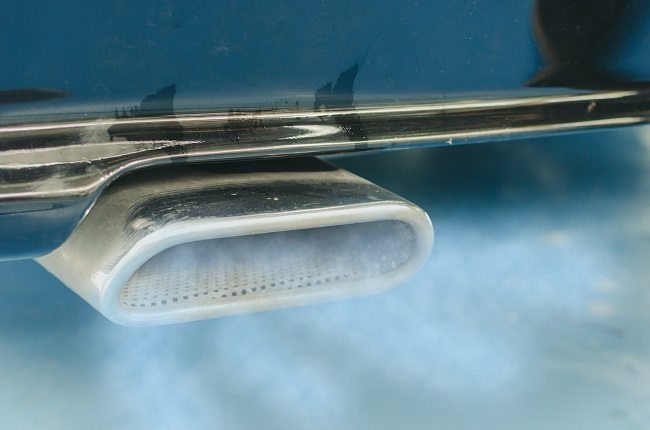
If there is blue smoke from the exhaust, it indicates that oil is entering the combustion chambers. This is usually due to wear of the piston-cylinder group parts, stuck piston rings, destruction of the valve stem seals, and the use of oil of inappropriate viscosity.
Here is what you need to do:
- Ensure that the correct oil is used in your lubrication system. If not, change it by draining the system.
- Measure the compression in the engine cylinders. If it is insufficient, the tightness of the combustion chambers is lost. Further diagnostics will be necessary.
- Take your car to the garage: quite often, the situation where the car smokes blue is a sign of an imminent engine overhaul. It is impossible to perform it without the help of specialists.
Conclusion
Smoke from the exhaust pipe almost always indicates malfunctions in various vehicle systems. You cannot neglect this sign. After all, the sooner you troubleshoot the malfunction, the less damage you will cause to your car.