
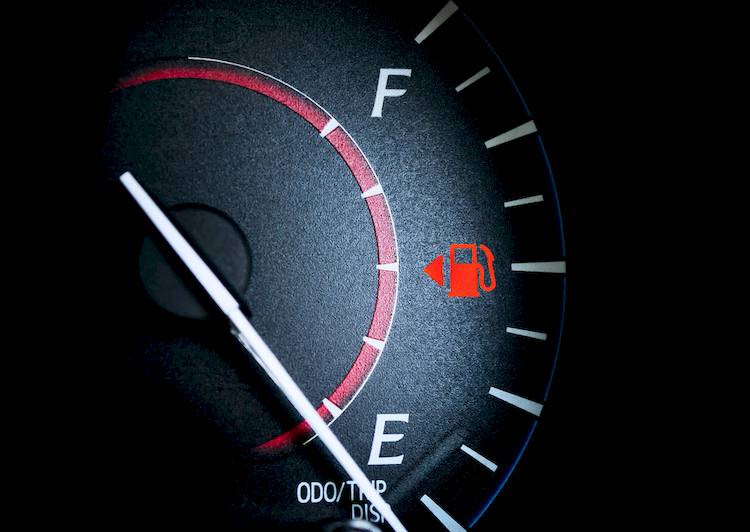
An incorrect fuel gauge reading does not affect engine functions and does not create any major problems.
You can drive perfectly well without damaging any major components. However, not being able to read the correct fuel level will result in running out of gas without warning.
The functions of a fuel gauge are to indicate the amount of fuel in the gas tank and to give a warning when it is time to refuel.
Driving with a low fuel level leads to many long-term consequences such as fuel pump clogging, engine overheating, and premature wear of several engine parts.
Incorrect Fuel Gauge Reading: What’s Wrong?
A vehicle’s gauge system consists of three basic parts: the gauge, the circuit, and the sender. A fault in these parts will cause the gauge to fail or give incorrect readings. The four causes of fuel gauge failure are as follows:
1. Sending Unit Failure
The most common reason a fuel gauge doesn’t work. The gauge may read the voltage return from a dead sender as “Full” or “Empty.”
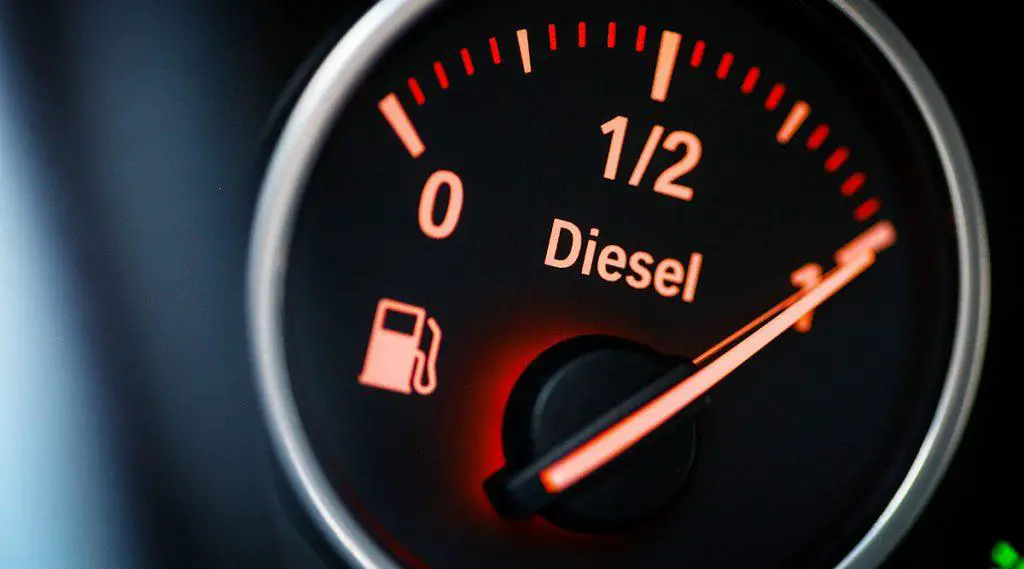
The sending unit moves and continuously rubs against the variable resistor when you drive the car. The constant friction wears out the contacts, leading to their failure.
2. Circuit Problems
Depending on the source of the problem, there may be a voltage issue in the fuel sender, causing the gauge to receive no voltage response.
An interruption in the ground of the gauge or the fuel sender can also be the cause of the problem. Other reasons could be corrosion or loose connections at the fuel pump module.
3. Gas Gauge Failure
A less common reason but not entirely impossible. This can occur when the internal circuit is faulty, short-circuited, or open.
There are 3 common problems with the gas gauge that you should look into more closely.
Problem #1: The gauge stays on full even though you filled up a week ago and have been driving regularly. This is not a sudden increase in fuel efficiency; it is more likely a problem with the variable resistor.
This problem can stem from faulty wiring, an open circuit in the resistor, or, in rare cases, a faulty gauge.
Problem #2: The gauge is stuck on empty, even though you know you recently filled your tank (confirmed by your bank statement).
This problem usually comes from several causes: the float may have detached from the metal arm, making it unable to provide fuel level information.
The variable resistor could be malfunctioning, or corrosion on the system wires could disrupt the transmission of information.
Problem #3: The gauge fluctuates between full and empty seemingly without any pattern. Do you feel like you’re constantly guessing your fuel level?
This problem often results from the float getting stuck in place and then resuming movement due to the car’s motion, leading to erratic readings. Alternatively, a faulty gauge itself could be the cause of this inconsistency.
4. Non-Functional Instrument Cluster
The least common cause and its repair is the most expensive. Most modern vehicles have a fully integrated circuit. So, when one part fails, the entire unit must be replaced.
How to Identify Problems with a Fuel Gauge?
For amateurs, calling a professional mechanic is the best option. But, if you have experience, it is easy to discover problems related to incorrect fuel gauge reading with these tools:
- A digital multimeter (DMM)
- An electrical wiring diagram (EWD)
- Basic hand tools
Perform the following tests to identify the source of the incorrect fuel gauge reading problem.
Instrument Cluster Self-Test: The procedure involves performing a series of tasks, including turning on the headlights, pressing the trip meter button, etc.
The task sequence could be different for older vehicles. You must consult the owner’s manual for the correct command.
Fuel Sender Test. Perform the test when the tank is less than half full to avoid hot oil splashes. Use the multimeter to check the voltage on the pins, and it should be 5V or 12V on one pin.
Gas Gauge Test. This inspection involves another voltage test, and the reading should be exactly the same as the fuel sender test.
FAQ
- Can extreme temperatures affect the accuracy of a fuel gauge?
Yes, extremely cold or hot temperatures can temporarily affect the accuracy of the fuel gauge. However, the gauge should return to normal when the temperature becomes more moderate.
- Is it safe to drive with a faulty fuel gauge?
It is not recommended to drive with an inaccurate fuel gauge, as you could run out of gas unexpectedly. It is safer to rely on your odometer and fill your tank based on mileage until the gauge problem is resolved.
- Why does my fuel gauge fluctuate while driving even when the tank is stable?
Rapid fluctuations of the fuel gauge needle while driving can be caused by a loose wire connection, a faulty gauge, or interference from other electrical components. It is important to have it checked to ensure accurate readings.
- How much does it cost to correct an incorrect fuel gauge reading?
The cost of repairing a fuel gauge can vary depending on the root cause of the problem. It can range from a relatively inexpensive fuse replacement to a more costly repair of a sender or instrument cluster.
- How often should I calibrate or check the accuracy of my fuel gauge?
You generally do not need to calibrate your fuel gauge manually. If you suspect the reading is incorrect, it is best to address the issue as soon as you notice it rather than relying on regular calibration.
- Can an incorrect fuel gauge reading damage my vehicle?
While an incorrect fuel gauge reading cannot damage your vehicle, it can lead to an unexpected fuel outage, which can cause inconvenience and potentially leave you stranded. It is essential to address the issue promptly.
Conclusion
If you are experiencing problems with your fuel gauge, such as an incorrect fuel gauge reading, it is essential to address them promptly to maintain the accuracy of your vehicle’s fuel level readings and ensure a safe and hassle-free driving experience.