
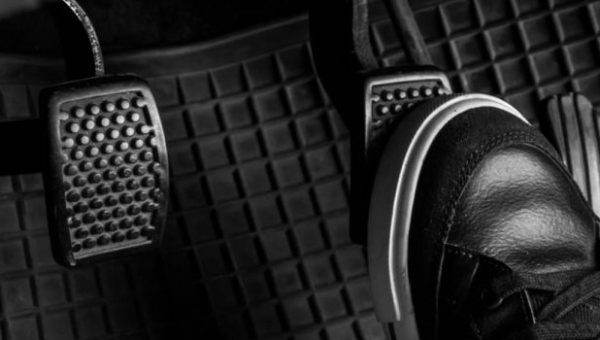

Does it seem like your vehicle is accelerating slower than usual and struggling to climb hills? Don’t rush to look for ignition or fuel supply faults: if these symptoms are accompanied by free play in the clutch pedal and an unpleasant burning smell is occasionally noticeable inside the cabin, the problem is likely clutch slipping. We will explain why this happens and how to avoid it.
CLUTCH SLIPPING: WHERE THE PROBLEM IS
The proper functioning of the system depends on the friction force between the driven disc and the flywheel. If the friction coefficient decreases for any reason, the contact surfaces begin to slip, and the torque is not fully transmitted from the engine to the transmission. As a result, accelerating the vehicle to a certain speed takes more time, and its performance deteriorates. It also becomes more difficult to tackle inclines and hills because the power transmitted to the gearbox shaft is insufficient to move the vehicle.
5 MOST COMMON REASONS FOR CLUTCH SLIPPING
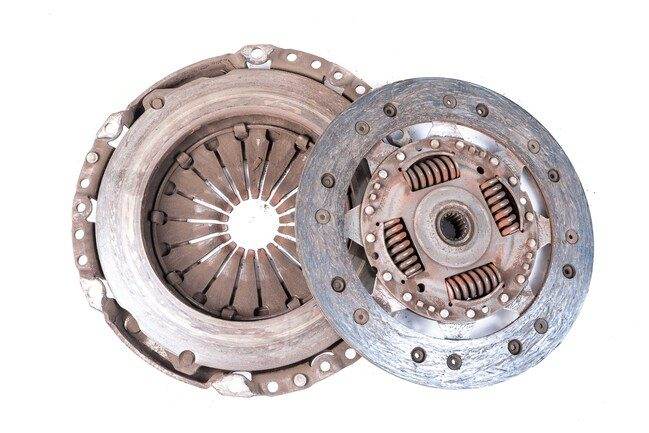
- Worn and damaged friction linings and disc surface. Excessively worn friction linings, due to reduced thickness, are not sufficiently pressed against the flywheel surface. The compression force of the mechanism is not enough to ensure a fixed connection of its elements. A deformed lining is pressed unevenly against the flywheel.
- Oiling of friction linings. It contributes to reducing their roughness. Due to the low friction coefficient, the contact elements slip.
- Weakened or damaged diaphragm spring. If the spring’s elasticity has decreased, the pressure exerted on the driven disc when pressing the pedal will be insufficient to activate the unit.
- Malfunction of the clutch linkage. A stretched cable, a damaged fork on vehicles with mechanical clutches, swelling of rubber components, or loss of seal integrity on vehicles with hydraulic control can also lead to clutch slipping, as the pressure force on the diaphragm is not sufficient to ensure fixed contact of the coupling parts.
- Damaged wear compensation mechanism. Due to a malfunction of the adjustment ring or sensor spring, adjusting the free play becomes impossible. This reduces the holding pressure of the driven disc.
6 RECOMMENDATIONS THAT WILL HELP AVOID CLUTCH SLIPPING
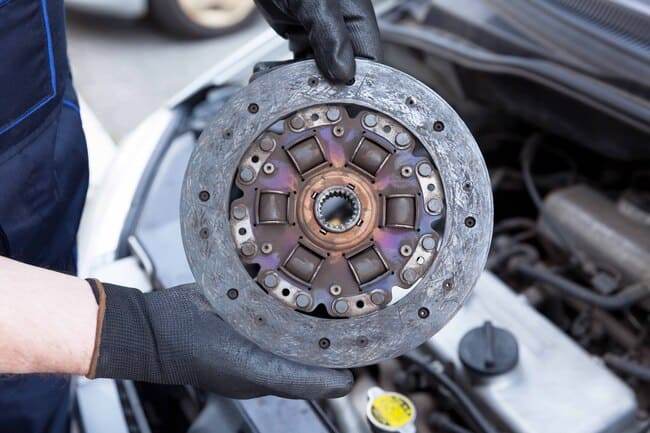
- Try to replace system components as a kit. The average lifespan of the pressure plate and driven disc, diaphragm spring, and release bearing is roughly the same, about 100,000 to 150,000 kilometers. Therefore, to ensure the system operates as long as possible, always replace components as a kit.
- Check the tightness of vehicle components and assemblies. Poor quality or damaged seals of the engine and transmission, oil leaks from the input shaft oil seal or crankshaft seal, loss of seal integrity in the hydraulic actuator are reasons for oiling the friction linings.
- Choose components according to your driving style. A standard clutch with composite material friction linings is suitable for calm and smooth driving. They have the optimal friction coefficient, low operating temperature, and are inexpensive. However, a sports car is better equipped with a special clutch designed for heavy loads. Its linings are made of materials with added carbon and Kevlar, and a mixture of copper, aluminum, cast iron, and ceramic. It withstands much higher temperatures, has increased wear resistance, and is suitable for aggressive driving.
- Check the proper adjustment of the pedal travel. Insufficient pedal travel prevents complete disengagement of the clutch. This causes accelerated wear of the friction linings and can lead to overheating and warping of the driven disc.
- Always use the working fluid recommended by the manufacturer. Do not mix fluids of different compositions. Aggressive compounds formed as a result of mixing or components contained in a particular class of fluids can be destructive to the hydraulic clutch actuator.
- Follow these clutch operation rules:
- When starting, first release pressure on the pedal so that the car starts and begins to move slowly, then hold it in a semi-pressed state for 2-3 seconds, then release it completely;
- Do not start at high engine speeds;
- When descending a steep slope, engage first gear, occasionally pressing the brake pedal to avoid overheating the components.
- When exiting difficult off-road areas, such as a puddle, a pile of snow, or mud, use a tow if possible;
- While driving, do not rest your foot on the clutch pedal continuously to avoid unintentionally pressing it;
- Do not overload your vehicle, especially when driving on poor-quality roads: this significantly increases the load on the assembly.
CONCLUSION
Clutch slipping is a common failure, making driving not only uncomfortable but also dangerous. But in most cases, any car owner can prevent problems. Simply purchase high-quality components and follow the above recommendations.