
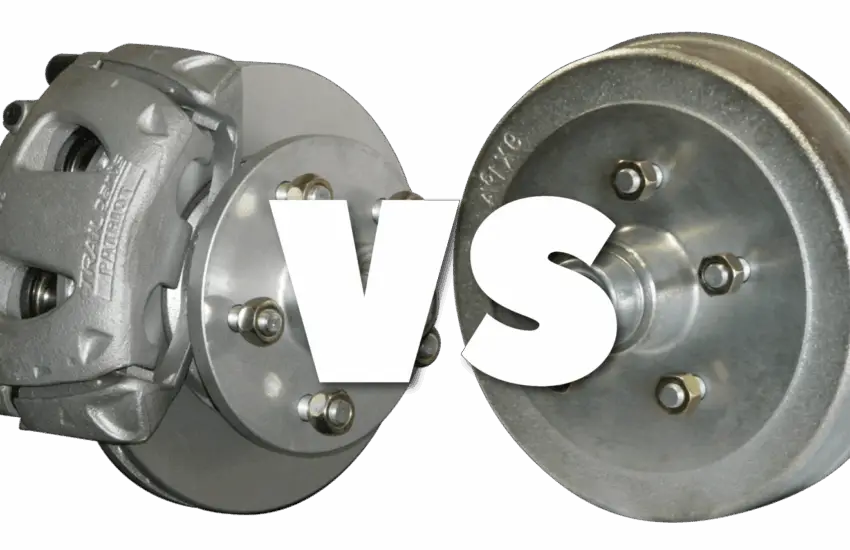
You may have been driving your car for years, but do you know why disc brakes and drum brakes are used at the front and rear respectively?
Generally, people don’t have a precise answer to this question, which ultimately leads them to make the wrong choice of components for their car.
Well, find out now the reasons why disc brakes are used at the front and drum brakes at the rear!
Reasons for Using Disc Brakes and Drum Brakes at the Front and Rear Respectively
Brakes are the essential safety components of any vehicle. Disc brakes and drum brakes have different functions and operate at the rear and front of the car. To find out which should be installed on which part, check the following reasons.
1. Braking Capacity
Every time you press the brake, out of the vehicle’s total weight, only thirty percent is transferred to the rear and seventy percent to the front.
When talking about the braking capacity of disc brakes and drum brakes, the more reliable disc brakes are what you need to use to handle such a significant weight.
Conversely, drum brakes are cheaper and can wear out easily due to their inability to handle the weight.

Therefore, this gives you a reason to install the most effective braking system at the front, which is disc brakes, of course.
The 30 Suggested Car Maintenance Tasks and Intervals
2. Economic Factor
To clarify the use of disc brakes and drum brakes at the front and rear, economic factors have their own causes.
The manufacturing cost of disc brakes is much higher than that of drum brakes due to their overall structure, specially designed to provide the necessary resilience to stop your entire vehicle.
In addition to important components, the disc brake assembly includes a metal drum, a small caliper (which impedes the vehicle), and a thin rotor as well.
By consulting experts or using their maintenance tips, you can also extend the lifespan of these brakes.
Unlike disc brakes, drum brakes are affordable due to the need for fewer moving parts. When drum brakes are used at the rear, it’s easy to share energy between the parking brake and the regular brakes.
But, when it comes to driving in the rain, disc brakes are more effective. So, if you expect superior performance from your vehicle, opt for disc brakes. On the other hand, to make driving more economical, nothing beats drum brakes.
3. Hardware Requirements
As mentioned earlier, disc brakes require additional hardware and high hydraulic pressure to enhance performance.
But, all these components help the brakes cool down effectively and quickly, making them less vulnerable to fading or warping with high temperature.
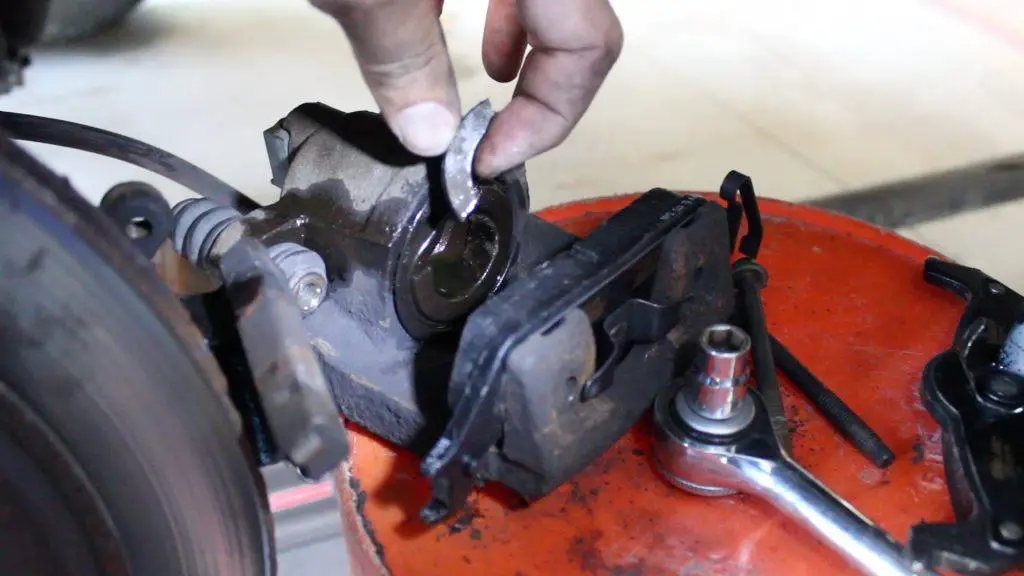
Surprisingly, drum brakes do not have a caliper support and require little hardware, as everything is shareable in its core.
Furthermore, they are also equipped with a smaller master cylinder near the pedal, as it cannot handle much pressure. Insufficient hardware fixation leads to warping and discoloration due to high temperature, as they cannot cool down easily.
FAQ
- Is it possible to use disc brakes at the rear of a vehicle?
It is possible to use disc brakes at the rear, and some sports and high-performance vehicles use four-wheel disc brake configurations to enhance braking performance.
However, this configuration can be more expensive and may not be necessary for daily driving since the front brakes handle the majority of the braking force.
- Can I upgrade my vehicle’s braking system to have disc brakes at the rear?
You can upgrade a vehicle’s braking system to install disc brakes at the rear, but this may require significant modifications and can be costly.
It is essential to consult a professional mechanic or an automotive expert to ensure that such an upgrade is feasible and safe for your specific vehicle.
- Are there specific situations where rear drum brakes are better than disc brakes?
Rear drum brakes can be advantageous in situations where cost-effectiveness and simplicity are prioritized over high-performance braking.
They are also well-suited for vehicles that primarily operate at low speeds with frequent stops and starts, where the rear brakes do not experience as much heat buildup.
- What happens if I neglect the maintenance of my rear drum brakes?
Neglecting the maintenance of rear drum brakes can lead to reduced braking performance, increased stopping distances, and a higher risk of brake failure.
- Do all vehicles follow the front disc brake and rear drum brake configuration?
No, although the front disc and rear drum configuration is common, it is not universal. Some vehicles, especially luxury or high-performance cars, use four-wheel disc brake configurations to enhance braking performance.
The choice of braking system can vary depending on the intended use and design of the vehicle.
- Are there benefits to having disc brakes on all four wheels of a vehicle?
Yes, having disc brakes on all four wheels can ensure consistent and high-performance braking across the entire vehicle.
This configuration is often preferred in sports cars and performance vehicles, where superior braking performance is essential for handling and safety.
- How can I tell if my vehicle is equipped with disc brakes at the front and drum brakes at the rear?
You can generally identify your vehicle’s brake type by inspecting the wheels. Look through the wheel spokes to see if there is a flat, shiny disc visible near the front wheels.
For the rear wheels, you might see a round, drum-shaped structure. Additionally, consulting your vehicle’s owner’s manual or contacting the manufacturer can provide you with this information.
- Can I convert my rear drum brakes to disc brakes for better performance?
It is possible to convert rear drum brakes to disc brakes to improve braking performance. However, this is a complex and often costly modification that may require specific parts and expertise.
It is advisable to consult a qualified mechanic or an automotive specialist to assess the feasibility and cost of such an upgrade for your specific vehicle.
Conclusion
These factors are sufficient to choose the best for your car. Disc brakes are appealing for their quick braking and durability.
Drum brakes are the most affordable for driving. So, use the reasons above to choose the best combination between disc brakes and drum brakes right now!