
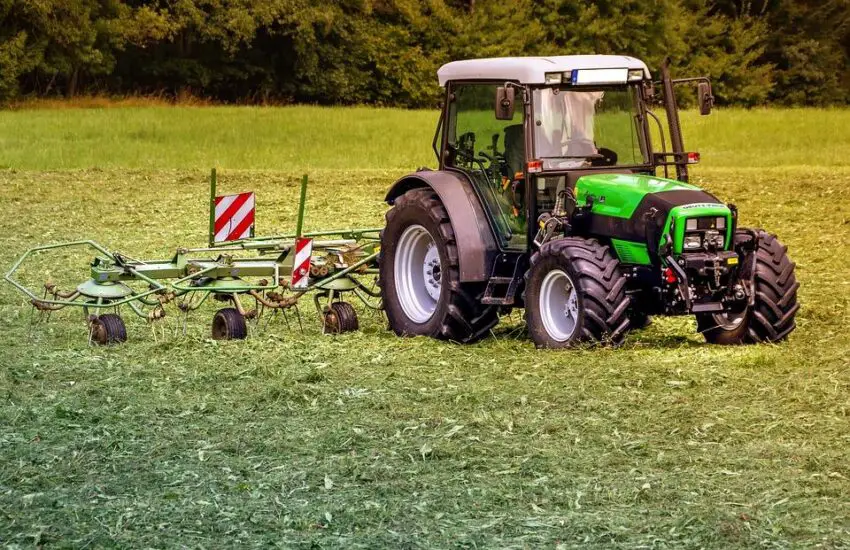
Tractors have larger rear wheels and smaller front wheels. Many factors contribute to a better driving experience.
Tractors are robust and powerful machines. People use tractors for farming and pulling heavy objects.
It features a super powerful diesel engine for easily towing heavy loads. A tractor engine converts significant rotational force into traction power.
This is why a tractor moves at low speeds while pulling heavy and bulky loads. Two-wheel drive tractors are perfect for agricultural and industrial uses.
Let’s find the reasons why tractors have tires of different sizes.
Why do tractors have larger rear wheels and smaller front wheels?
Tractors have a lot of work to do in the fields. Different tire sizes help establish good contact with the ground surface.
A tractor can pull heavy loads without any problem. Tires also play an essential role in the driving experience.
Large and heavy weights can be stuck on any surface. The two drive wheels with large rear wheels and small front wheels prevent the tractor from sinking.
Manufacturers design rear-wheel drive tractors to balance weight and power. The rear wheels also provide stability to the tractor.
The reasons why tractors have different wheels are:
1. Adhering to the ground
Larger tires are the reason why tractors perform perfectly in muddy fields. Tractors have larger rear wheels to prevent slipping on the muddy surface. A car always slips on muddy ground due to small tires.
The reason is the grip that a tractor rear wheel easily exerts on the surface. Balancing weight is much easier with wide tires. The rear tires of a tractor cover a larger area to distribute the weight evenly.
A heavy pulling load behind the tractor also produces strong pressure on the rear wheels. It is necessary to increase ground grip or traction. The larger rear wheels perfectly perform the gripping task.
2. Better forward visibility
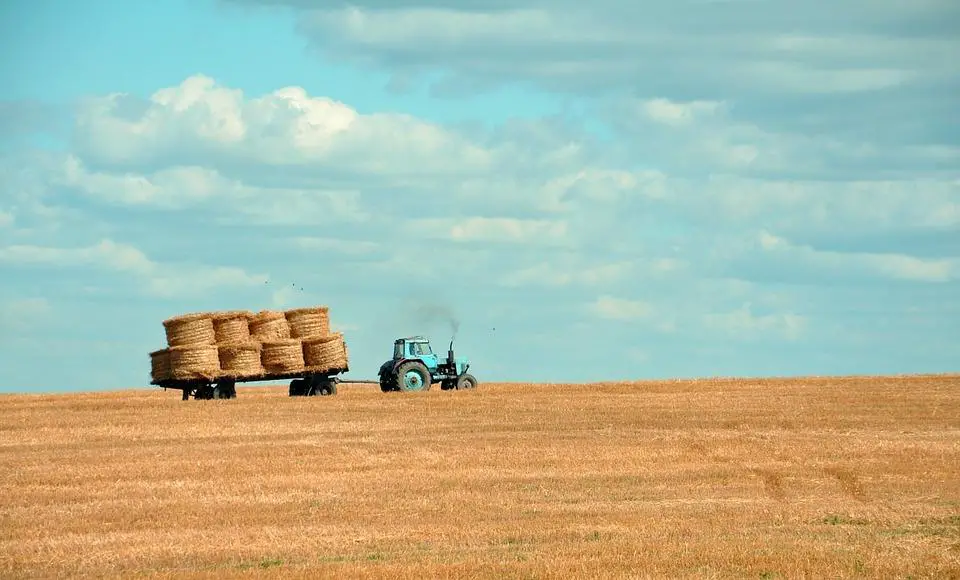
Smaller-sized wheels at the front offer better forward visibility. It is much easier to see everything when the tires don’t get in your way.
The driver’s seat is set to a higher position due to the larger rear wheels. According to expert maintenance tips, driving seats at higher altitudes in rear-wheel tractors make farming easier.
A driver can easily see the corners of fields and roads. It becomes easier to plow the land with better forward visibility.
3. Handling
Smaller wheels at the front provide better handling characteristics to the tractor. One can easily take tight turns on the field with small front wheels. A smaller radius facilitates proper steering handling.
The rear wheels have a connection with the drive shaft. It covers a maximum area during plowing and harvesting. You can also take tighter turns with small front wheels when driving on city roads.
FAQ
- What is the advantage of having smaller front wheels on a tractor?
The smaller front wheels of a tractor allow for better maneuverability and steering control.
They make it easier to turn the tractor in tight spaces and navigate fields without damaging crops or causing excessive soil compaction.
- How do larger rear wheels contribute to traction?
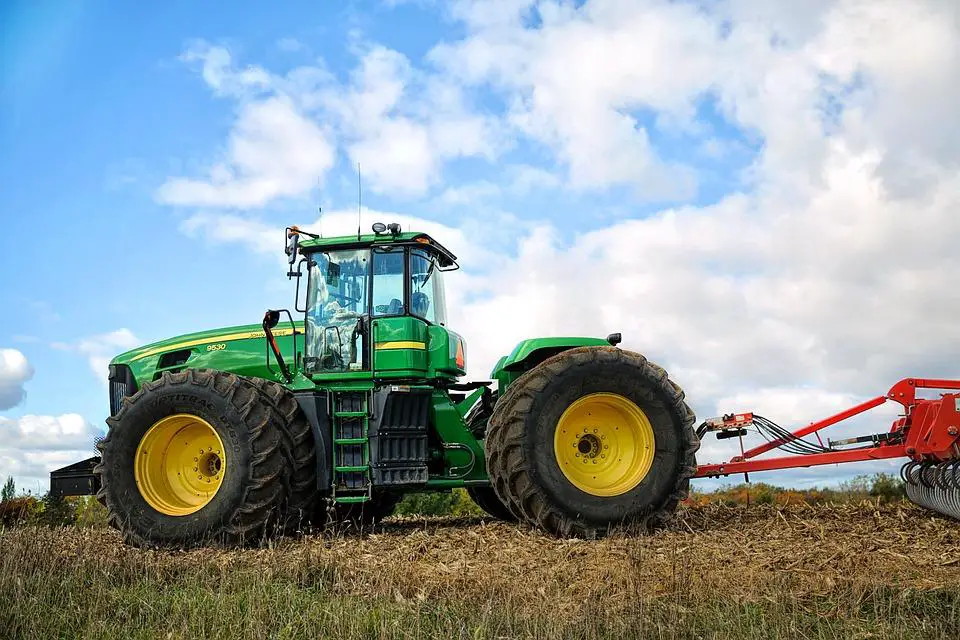
Larger rear wheels distribute the weight of the tractor and its attachments over a larger area, thus reducing ground pressure.
This increased surface area improves traction by preventing the wheels from sinking into soft or muddy soil.
- Are there different sizes of rear wheels for tractors?
Yes, there are different sizes of rear wheels available for tractors, depending on the intended use of the tractor.
Some tractors have larger rear wheels than others to suit specific applications, such as intensive farming or construction.
- Do all tractors have smaller front wheels?
Not all tractors have smaller front wheels, but it is a common design for agricultural and utility tractors. Some specialized tractors used in niche applications may have different wheel configurations to meet specific requirements.
- Can you explain the role of weight distribution in choosing wheel size?
The size and weight distribution of the tractor’s wheels are crucial for maintaining stability and preventing tipping.
Larger rear wheels help distribute the weight evenly, ensuring that the tractor remains balanced, especially when carrying heavy loads.
- Are there any disadvantages to having larger rear wheels on a tractor?
While larger rear wheels offer benefits in traction and stability, they can increase the overall height of the tractor, making it less suitable for low-clearance applications.
Additionally, larger wheels may require more power to turn, affecting fuel efficiency.
- How do front-wheel drive tractors differ in terms of wheel size?
Front-wheel drive tractors have larger front wheels and smaller rear wheels compared to rear-wheel drive tractors. This configuration is used for specific purposes, such as lawn and garden tractors or small utility vehicles, where maneuverability is a top priority.
- Can you change the wheel size on a tractor?
In some cases, it is possible to change the wheel size on a tractor, but it may require modifications and adjustments to the tractor’s design, including the axle and steering system.
It is essential to consult a qualified technician or manufacturer before making such changes.
- What other factors influence the choice of tractor wheel size?
Besides traction and stability, factors such as soil type, terrain, and the intended use of the tractor play a significant role in determining the appropriate wheel size.
Some tractors may have adjustable wheel widths to adapt to different conditions.
Final Thoughts
There you have it! These are the main reasons why tractors have larger rear wheels and smaller front wheels. Different wheel sizes distribute the weight evenly across all tires.