
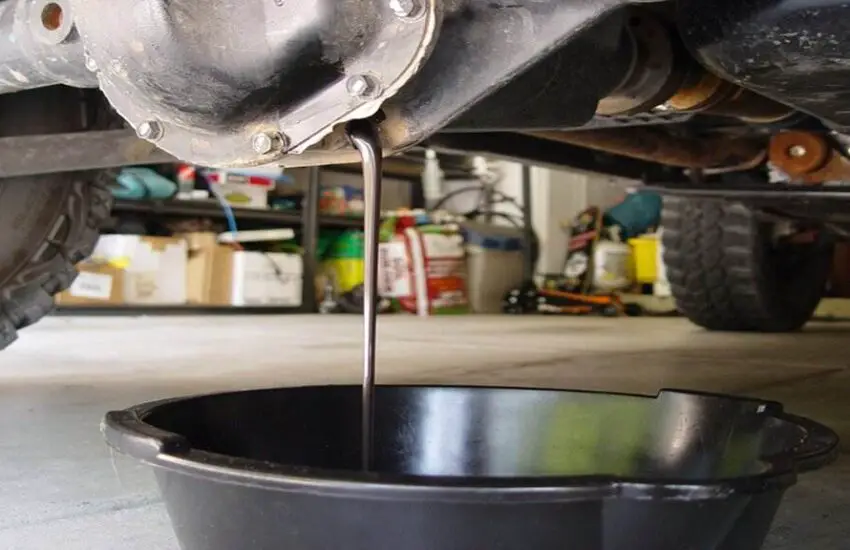
Every part of the vehicle has its distinct function and is fully supported by an accompanying tool or amplifier to operate more effectively through the indispensable effects of time and environment. That said, one of the most vital things contributing to the proper functioning of the process and ensuring the optimal long-term health of your vehicle is every type of fluid or oil. If you do not pay attention to these powerful boosters, your car’s performance may drop at any time with fewer signs to prepare in advance. And of course, as part of your goal to surf this information, in the case where you never change the differential fluid, nothing good will happen afterward.
In today’s article, I will go into more detail about differential fluids and the harmful effects behind the habit of leaving this careless lubricant. We will also show you some useful tips on the oil change routine for car components and elements to help you stay with the car much longer than you always think.
What is a Differential Fluid?
Driving towards an unexpected turn is never easy and gives off a feeling of comfort. Have you ever gone through the turns of a street without having to brake, adjust the accelerator, or let the car vibrate successively. It seems like an impossible task, but in reality, it is very likely to be accomplished thanks to your skillful driving ability and the best assistant for typical and surprise turns, the differential (also called the gearbox or transmission).
When the car is moving on a straight road, the wheels have the same speed, so there is no effect on balance and stability. But in turns, the inner wheel has a shorter distance than the outer wheel. So to be able to turn, the speed of the outer wheels must be greater. The differential will then be charged with adding and compensating for the gap between the inner and outer wheels when the vehicle faces every turn or curve in all directions.
More specifically, because it is part of the engine’s powertrain group, it will, as its name suggests, help transmit the balanced power of the vehicle subjected to unusual shocks to each car’s wheel. In short, the differential will control you and your direction will act for a smoother and more stable driving experience.
And as we mentioned quite a bit above, any car part, with the impact of time, will encounter problems related to driving smoothness and gradually face a loss of power. The operation of the differential will depend on a substance called differential fluid. Differential fluid, often called gear oil, lubricates the internal components of the differential, such as the ring and pinion, to prevent differential wear and cause serious mechanical problems when using the vehicle non-stop for a long period.
And do you know why we often refer to this substance as fluids rather than oils? This is due to its greater homogeneity. It has a thicker texture than oil, adheres to the device, and penetrates as deeply as possible.
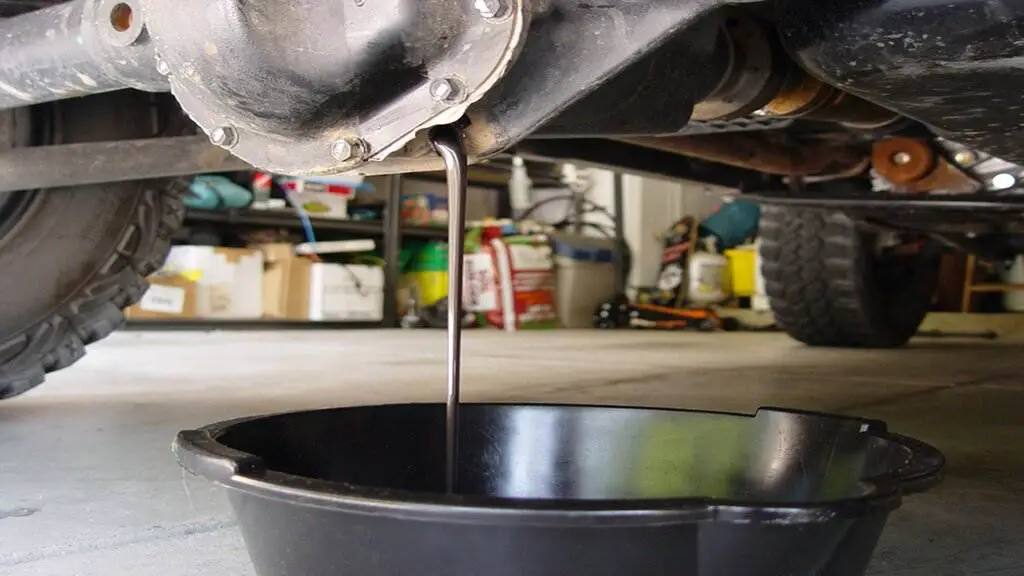
Typically, there are two types of differential fluids. The first type is mineral-based, a natural type of fluid derived from crude oil. The second is a synthetic differential fluid made in a laboratory. Synthetic differential fluids, like other synthetic oils, can be refined to achieve the best performance for each type and condition of the engine.
Overall, automotive differential fluids will have the following highlighted functions, which reduce friction, save fuel, reduce the wear rate, and maintain viscosity to extend the life of your equipment. It can optimize the power of the gearbox for smooth shifting and smooth operation. Some quality types also protect the differential in particular and the entire vehicle from severe oxidation and rust, keep the temperature in the gearbox lower than usual, and avoid the situation of engine burn-out during continuous operation in hot and high-pressure conditions.
What Will Happen If You Never Change the Differential Fluid
Keeping in mind these promising functions for excellent driving, differential fluid is a vital substance for any vehicle. It will ensure that the gears or differentials operate smoothly and efficiently in a complete system like a car engine.
Over time, the differential fluid will inevitably need to be replaced, and if that does not happen, the gears may wear out faster due to friction and cause a host of problems in the engine. And that is something you never want to happen, at any time, especially when you are enjoying your long-standing freedom and comfort after days of hard work.
Below are some of the effects of not changing the differential fluid when needed. These signs are not too serious at the beginning of the repair process. You can completely ignore and forget them at some point, perhaps just after reading this. However, what your car will undergo in the long term may be irreparable. So beware!
Differential or Transmission Emits a Whining Noise
The most common sign that prompts you to change the differential oil immediately is when you notice a whining noise coming from the rear differential. Not only a whine or groan, but any noise coming from the differential or transmission indicates that the fluid needs to be changed.
If the gear oil becomes lower than the optimal level or becomes too dirty, it can cause the gears to whine or howl as they rotate. These noises will increase with the vehicle’s speed. Never ignore this sign because it can cause a lot of serious damage later, and no one will ever be able to fix it again.
Furthermore, the differential may not make noise even when the fluid is in a low state. When you hear a noise, there is no lubricant left inside or the oil is too dirty. If this happens, you need to check the differential or transmission as soon as possible to avoid the undesirable possibility of a broken or damaged engine.
Jerky Transmission, More Visible in Turns
Although transmission jerking can be caused by some of the deepest and most complex problems, it can also be a potential sign of a low differential fluid level. If you feel the car shaking or vibrating strongly when driving on the road, there is probably something wrong with the differential. When the differential fluid is too dirty or its level is too low, you may notice gear or transmission jerking as well as many annoying noises. If changing the differential fluid does not solve the problems, it is a good idea to carefully inspect the entire vehicle at once to avoid missing hidden issues.
The Burnt Smell from the Transmission or Differential
A burnt smell coming from your differential or transmission is another sign that you need to consider carefully if changing the differential fluid has not yet entered your automatic maintenance dictionary. Furthermore, the smell may come from an oil leak from an old seal, represented by a red spot under your parking space. Burnt smells can also come from overheating of a gearbox due to poor lubrication. The overly old fluid cannot properly lubricate the moving parts, causing the metal components to ignite the oil at high temperatures. Changing the differential oil can partly solve the problem. Otherwise, immediately replace the seal or gasket.
When You Start the Car for the First Time, It is Difficult to Operate.
If the car does not operate normally, it may be because the differential is damaged or the differential fluid is low when you shift a gear and press the accelerator. This will cause a misalignment between the ring gear and the pinion gear. The bearings are overloaded, making it harder to rotate the ring gear. And eventually, the car will not run well from the start.
Very Worn Differential
If you do not change the differential oil for a long time, it can lead to the wear of the vehicle’s differential. And when they are too old, you will no longer be able to drive your car. Even if you do something, there will always be a loud noise heard, annoying like a morning alarm. And up to a certain point, the car can no longer even move.
How Often to Change the Differential Fluid
The frequency of changing the differential fluid will depend on the car brand and the original manufacturer’s opinions. Generally, the user manual provided by the manufacturer will contain the instructions on this. But if you cannot find it anywhere, it is best to contact the manufacturer via their hotline in no time without trying to guess something you need to do next.
The most appropriate time for a gearbox oil change is after the car has traveled about 20,000 to 50,000 miles, depending on the current condition of the car and industry advice. However, the real-time change can be modified because each driver will drive the car differently and take care of it with their specific routine.
If you own a car and expect it to be healthy most of the time, do not wait for it to reach the recommended number of 40,000 miles or 50,000 miles to change the differential fluid, otherwise it may be too late for a problem. These are just theoretical numbers. The driver who cares about the durability and smoothness of the car at every turn will check it regularly and have the fluid inspected or changed, even when the car has only traveled about 20,000 miles. However, in some exceptional cases, such as specific manufacturing off-road vehicles or those usually used for towing, the fluids may be reviewed and maintained at a lower mileage level.
Vehicle owners should observe and regularly check the condition of the oil using a dipstick. Sticks that turn dark brown, or black, or make strange noises are signs that the car’s rear differential oil needs to be changed. This act is strongly encouraged because the longer the gearbox is left unchecked, the more likely each related part will malfunction. And these malfunctions can lead to many engine problems that are difficult to control afterward.
Breaking Down the Differential Fluid Change Cost
Whether we like it or not, it is time to dive into the bitter truth for your wallet for this upcoming project. How much will changing the differential fluid cost you? After all, blind unconsciousness and recklessly continuing to drive the car with its old fluid are never a good thing. Driving on the road with burnt or severely insufficient differential fluid will forever and ever do your car’s engine and your car as a whole, more harm than good. The fluid, ironically, can wear out the differential due to overheating or abrasion of colliding metal parts.
If the fluid is not checked and changed for a long period, the entire differential can fail. So this is a reason that turned what could have been a simple fluid change into a more expensive project. Remember to visit your trusted mechanic after detecting perhaps just one of the above symptoms and change the differential oil in a timely manner.
Renewing this kind of fluid is quite cheap. It varies from vehicle to vehicle and the due mileage also differs. Typically, a healthy differential will require 1 to 4 quarts of fluid. Furthermore, vehicles equipped with all-wheel drive features will have a differential at the front and one at the rear. In this case, the amount of fluid you need to fill the car will be double the standard.
With good expert hands, the process can be done easily in just one hour. The differential fluid change cost will range from about $90 to $150, including a can of fluid charged between $40 and $70, and labor costs from $50 to $80. Depending on the fluid brand and the experience of the mechanic handling your service, the total bill may fluctuate by $10 to $20 more.
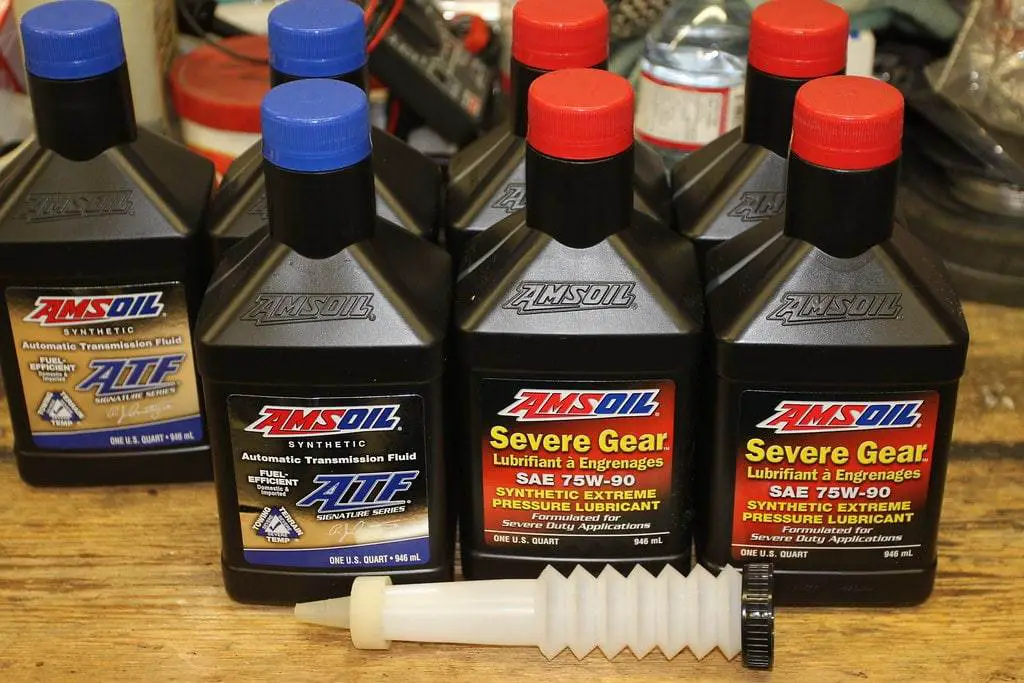
Even if both have the same engine structure with the same gearbox, it may suit this type of differential fluid, but not another. So, when you buy a car gear oil yourself, it is best to give the seller detailed information about your vehicles, such as the brand, model, version, and model year, for better advice on choosing the most compatible fluid type.
How to Perform the Differential Fluid Change and Check Yourself
After breaking down the cost of changing the differential fluid, Car From Japan will show you the quick way to check and replace the differential fluid at home without wasting too much money and travel effort. If you wish to perform this check or replacement, you must carefully read the instructions from reliable sources and watch the tutoring videos for a safe and effective process. Otherwise, indeed, you must be very confident in your mechanical and automotive knowledge. So good luck!
Before starting work, you need to prepare a few tools and supplies:
– Differential oil
– A set of jacks with 4 jack stands.
– A basin containing the old fluid drained from the car
– Lots of newspaper or cardboard to line the yard.
– A suction hose and an oil pump (Oil Suction Gun).
– Sockets
– Some old cleaning cloths.
The main task is quite simple, as you will see below. If you are not familiar with the tools and procedures for handling any car part in general, please spend a generous time of about 2 hours to do it carefully and learn from the experience at the same time.
Step 1: First, drive the car for about 20 minutes on the road to warm up the engine, then find a flat parking spot.
Step 2: Raise the car to a height using 4 jack stands to prop the car at that high flat position.
Step 3: Get under the car, slide towards the rear and look up, you will see the horizontal wheel axle, and in the middle is a large box, shaped like a pumpkin. Here is where to get things working: The differential.
Check again if the box cover is still smooth. If there are scratches, they may be caused by collisions with obstacles on the road. Driving on paved roads is usually not a problem. But when the car is driven in so-called off-road conditions, such as rocky areas, trails, forest crossings, and streams, it must encounter tons of convex and concave obstacles protruding from the ground. When driving in such conditions, you must be very careful with the handle so as not to damage the differential.
Step 4: Spread a lot of newspaper or cardboard on the ground under the differential to catch stray oil drops that splash during draining.
Step 5: Find the location of the drain hole and the fill hole on the differential. Place the used fluid container on top of the newspaper, just below the oil drain hole. Put the old fluid pan in place, just below the differential.
Step 6: Starting the fluid draining process, you must first open the fill screw. Because there are many car owners, admittedly novices but in very good spirits, eager to open the drain plug immediately to remove all the old fluid. However, in some cases, the screw has rusted and stuck too tightly on the differential. After all, your car will precariously rest in the middle of nowhere until a qualified mechanic with tools comes to the rescue. Otherwise, you must lower the car, then call someone to take it to the repair shop.
Both cases result in additional costs and a lot of unnecessary effort. Therefore, before draining the oil, you must test the fill screw to see if it can be opened or not. If not, take the car to the shop from the first minute to avoid any subsequent problems