
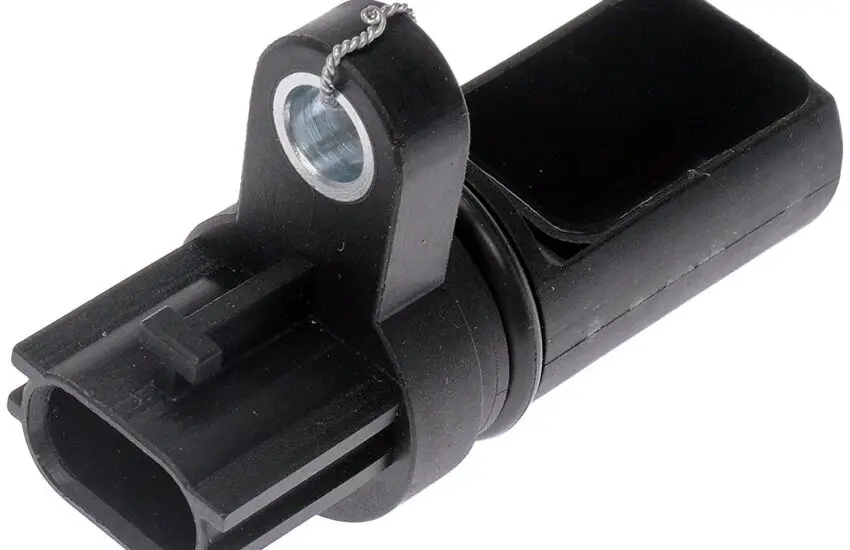
The crankshaft position sensor, in case you didn’t know, is an essential electronic device for the operation of a car. It is located in the car’s engine. It records the rotational speed of the crankshaft.
This sensor then transmits the information to the ECU and decides on fuel injection and optimal ignition regulation.
The location of the crankshaft determines the effectiveness of the collected data. This is why the sensor is located either next to the camshaft or the crankshaft itself.
If we try to explain it in simpler words, the crankshaft position sensor monitors the location of the camshaft in the engine.
The information it collects in this way is used to optimize the timing of fuel injection into the engine.
If this sensor malfunctions, the computer will be unable to make precise fuel injection adjustments and engine performance will decrease.
How does the crankshaft position sensor work?
Here are some ways this sensor works. Let’s take a look.
Detection
If you look at the crankshaft, you will find a powerful magnet next to it. You will also notice that there are steel pins or dowels arranged at regular intervals around the crankshaft.
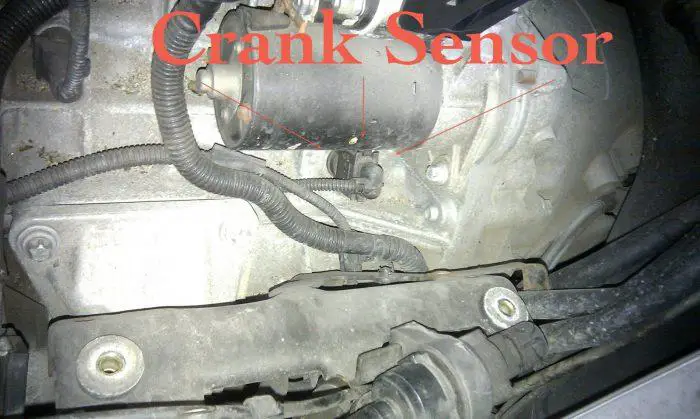
This magnet constantly radiates a stable magnetic field. When the engine starts and the crankshaft rotates, the steel pins around the shaft rotate through this field. This causes a fluctuation in the field, thus producing an AC (alternating current) signal.
This signal further informs the Engine Management Unit (engine computer) to decipher the rotational speed. In turn, the EMU is able to calculate the position and rhythm of the camshaft to further optimize fuel injection and ignition.
Adjustments
Like modern cars, we need to learn one thing. Engines will give us efficient performance only if the internal parts move at a specific recommended speed.
It is only once the crankshaft position sensor detects the rotation of the crankshaft inside the engine that the onboard system can use the information the sensor sends to it.
This is when the computer will make small, precise adjustments/tunings to the engine to increase its efficiency.
Consider cases where you are moving at full throttle. With constant acceleration in modes like cruise control or sport mode, the computer must make these fine adjustments to the engine to change the speed.
The computer will ensure it continuously checks the crankshaft’s rotational speed, compares it to the ideal range, and adjusts the speed accordingly. This adjustment may involve increasing or decreasing the speed.
What happens if the crankshaft position sensor malfunctions?
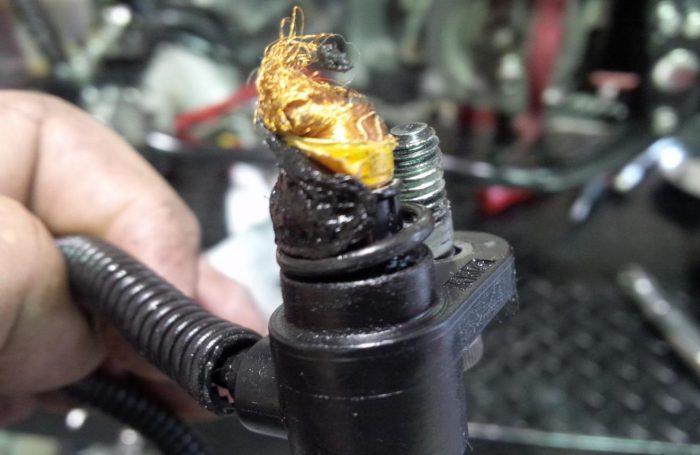
If you need to maintain the proper functioning of your engine, it is imperative that this sensor remains in perfect condition. Any fault in the sensor will result in incorrect data being communicated to the engine computer.
The engine, when operating based on this data, will not perform optimally. It can even go as far as causing the car to stall.
The reason is that the ECM will start based on its own memory to ensure fueling and ignition, which, by the way, cannot be optimal.
Thus, a decrease in engine performance could actually be one of the symptoms of a crankshaft sensor failure.
FAQ on the function of the crankshaft position sensor
- Can a faulty CKP sensor damage the engine?
While a faulty CKP sensor can lead to poor engine performance and drivability issues, it does not typically cause direct engine damage.
However, continued operation with a faulty CKP sensor can lead to other issues, so it is crucial to address the problem promptly.
- How to diagnose and repair a faulty crankshaft position sensor?
Diagnosing a faulty CKP sensor involves using a scan tool to read Diagnostic Trouble Codes (DTCs) from the ECM.
Additionally, technicians may perform electrical tests and inspect the sensor and its wiring.
If a fault is confirmed, the sensor should be replaced with a new one, then clear all DTCs.
- Can I replace the crankshaft position sensor myself?
Replacing a CKP sensor can be a DIY task for those who possess mechanical skills and the necessary tools.
However, it is essential to consult the vehicle’s service manual for specific instructions and ensure proper installation and torque specifications.
- How often should a crankshaft position sensor be replaced?
There is no specific maintenance interval for replacing the CKP sensor. It is typically replaced when it fails or shows failure symptoms.
Regular vehicle maintenance and prompt replacement of sensors when issues arise can help ensure optimal engine performance.
- Are there different types of crankshaft position sensors?
Yes, there are different types of CKP sensors, including Hall effect sensors and magnetic reluctance sensors. The type used depends on the vehicle’s make and model.
- Can a damaged CKP sensor affect vehicle emissions?
Yes, a faulty CKP sensor can impact emissions by causing incomplete combustion and increased pollutant emissions. Addressing CKP sensor issues can help maintain compliance with emission standards.
- Can a faulty crankshaft position sensor cause sudden vehicle stalling while driving?
Yes, a faulty CKP sensor can lead to sudden stalling while driving. If the sensor fails to provide accurate data to the ECM, it can disrupt the engine’s ignition timing and fuel injection, causing the engine to shut down unexpectedly.
- Is the crankshaft position sensor the same as the camshaft position sensor?
No, the Crankshaft Position Sensor (CKP sensor) and the Camshaft Position Sensor (CMP sensor) are not the same. Although both sensors provide critical data to the ECM for engine control, they monitor different components.
The CKP sensor monitors the position and rotational speed of the crankshaft, while the CMP sensor monitors the position and timing of the camshaft.
In general, the crankshaft position sensor plays a very important role in ensuring engine performance and increasing its efficiency. Follow the maintenance advice recommended by your car manufacturer to keep it in good condition.