


Everyone knows it: the performance of a particular car is often measured only in horsepower. The question of power is usually the first one asked when discussing the actual power of a vehicle. Young drivers, in particular, like to show off power figures and think that the vehicle with the most power under the hood also surpasses all others in terms of acceleration and performance. Is that really the case? Because there is also torque, which should not be overlooked. So, if you really want to compare engines with each other, you must not only pay attention to the number of horses in your vehicle but also take into consideration the factors of speed and torque.
WHAT EXACTLY IS TORQUE?
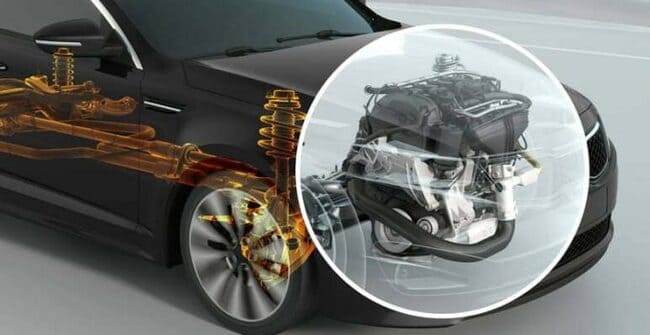
We must first address the question of what we are actually dealing with when we use the term “torque.” It describes the rotational equivalent of force. This force accelerates things, and torque sets them in motion. Torque is therefore composed of the actual force and the lever arm, which can set things in motion, but the time factor must not be overlooked here either. In terms of the engine, torque indicates how quickly the engine responds to the accelerator pedal. Modern engines must deliver as much torque as possible in the lower speed range as well as a “wide” speed range. The torque curve of the 1.4L TSI Twincharger engine meets these requirements: high torque from low RPMs (250 Nm at 1,500 rpm) and a constant curve up to high RPMs (up to 4,500 rpm).
Torque describes the effect of a force on a body. However, this force does not act directly on the body but in a rotational movement. In a car engine, the amount of torque is the effect of the combustion pressure on the piston, which in turn sets the crankshaft in motion. The torque of an engine is mainly influenced by the piston displacement. But it is the interaction of torque and speed that gives the engine its actual power. The engine speed indicates the revolutions of the crankshaft per minute. In an internal combustion engine for cars, it is between 500 and 900 revolutions per minute.
PETROL OR DIESEL, WHICH HAS MORE TORQUE?
In general, most people know that a diesel car has more to offer in terms of torque than a petrol car. Because as a compression-ignition engine, which a diesel vehicle is after all, the torque is always greater, even if the displacement is the same. This naturally also results in faster acceleration. Another reason for this is the special design of a diesel engine where the cylinders are rather narrow and tall. It can also be noted that the combustion pressure that builds up is higher. This, of course, also has a positive effect on torque.
TURBOCHARGED ENGINES – WHERE DOES ALL THAT POWER COME FROM?

Supercharging allows for increasing the power of the internal combustion engine. During the intake phase, the engine is supplied with air by a compressor, which is itself driven by a turbine powered by the energy of the exhaust gases. So, it can be said that a turbocharger brings a power increase for the same displacement. Furthermore, a turbocharger can also be useful for achieving a specific engine performance with a lightweight engine. A vehicle with a turbo engine is particularly popular with drivers of towing vehicles. Indeed, high torque at low RPM can bring significant advantages when towing a trailer.
WILL PETROL ENGINES BE LEFT IN THE DUST?
Definitely not. Although a petrol engine without a turbocharger has lower torque at low RPM, it can still deliver the same power. However, this requires high engine speeds, in which case a petrol engine can also achieve quite good acceleration. And then there are also modern petrol engines that have a turbocharger and thus compensate for this disadvantage, as then the high RPMs can also be eliminated. So, if the question is how fast your vehicle can accelerate from 0 to 100 km/h, a power comparison should be preferred over a torque comparison.
WHICH VEHICLES ARE POPULAR TODAY?
Today, people want vehicles that are flexible and can be driven with high torque even at low RPM, but can also be driven quite fuel-efficiently at low RPM. Because when it comes to performance parameters, they are only essential when high acceleration and top speed are absolute priorities. For a few drivers, this may be the priority, but in general, fast acceleration or top speed is usually impossible to achieve in practice. Nevertheless, performance parameters remain important factors when comparing vehicles.