
Knock! Knock! Do you hear a strange knocking noise coming from inside the engine and are you struggling to find the connecting rod bearing replacement cost? Then you’ve found the right place! This article will answer all your questions on this issue!
What are Connecting Rod Bearings in an Engine
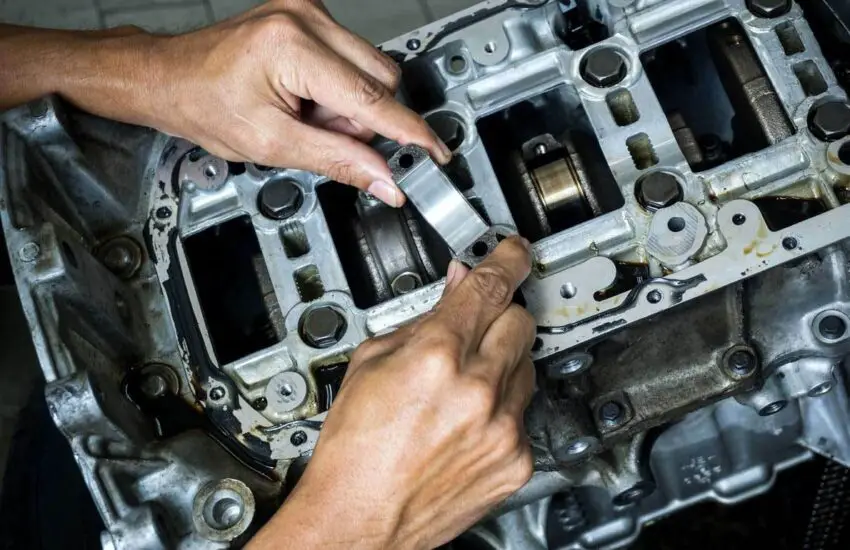
Connecting rod bearings are also called rod bearings, which are split bearings, consisting of two identical semi-circular halves. When installed in the engine, they form a circle.
The rod bearing is carefully installed in a separate cavity. Usually, the cavity cover and the engine block have recesses that allow the bearing to slide inside.
So, what is the purpose of this component? And why is installing the crankshaft without connecting rod bearings not recommended?
Each piston in your engine is connected to connecting rod bearings, and these components play an essential role in maintaining engine balance and lubrication. The main reason you cannot simply install the crankshaft without them is twofold.
First, connecting rod bearings ensure that the piston maintains proper balance with the crankshaft, thus ensuring smooth and stable operation. Their role is to eliminate any excessive play or movement, as any imbalance inside the engine can lead to performance issues.
Second, these connecting rod bearings play a crucial role in keeping your engine’s crankshaft well lubricated. Each bearing is designed with enough clearance to allow for a controlled oil flow.
This controlled flow creates a protective layer between the connecting rod bearing and the crankshaft, thereby preventing excessive wear and promoting long-term engine health.
If there is a lack of oil or if the oil is contaminated, it can significantly impact the lifespan of the bearings. In such cases, the bearings may wear out prematurely and require replacement. This raises the question of connecting rod bearing replacement costs, which we will address next.
What is the Connecting Rod Bearing Replacement Cost
Connecting Rod Bearing Replacement
Understanding the average connecting rod bearing replacement cost can be overwhelming, but this detailed breakdown will help you navigate the process like a pro!
Connecting Rod Bearings
Engine type and brand: The cost varies depending on factors such as the car model and performance.
Standard or performance: Performance bearings offer higher load capacity but cost more.
Price range: $50 to $400+ for a full set of bearings.
Gaskets and Seals
Replacement needs: Some gaskets can be reused, while others must be replaced depending on their condition. Cost range: $20 to $100 depending on the specific parts needed.
Engine Oil and Filter
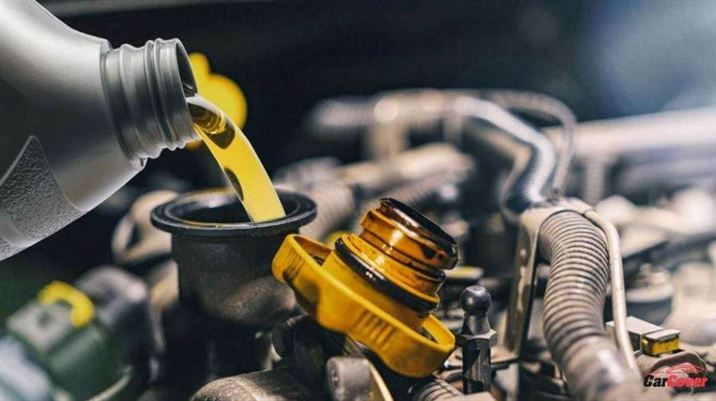
Essential for clean lubrication: Always use high-quality oil and a filter recommended by your car manufacturer. Price range: approximately $30 to $50 for both.
Miscellaneous Parts
Fasteners, clips, etc.: Depending on your car’s condition, some minor replacements may be necessary. Cost: $10 to $20 on average
Shop Supplies and Fees
Some shops add fees for supplies such as cleaning products and waste disposal. Expect around $10 to $20
Taxes and Fees (Location-specific add-ons)
Varies by region: Depending on your location, applicable taxes and fees may add a small percentage to the total cost.
In short, you should always get quotes from multiple mechanics and be upfront about your budget constraints. Remember, a higher price doesn’t always guarantee better service, so research your options carefully!
Labor Cost
Labor costs for connecting rod bearing replacement typically represent the largest portion of the expenses for replacing connecting rod bearings.
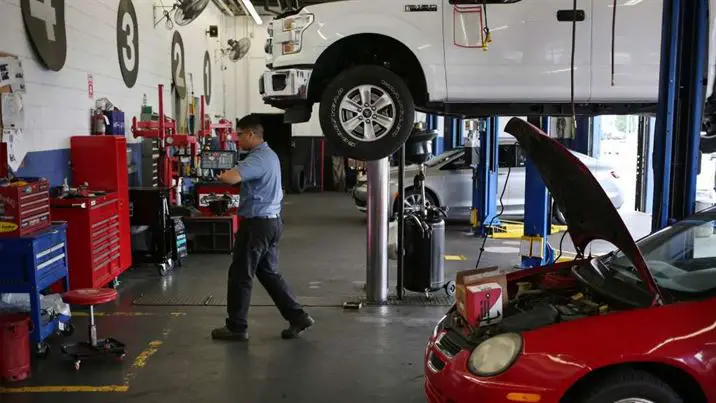
You will need to consider your mechanic’s hourly rate, which is between $95 and $100. However, hourly rates can vary, ranging from $15 to $210 depending on your location.
Additionally, if you leave your vehicle at the center, you might have to pay daily parking fees, usually $5 to $25 per day. Since this repair can take up to 20 hours of work, these fees can add up quite quickly.
Finally, there are often shop fees, which can be 5% to 20% of the total bill. If you pay $3,000 in labor costs, an additional 20% fee for the repair center can be a substantial addition.
Other Parts Included
If your connecting rod bearings show signs of wear, simply replacing the bearings may not be enough. It is often necessary to replace additional components such as head bolts and gaskets.
Furthermore, if the damaged bearings have damaged the pistons or crankshaft, more extensive repairs may be needed, potentially requiring the replacement of both components.
For example, in cases where a bearing has spun, it may fuse with the crankshaft, making repair impossible. This situation would require replacing the crankshaft, as well as resurfacing the engine block and possibly installing new pistons.

What Causes Connecting Rod Bearing Failure
Besides the connecting rod bearing replacement cost, you should take a closer look at some main causes of this component’s failure.
As you may know, connecting rod bearings can wear out over time, leading to significant engine problems. So, what exactly causes this wear? Let’s explore these factors in the upcoming sections.
Below-Average Bearing Quality
The initial cause of connecting rod bearing failure, and consequently the need to understand the connecting rod bearing replacement cost, often stems from using poor-quality bearings.
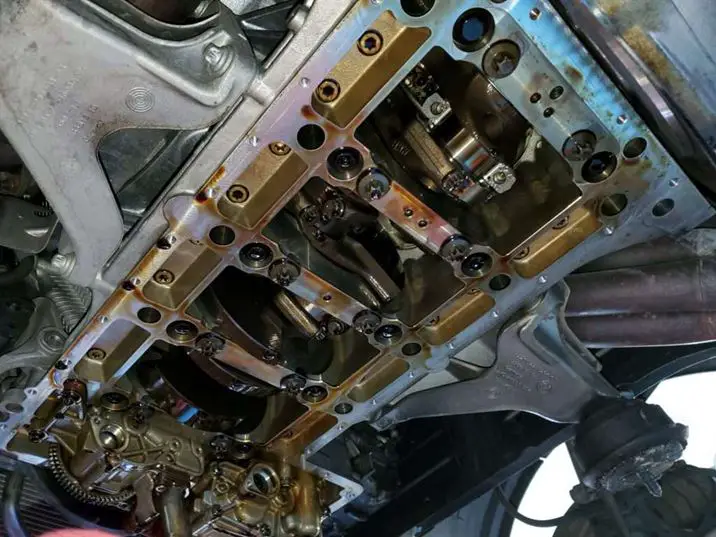
Some engines are particularly vulnerable to premature connecting rod bearing failure. Although not all engines are affected, some experience bearing wear sooner than expected. Notably, high-performance BMW engines, such as the S62, S54, S65, and S85, are known to encounter connecting rod bearing issues.
Therefore, when considering purchasing an M5 or M3 equipped with one of these engines, it is crucial to check if the connecting rod bearings have already been replaced.
If not, a thorough engine inspection is essential to determine if any damage has occurred to the crankshaft. Let’s now move on to other contributing factors before discussing the connecting rod bearing replacement cost.
Low Oil Level
Another frequent cause of connecting rod bearing failure is inadequate oil level. Low oil levels can harm any type of bearing, whether main bearings or connecting rod bearings.
Insufficient lubrication can lead to increased engine wear. This is because oil not only lubricates the bearings but also helps dissipate heat.
Without adequate oil flow to the crankshaft, the bearings become dry, leading to friction between them and the crankshaft. This friction causes significant wear on both the bearings and the crankshaft.
Infrequent Oil Changes
The last likely cause of connecting rod bearing failure and the associated cost of engine bearing replacement is infrequent oil changes.
Inadequate maintenance practices are often the main problem leading to bearing issues. Some people extend their oil change intervals to up to 20,000 miles, even though it is recommended to do so every 10,000 miles or less.
In such cases, the bearings tend to wear out much faster than normal. This is mainly because the engine oil does not fulfill its primary function of lubrication.
What are the Symptoms of Failing Connecting Rod Bearings
If your connecting rod bearings are deteriorating, you will likely hear noticeable sounds before detecting other signs. However, there are other symptoms to be aware of:
Oil Problems
When connecting rod bearings fail, you may encounter oil-related problems. These include low oil pressure, frequent oil changes due to contamination, or the presence of metal shavings or a silver sheen in the oil.
Modern engines use sealed systems where the bearings operate immersed in fluid to reduce friction and prevent bearing failure. If problems occur, you might observe oil containing shavings, thinning due to gas contamination, or low oil pressure.
Noisy Engine
Faulty connecting rod bearings produce distinctive knocking noises, hence the term “engine knock.” These noises become noticeable when the engine starts and stops and, in severe cases, even at idle.
If you hear a metallic knocking noise, it’s often a sign of problems, and you should then prepare for the upcoming connecting rod bearing replacement cost.
Transmission Problems
Squealing in the transmission or frequent belt wear can be related to connecting rod bearing issues. As the connecting rods fail to smoothly transfer force to the crankshaft, it puts increased pressure and strain on the transmission.
Engine Failure
Connecting rod bearing problems can lead to engine failure, with cases such as a rod punching through the engine block being a common cause. In such cases, you will need to consider whether repairing the engine is worth it or if replacing the short block is a more cost-effective solution.
These symptoms serve as indicators of potential connecting rod bearing problems, requiring timely inspection and repairs to prevent further damage to your engine.
FAQ on Connecting Rod Bearing Replacement
1. Can I replace just one connecting rod bearing or do I need to replace them all?
It is recommended to replace all connecting rod bearings at the same time, even if only one appears damaged or worn. Replacing all ensures consistent performance and avoids future problems.
2. Can I use aftermarket connecting rod bearings or should I stick with OEM parts?
Although aftermarket connecting rod bearings are available and may be more economical, using OEM (Original Equipment Manufacturer) parts is often recommended for optimal engine performance and longevity.
3. How can I avoid connecting rod bearing problems in the future?
Regular maintenance, including oil changes, using high-quality engine oil, and avoiding excessive engine strain, can help extend the life of your connecting rod bearings and prevent future issues.
4. Can replacing connecting rod bearings improve engine performance?
Replacing worn connecting rod bearings can restore proper engine operation and improve performance by reducing friction and ensuring smooth crankshaft rotation.
5. Are there warranties on connecting rod bearing replacement parts or labor?
Warranties can vary by manufacturer or repair shop. It is recommended to inquire about warranty coverage for parts and labor when planning the replacement.
6. Is it possible to upgrade connecting rod bearings during replacement for better durability?
You can choose upgraded or performance-oriented connecting rod bearings during replacement to enhance durability and performance, depending on your needs and budget.
Conclusion
In conclusion, understanding the connecting rod bearing replacement cost and the factors that influence it is essential for responsible vehicle ownership.
Although the cost can vary depending on several factors, including the vehicle’s make and model, labor rates, and the choice between original and aftermarket parts, one thing remains clear: it is crucial to address worn or damaged connecting rod bearings to prevent greater engine damage and costly repairs down the road.