

The traction control system (TCS) is an active vehicle safety device. It prevents loss of traction on the driven wheels on the road. It becomes active when the engine torque and throttle input do not match the surface you are driving on.
But what does traction control mean? Well, it’s a method that limits the power delivered to the wheel to apply traction to the car’s wheels, causing them to stop slipping. It uses all the available traction on the road when the vehicle accelerates on low-friction surfaces.
What is the Traction Control System?
TCS is an active vehicle safety feature that is standard in modern automobiles. A secondary function of a vehicle’s Electronic Stability Control (ESC)*, the onboard system kicks in when acceleration speeds up. This prevents the tires from slipping when the car accelerates.
Traction control proves useful in bad weather conditions (rain, ice, or snow) and on slippery surfaces offering little to no grip. Drivers had to press the accelerator pedal in old cars without a TCS system to prevent the wheels from slipping excessively on difficult roads. This allowed them to gain speed without losing grip. But modern vehicles equipped with this technology allow drivers to accelerate in a controlled manner by limiting the power delivered to stop wheel slip.
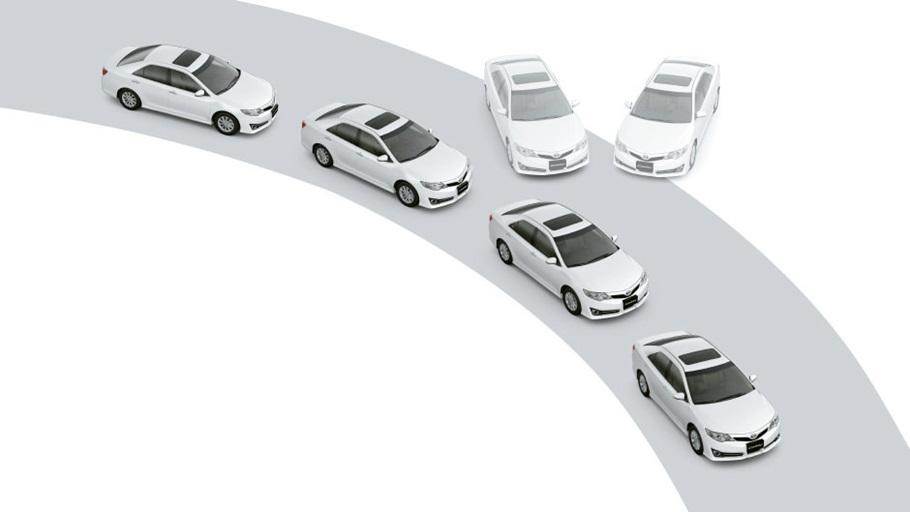
The system allows the driver to have better control of their car. It reduces the risk of losing rear control during acceleration and oversteer when driving in a corner. When the TC light flashes during operation, the driver knows that the traction control technology is active and trying to prevent one or more wheels from spinning faster and causing instability. This often happens when the vehicle accelerates rapidly in corners, forcing the wheels to slip horizontally and potentially creating an accident risk.
* ESC is a computer-driven function in modern vehicles. It adds to stability by detecting loss of traction and then reducing it.
How Does Traction Control Work?
Unless you are driving a very old car, it is likely equipped with a traction control system. It is in operation and helps you drive safely without you realizing how it works.
Well, the mechanism is quite simple if you pay attention to it. Its operation is quite similar to the Anti-lock Braking System (ABS) and the components of both systems are also similar. The TCS has a wheel speed sensor that monitors the rotational speed of the front wheels or all four wheels. The hydraulic modulator drives the brakes while the ECU (Electronic Control Unit) monitors the data from the wheel speed sensors and intervenes to command the hydraulic modulator if necessary.
In modern vehicles, ABS and TCS are considered a single unit, as the latter is an addition to the ABS setup. The ECU monitors wheel activity. It checks if any one is spinning faster than the others, indicating that the wheel in question is losing grip. On such an occasion, the ECU intervenes to slow down the rotation of the problematic wheel. It commands the hydraulic modulator to pump the brake in rapid succession to that specific wheel.
Some TCS control wheel slip by reducing engine power to the wheels that are about to lose traction. Once the condition returns to normal, the system resumes its normal operation – monitoring the wheel and its rotational speed.
When the system cuts engine power to control wheel slip, you might feel a pulsating sensation through the accelerator pedal. This is the impact of the TCS forcing the engine to adjust the wheel rotation speed. So don’t worry if you feel a vibration when driving on a slippery road.
Understanding how the traction control system works in the video:
The Right Time to Use Traction Control in Cars
TCS is a standard safety device in modern vehicles. It becomes active when the engine starts. The system intervenes when there is a discrepancy between the wheel rotation speed and the vehicle speed.
The system is beneficial for any type of vehicle, regardless of the powertrain it has. But it does more harm than good in some situations. For example, when you drive the car from a standstill in snow or sand, all wheels slip, causing the TCS to reduce engine power too much. As a result, moving forward on such surfaces becomes very difficult.

Most models have an option to disable TCS in such difficult conditions. Some cars do not allow it to be completely disabled. But they offer a setting for snowy or icy conditions or an option to increase wheel slip if necessary. You need to turn off the system or apply the additional settings depending on the weather or the type of surface you are driving on.
Thus, to avoid loss of control, ensure body stability, and optimize tire traction, the traction control system should be enabled in most everyday driving situations. However, car owners can temporarily disable this system to increase traction when traveling on snowy or muddy roads.
Symptoms of a Traction Control Problem
Knowing the symptoms will help you identify if the system is experiencing problems. The system rarely encounters issues, and you can always drive even if something is wrong. However, you must be cautious when driving on slippery surfaces with a malfunctioning TCS.
If there is a problem with the system, the traction control light will illuminate briefly after starting the engine. This can happen due to a faulty wheel speed sensor, a faulty ABS, low air pressure, and driving with a mini spare wheel.
In Conclusion
Along with ESC, the TCS traction control system is widely used in most vehicles. Traction control helps provide a safe driving experience throughout the driving process. Difficult terrain conditions such as muddy and slippery… are some of the factors affecting car performance and safety. The traction control system was developed to solve this problem. We hope this topic provides you with useful information.