
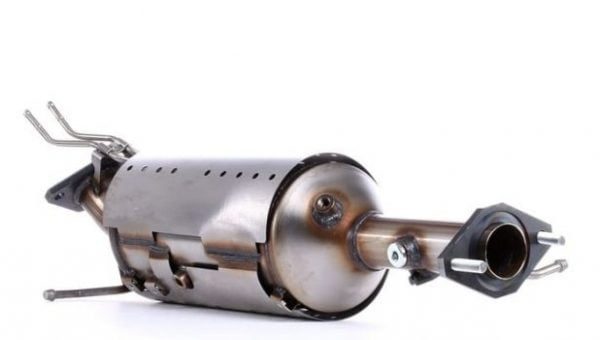

The filter that cleans diesel exhaust is essential, but can easily go wrong if you don’t know how it works.
- 1 What is the particulate filter in a car?
- 1.1 How does the diesel particulate filter work?
- 2 What is diesel particulate filter regeneration?
- 2.1 What to do if both types of regeneration do not work?
- 3 What causes a diesel particulate filter blockage?
- 4 Is a particulate filter a legal requirement?
- 4.1 Do I need a diesel particulate filter to pass the MOT?
- 5 My particulate filter is broken – how much will a new filter cost?
If you drive a diesel car in 2021, there’s a good chance it’s equipped with a diesel particulate filter. You might not know what it is, how it works, or even when it’s doing its job. Diesel particulate filters have been installed on diesel-fueled cars for nearly two decades, and knowing how they are maintained can help keep your engine running cleanly and smoothly.
Here are all the details of what a particulate filter is and how to maintain and clean it.
WHAT IS THE PARTICULATE FILTER IN A CAR?
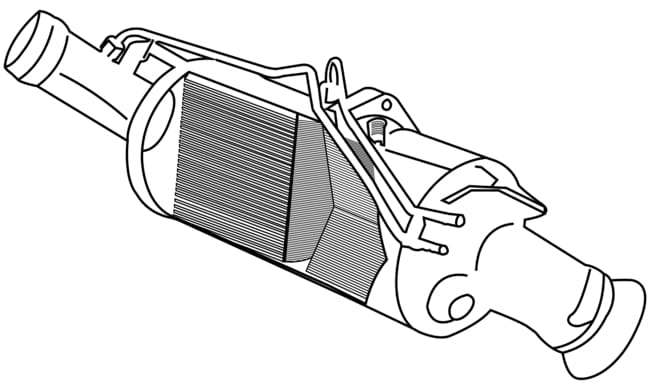
A diesel particulate filter (DPF) is a filter fitted to cars and it is designed to capture and store exhaust soot. Soot is a natural part of the combustion process, but larger chunks can be dangerous to an engine, so the filter removes that risk. While in the past only diesel cars were equipped with particulate filters, some gasoline car manufacturers have also started installing them on their vehicles. You can always tell a car that doesn’t have a DPF by the clouds of black smoke coming from the exhaust, especially when accelerating, for which diesel vehicles were notoriously known.
However, filters only have a limited capacity, meaning they will periodically need to remove the soot, which is called “regeneration” of the DPF.
If you haven’t heard of it, you might be wondering “when were diesel particulate filters introduced”? Particulate filters have been around for a while, since the introduction of Euro 5 exhaust emission legislation in 2009 to help reduce CO2 emissions from cars, they became effectively mandatory. All post-2009 cars compliant with the Euro 5 standard must be equipped with a DPF to reduce emissions.
HOW DOES THE DIESEL PARTICULATE FILTER WORK?
Soot is one of the byproducts of the combustion process. It is harmful both to the environment and to people and animals, so it’s the filter’s job to trap and remove diesel particles from the exhaust gases before they can be released into the atmosphere.
When you drive, the exhaust products pass through the walls of a series of channels that are blocked at different ends. Here, the soot particles are captured. The filter also removes the soot and it does so by exposing it to high temperatures. This burns the soot and leaves only a very fine ash residue. However, too much ash can accumulate in your filter and eventually cause blockages, which is why there is a regeneration process to clean the filter. Now it’s the turn of the blockages to be subjected to very high temperatures and then the harmless products that are produced can be released with the exhaust gases. No harm is caused to the environment or your car!
But it’s all about diesel, are gasoline engines also equipped with particulate filters? In the past, only diesel cars were equipped with particulate filters, but gasoline particulate filters (GPF) have also been developed for gasoline cars. A gasoline particulate filter works in much the same way, although there is no soot: the combustion products are still superheated, which removes harmful substances and leaves carbon dioxide. At the same time, nitrogen oxides and unwanted hydrocarbons are converted into carbon dioxide, water, and nitrogen, making the waste much less harmful. Once the filter has done its job, the exhaust gases pass into a three-way catalytic converter which ensures that the exhaust complies with the latest level of EU emission standards and that the number of harmful pollutants coming out of the exhaust is reduced. Thus, diesel and gasoline particulate filters work in much the same way and ensure that harmful products from the combustion process do not enter the environment.
WHAT IS DIESEL PARTICULATE FILTER REGENERATION?
The diesel particulate filter regeneration process is essential to ensure its proper functioning – it is essentially a cleaning of the particulate filter. Ensuring it is able to fully regenerate when full of soot is also the best way to maintain a DPF. When it is full, you will see a warning on the dashboard. There are two types of regeneration: passive and active.
Passive regeneration takes place when the car is driven at high speed on long journeys, for example on the highway. This happens here because the engine is running at higher RPMs. These longer, high-speed journeys allow the exhaust temperature to rise to a higher level and cleanly burn off the excess soot in the filter. To ensure this happens, drivers are often advised to regularly run their diesel vehicle for 30 to 50 minutes at sustained speed on a highway or A-road to help clean the filter.
The problem with this, however, is that not all drivers do this type of driving regularly. To solve this problem, manufacturers have equipped cars with an alternative form of regeneration, which is active regeneration.
Active regeneration involves the automatic injection of additional fuel, via commands from the vehicle’s ECU, when a filter reaches a predetermined limit (normally around 45 to 50% of its total capacity). This added fuel raises the exhaust temperature and burns the stored soot, as it would have on a long highway journey. However, the trip must be long enough to complete the process and you may encounter difficulties if the trip is too short, as the regeneration process may not finish completely. If this is the case, the warning light will continue to indicate that the filter is still partially blocked. Driving for about 10 minutes at speeds above 40 mph should be enough to complete a regeneration cycle and turn off the light.
Some signs let you know if an active regeneration is in progress.
They are:
- The engine sounds slightly different
- The cooling fans are running
- A slight increase in fuel consumption
- Increased idle speed
- Deactivation of automatic stop/start
- A hot, pungent, and slightly acidic smell from the exhaust
WHAT IF BOTH TYPES OF REGENERATION ARE NOT WORKING?
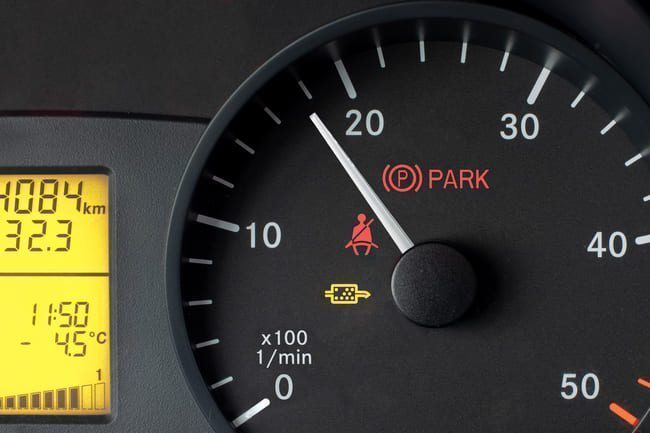
If your warning light does not go out, turns red, or additional DPF lights come on, do not just ignore it. In addition to releasing a lot of dangerous gases into the air, it also risks damaging your engine. This can be very expensive to repair.
Some garages offered a forced regeneration service, which essentially involves cleaning blocked DPFs. This usually costs around £100 and, although it is not a 100% guaranteed solution, it generally succeeds in removing excess soot and allowing the DPF to function and regenerate automatically, which could prevent further problems later.
It is a failure of proper regeneration that is the cause of most diesel particulate filter problems: they become blocked, which increases exhaust emissions, chokes engine performance, and sometimes even puts the car into a restricted “limp home mode.”
Therefore, modern diesel car owners must be aware of the importance of maintaining their diesel particulate filter through their driving habits and practices.
WHAT CAUSES A DIESEL PARTICULATE FILTER BLOCKAGE?
Particulate filter faults are often caused by certain driving styles. Short, low-speed trips are the main cause of diesel particulate filter blockages. This is why car manufacturers often go so far as to recommend that drivers who only want to travel short distances in urban areas choose a gasoline car instead of a diesel and why so few “city cars” are diesels.
Poor maintenance can also lead to particulate filter problems. A diesel particulate filter on a poorly maintained car may fail sooner than a well-maintained one. How long particulate filters last is a tricky question, but they should last at least 100,000 miles. This could be halved if it is not properly maintained during service. This also includes using the right type of oil. Some oils contain additives that can actually block filters, so check what oil you are using and what oil is used when your car is serviced.
IS A PARTICULATE FILTER A LEGAL REQUIREMENT?
Yes, you must have one if your car was produced after 2009. Owners face fines if caught (up to £1,000 for cars and £2,500 for vans) and removing a DPF can also invalidate your car insurance.
DO I NEED A DIESEL PARTICULATE FILTER TO PASS THE MOT?
A diesel particulate filter check has been part of the MOT test since February 2014. If a filter has been removed, the car will fail its MOT. Removing the DPF will sometimes cause the warning light to come on – and that in itself is a MOT failure point: no dashboard warning lights should remain on during the test.
MY PARTICULATE FILTER IS BROKEN – HOW MUCH WILL A NEW FILTER COST?
Diesel particulate filters are very expensive. A new one directly from the manufacturer can cost between £1000 and £3500, which could potentially wipe out the cost savings associated with driving a diesel.
As cars age, the cost of replacing the DPF could be more than the value of the car – and it’s the older, higher-mileage cars that are most likely to need a new DPF.
There are aftermarket DPFs, but you must ensure they have the correct type approval and match the manufacturer’s specifications, otherwise they may not work properly and cost you more in repairs.