
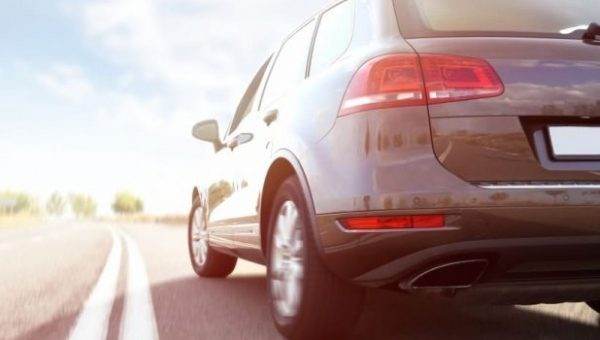

4motion is the patented name for the all-wheel drive systems found on Volkswagen cars. It has been used since 1998. Previously, all-wheel drive versions were called “Syncro.” Increased off-road capability on rough terrain and loose or slippery surfaces is one of the main advantages of this system.
HOW IT WORKS
Full-time 4motion can be found on vehicles equipped with longitudinal engines. It uses a Torsen limited-slip differential. This distributes engine torque based on road conditions, transferring the most to the axle with better traction.
An electronically controlled Haldex multi-plate clutch is part of the on-demand system. Under normal conditions, all torque is distributed only to the front axle. If the front wheels start to slip, the rear wheels are engaged, and for short periods, up to 100% of the torque can be distributed to them.
Part-time 4×4 is less common. It is activated by the driver and provides a rigid connection between the front and rear axles. It is designed only for off-road driving and driving on slippery surfaces.
VOLKSWAGEN MODELS EQUIPPED WITH 4MOTION
| Drive Type | Cars |
| Full-time with a Torsen differential | Passat B5; Phaeton 3D1, 3D2, 3D3, 3D4, 3D6, 3D7, 3D8, 3D9. |
| On-demand with a Haldex clutch | Golf 1J1, 1K1, 1K5, 5K1; Bora 1J2, 1J6; Passat B6, B7; Tiguan 5N, AD1, BW2. |
| Part-time 4×4 | Amarok 2HA, 2HB, S1B, S6B, S7A, S7B. |