
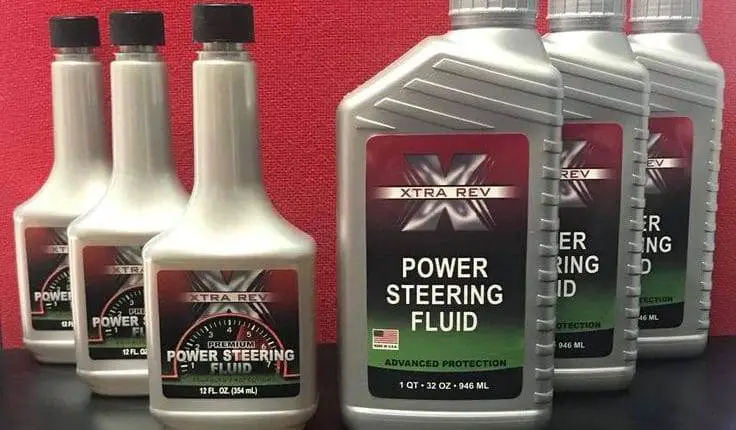
“It’s better to have too much than too little” Do you think this saying is always correct in all situations? It may be suitable in some circumstances, but it won’t be ideal when you apply it to filling your power steering reservoir. This article will discuss the consequences and symptoms of overfilled power steering fluid. Read on for more unresolved inconveniences!
What is the purpose of power steering fluid?
Currently, all car models have an additional power steering system to make vehicle operation safer and more flexible. However, for this system to be stable, specialized lubricants are needed. So, how does power steering fluid work? Power steering fluid is a special auxiliary liquid that lubricates the hydraulic system (pump, valve) of the power steering. Power steering oil helps the driver handle the steering wheel more easily, helping them avoid needing to use too much force while driving the car accurately and smoothly.
In the hydraulic power steering system, this fluid plays a very important role in creating the rack’s thrust, to help the steering wheel turn as the driver wishes. If the vehicle lacks power steering fluid, the steering system will be affected. Specifically, when the oil pressure does not reach the required level, the force is not sufficient, leading to the phenomenon of heavy power steering, and slow steering return…

How much power steering fluid does a car hold?
There is no fixed amount for how much power steering fluid is sufficient for your car? It will depend on each model as well as the unique requirements of each vehicle and this will make the process of identifying the fluid volume a bit more difficult than you think.
To know exactly how much power steering fluid is left? You can use the dipstick. If you use the dipstick to check the power steering fluid level, first wipe off the excess oil from the dipstick when you pull it out of the cylinder, then plug it back in and pull it out. The second way is that you can easily observe visually. If the reservoir cylinder is made of transparent plastic, you can see the oil level inside the cylinder. In some vehicles, the power steering fluid level can only be accurately checked after the engine has run for a short period, and you may sometimes need to turn the steering wheel in several directions multiple times while the vehicle is idling.
On the dipstick or on the oil reservoir, there are usually lines marking the maximum and minimum levels. If the oil level is near or below the maximum, the power steering fluid is topped up. In other vehicles, the level on the dipstick or cylinder is both “high,” after the engine runs, and a “low” level after the engine has been off for a while. Or, there may be “Min” and “Max” lines for the usable oil level. Be sure to compare the power steering fluid level with the standard level.
For the amount you need to buy, a one-liter bottle will be enough to fill, whereas you will need about two liters for a flush.
What happens if you overfill power steering fluid?
Is it bad to overfill power steering fluid? This action does not damage the power steering system. But it can give you other harmful consequences. Overfilling your car’s power steering fluid can cause leaks that can reach the reservoir. This can then cause foaming in the hydraulic fluid, which can shorten the lifespan of your system, even when the fluid becomes expensive and it can make its way out of the reservoir. Common symptoms are described below:
Fluid leak and making a mess for your engine
In the first stage, it’s easy to ignore the symptoms because there is no problem for your car. However, don’t be subjective! When you overfill your power steering reservoir, it overflows. When the engine starts to increase the temperature under the hood, the steering fluid begins to expand. Over time, the fluid will accumulate in many places where it shouldn’t be, for example in your engine belts. Before you know it, the belts can slip or break and prevent your engine from running.
However, the consequences don’t stop there, when the power steering fluid expands due to heat, this fluid will spill out of the reservoir and make a mess of your engine. And in some severe scenarios, your engine will run excessively until it catches fire and completely breaks down. Read here that many drivers may wonder “Is power steering fluid flammable?” Our answer is “No,” it only burns under certain circumstances.
More specifically, “Any fluid that catches fire and has a flash point equal to or less than 199.4 degrees F is considered a liquid” according to OSHA. Power steering fluid only burns at a sufficiently hot temperature, particularly when the ambient temperature reaches 400 degrees F. However, this temperature can be fully reached when your engine is overloaded, so if the fluid is spilled, a fire is inevitable.
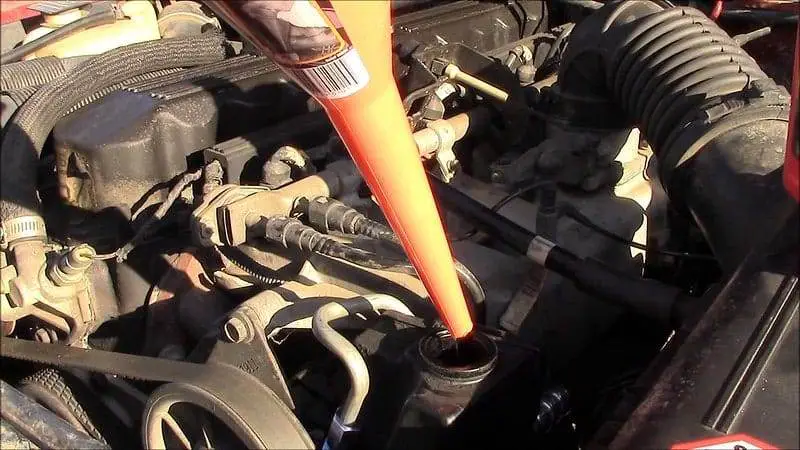
Engine parts are prone to wear
You need to fill the power steering to the mark mentioned on the reservoir, or on the dipstick. If there is too much fluid, it can cause air bubbles or foam inside the pipes during your filling. And the consequences will reduce your steering performance and make turning difficult.
When the power steering leaks, it will seep into other parts of the engine compartment such as batteries, belts, etc., which will affect the performance of these parts and cause them to wear out faster.
How to drain excess power steering fluid?
We have shared with you the consequences of overfilled power steering fluid. How to remove overfilled power steering fluid? There are different methods you can use to flush your power steering fluid to achieve the ideal fluid level for the steering system.
Using a turkey baster or a syringe
An effective way to help you extract excess fluid is to use a syringe or a juice baster. This can be a tedious or time-consuming process, but it is considered one of the best methods compared to other expensive methods. If you don’t want to waste the excess fluid after suction, you can use a container to hold this fluid and prevent this fluid from splashing which will contaminate your engine compartment.
You can use this method when replacing the old fluid with the new one. Use a juice baster to suck out all the old fluid. Then add the new power steering fluid and you’re done. However, by sucking the fluid this way, it can only absorb the oil in the reservoir, not all the power steering fluid in the system. Therefore, a few additional steps are needed. Specifically, after the first suction, add a little new fluid to the reservoir, then drive for about 15-20 minutes to let the new fluid mix with the old oil. Then use the Turkey Baster to suck out all the oil. Then, continue putting in new oil, run the car, and suck out the fluid.
Flushing the power steering fluid
With the car raised and the wheels lifted off the ground, we can easily do the step. But compared to using the syringe, this method will be a bit more complicated. Because you will need to add one more step: lifting your car.
Step 1: Use the car jack to lift the chassis.
Step 2: Disconnect the oil hose from the return hose and attach the plastic tube in its place. Remember to lift the other end of the plastic tube so that the power steering fluid does not leak out.
Step 3: Set the return hose into the reservoir to catch the excess fluid.
Step 4: Start the car, steer the wheel from left to right and vice versa. This will help the steering fluid flow into the return hose.
Step 5: Turn off the car engine, reinstall the return hose as before and remember to tighten the nut firmly.
Step 6: Restart your car and turn the steering wheel fully from left to right and vice versa so that the vehicle doesn’t have air foam in the system.
When to change the power steering fluid?
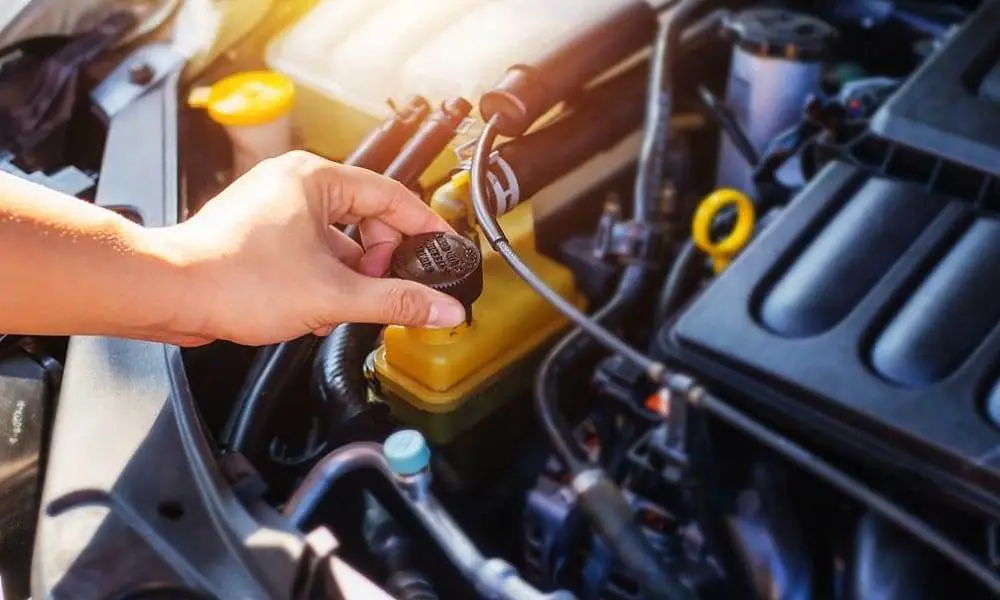
According to car manufacturers’ recommendations, the time for periodic draining of power steering oil is every 60,000 to 80,000 km. Under normal operating conditions, power steering oil is rarely lost quickly. However, if the vehicle shows the following signs, it is necessary to check the power steering oil:
The steering system makes strange noises: When the car lacks power steering fluid, the steering system often makes noise, especially when the car is moving slowly.
The steering wheel is heavy and hard to turn: Because the power steering system is malfunctioning, the steering wheel will be heavy and difficult to turn.
Slow steering return: When there is a shortage of power steering oil, the oil pressure decreases and the steering wheel moves slower than usual, which slows down the steering wheel.
The steering wheel jerks suddenly or vibrates slightly: This phenomenon occurs when the car is moving slowly.
Power steering fluid leak: If you see traces under the car, it may be because the car has a power steering oil leak. This is the cause of the car’s fluid loss.
Final thoughts: Can you overfill power steering fluid?
To ensure a smooth and precise steering system, you shouldn’t only need to check and change the power steering oil. But we recommend checking the fluid level in the reservoir. Overfilling is still not good, it can lead to catastrophic problems. We hope our shares will help you find a useful way to deal with the symptoms of overfilled power steering fluid. And you know when to check your engine.