
A vehicle’s engine has many components that perform different functions. However, none of these parts would function without a drive belt. There are different types of car belts, and their function is to keep the engine running by transferring power to various parts.
To do this, they have constant friction with several pulleys. For this reason, a loose or damaged belt affects the performance of the associated engine component.
Types of Car Belts: How Many Belts Does a Car Have?
How many belts are in a car? Several types, and we will discuss some of the most common ones. Here is a brief discussion of standard belts in a car and how they work.
1. Timing Belts
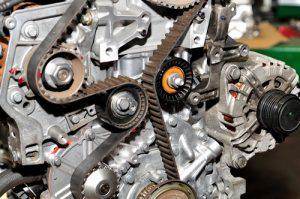
Your timing belt is probably the most important belt you have. It enables combustion inside the engine and ensures everything is timed accurately.
Also known as a Gilmer belt and camshaft drive belt, the role of a timing belt is to help the crankshaft turn the camshaft. The rubber belt opens and closes the engine valves in sync with the pistons.
In modern vehicles, this belt has replaced the timing chain. Timing belt failure causes less damage to pistons and valves than the chain.
2. Accessory Belts
Accessory belts come next. So, what does the term “accessory” actually mean?
It indicates that the purpose of these belts is to power the auxiliary parts that need to be powered to operate.
Without the belt, the auxiliary units will not work at all, and sooner or later, your engine will lose power. Here are the two types of accessory belts you might want to take a look at!
V-Belts (Drive Belts)
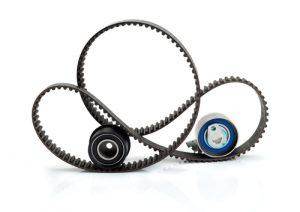
Another type of car belts, one of the oldest accessory belts, the V-belt was likely developed on vintage V8 pushrod engines. In order to power various components needed for the engine to function properly, these belts had to be created.
Originating from the crankshaft, they run through various components, including the alternator, power steering pump, air conditioning compressor, and water pump, and provide them with the necessary energy to operate. They are mainly found on older cars.
These belts hardly slip from their path, and the failure of one belt does not affect all engine functions. However, all V-belts wear out almost simultaneously.
So you may need to replace them all at the same time. Fluid contamination and regular wear are the main reasons for the malfunction of these belts.
Serpentine Belts
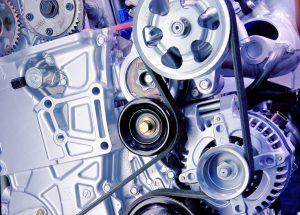
A long, snake-like belt runs through all the engine components and powers them. It is the alternative to multiple V-belts in newer cars. The belt is a standard in modern vehicles.
Since a single belt powers almost all the engine accessories, multiple components will be affected if the belt becomes loose or is damaged. However, it is easy to replace, and you only have to spend on a single belt.
A failing serpentine belt creates a squealing or screeching noise. If it fails, the entire engine may stop working.
Fan Belts
To be powered, the cooling system requires a belt. The serpentine belt drives it in some engines. It is driven by the fan belt in other engines. The following components of the cooling system can be powered by it:
- Water pump
- Fan
- Air conditioning
A functioning fan belt performs the following operations by driving the cooling system:
- Cooling a radiator
- Pumping coolant throughout the engine
Your engine will no longer be cooled if the fan belt breaks. As a result, the engine will overheat, possibly requiring costly repairs. So it seems wise to check the fan belt during regular inspections.
Drive Belt vs. Serpentine Belt
Among all types of car belts, there is no difference between a drive belt and a serpentine belt. Most cars have one or two drive belts. It is also called a serpentine belt when there is only one drive belt in a car.
Whether it’s a drive belt or a serpentine belt, it is part of the accessories that drive a car’s engine. The rubber component lasts a long time, between 40,000 and 70,000 miles.
However, it is not uncommon to see them go over 100,000 miles.
FAQ on Types of Car Belts
- Can I install a timing belt at home?
Installing the timing belt is not something you can perform immediately. Even experienced technicians do not allow unqualified apprentices to cause damage when changing timing belts.
The engine will not be timed accurately even if the timing is slightly off by a few millimeters during the installation of the timing belt, which would result in engine damage.
Depending on the severity of your mistake, the valves will be broken. Therefore, if you do not have the training and skills to perform this task, do not attempt it at home.
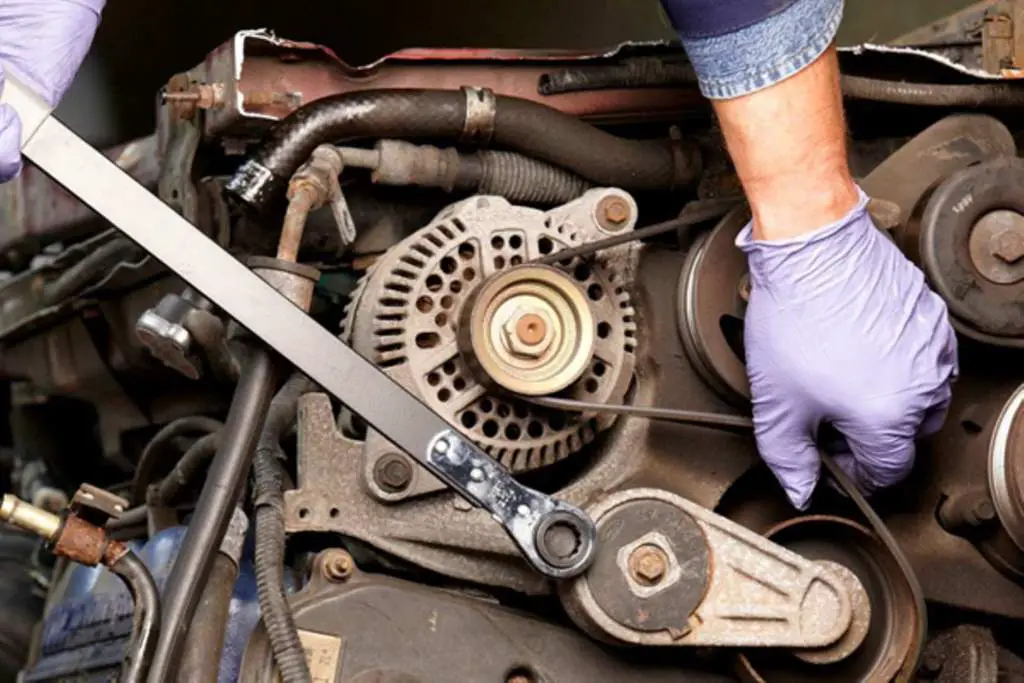
However, changing a serpentine or V-belt is a simple task that anyone can accomplish without risk. Just make sure to remove the old belt and attach the new one in the same way.
- When should these types of car belts be changed?
The belts in your automobile need to be updated, like all other components. It makes no difference if you use a timing belt, serpentine belt, or V-belt.
Every belt has a chance of breaking, especially the cheaper options made by some lesser-known companies.
To be more precise, how many miles do they last? Well, it depends a lot on the age of the belt.
As you may already know, the rubber used to make the belts hardens over time. As a result, belts can break even if they are not overly worn.

This is also crucial because the teeth keep the timing belt in the correct position. The timing will be disrupted if the belt jumps, which could damage the engine. Therefore, pay close attention to these timing belt components.
Additionally, at 60,000 miles, accessory belts should be changed. Even if the belt breaks, you will not damage the engine, so its replacement is not critical.
However, the vehicle will eventually shut down. In the worst-case scenario, it may potentially overheat. Nevertheless, it is advisable to ensure it is changed as soon as possible.
- How much does it cost to change a car belt?
Timing belts will be our first mention. In terms of cost, these belts are the most expensive to replace.
The component itself is reasonably priced and can be obtained for between $50 and $100. However, labor is costly, and the total cost of labor and components for a timing belt repair can range from $400 to $600.
On the other hand, serpentine belts are easier to change and cost less than $300 (labor and components).
- What happens if you don’t change these belts on cars?
Let’s take a look at what could happen if you don’t change the different types of car belts in your vehicle. As mentioned earlier, the timing belt controls the engine timing. As a result, if the belt is broken or breaks.
The timing will be disrupted, and your engine will most likely suffer engine damage. Because these timing belt engines are interference engines.
If a belt breaks in a non-interference engine, the potential damage is minimal. What exactly are non-interference engines?
They are the engines that do not use an overhead camshaft mechanism. Specifically, pushrod V8 engines. Because they are chain-driven and non-interference, they are largely damage-proof in such situations.
Watch this video by Scotty Kilmer to learn more about belt squeal, squeaking belt, belt noise, and drive belt replacement!
Final Words
Ultimately, these are common types of car belts you might want to recognize today.
The health and operation of the engine largely depend on the condition of these belts. So don’t forget each of them and their functions to use them in the best way possible.
Overall, timing belts, V-belts, and serpentine belts are all common. The timing belt drives the engine, while serpentine and V-belts power accessories such as the air conditioning system, water pump, alternator, and other vital parts needed for the vehicle to operate. As simple as that!