
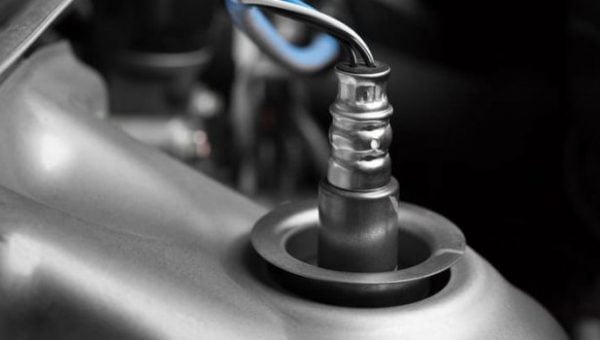

Help your engine breathe properly by checking your lambda sensor.
- 1 So, how does a lambda sensor work?
- 1.1 How do I test my lambda sensor?
- 1.2 What should a lambda sensor read?
- 2 Why do lambda sensors fail?
- 2.1
Symptoms
of a bad lambda sensor
- 2.2 How long do lambda sensors last?
- 2.1
- 3 What Lambda sensor do I need?
- 3.1 How much does a lambda sensor replacement cost?
Somewhere hidden in the corners of your memory, the word lambda might ring a few bells. The symbol used to denote lambda, λ, might refresh your memory even more. Lambda is the term used to indicate the length of any wavelength in mathematics and physics and has long been part of the British school curriculum. But what does that have to do with your car?
A lambda sensor gets its name partly from its operation, measuring the output waveforms in different engine modes to see how much oxygen is coming out of your exhaust.
Essentially, this sensor measures the ratio of gasoline to air, the amount of oxygen in the exhaust gases. It does this to ensure that the amount of gasoline is accurately adjusted and that the catalytic converter can clean it.
There are many benefits to having a fully functional lambda sensor and it can cause a lot of problems if it malfunctions. So to make sure you’re on the right wavelength, here is our detailed guide on what a lambda sensor is, how it works, and how to detect if it’s faulty.
The lambda sensor is a small probe first developed by Volvo in the 1970s. The location of the lambda sensor is the same on all cars and it is located on the car’s exhaust, between the exhaust manifold and the catalytic converter. In principle, the lambda sensor is the same as an oxygen sensor. Newer cars might even have two lambda or O2 sensors and the second one will be located just behind the catalytic converter. Diesel cars have lambda sensors, just like gasoline cars.
The lambda sensor works with the catalytic converter and they “signal” the exhaust gases passing through the catalytic converter. The sensors measure the gasoline/air ratio to ensure that the amount of fuel injected exactly matches what is needed and that it can be cleaned by the catalytic converter. This air-fuel ratio is the stoichiometric ratio, or the lambda ratio (hence the sensor’s name).
SO, HOW DOES A LAMBDA SENSOR WORK?
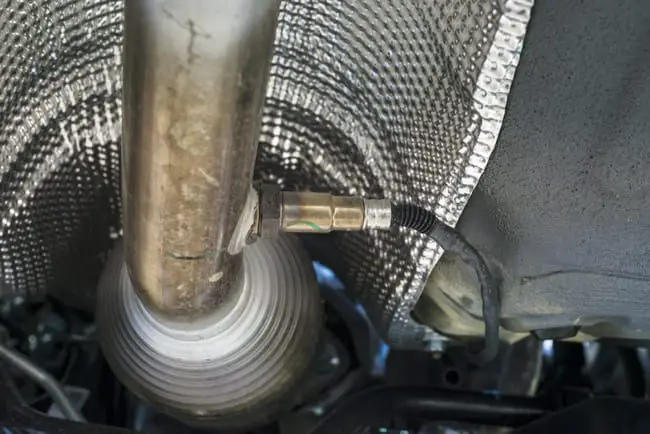
The lambda sensor takes measurements of the amount of oxygen and adjusts the amount of fuel sent to the engine cylinders by optimizing the air and fuel mixture. This optimized air-fuel mixture means the engine can run at optimal performance. Since the lambda sensor is located before the catalytic converter, it can measure the amount of air and fuel in the unburned hydrocarbons after combustion. It will therefore be able to tell if there is too much air, meaning more fuel needs to be injected, or too many carbon atoms or harmful emissions, meaning more air is needed to react with the fuel. It will also ensure that the catalytic converter, which removes harmful and toxic byproducts from the combustion process when they are expelled from the car, is working properly.
The data, once collected, is sent to the Electronic Control Unit (ECU) and it controls the amount of gas released, thereby reducing polluting emissions.
There must always be the right amount of fuel reaction with the appropriate amount of air in the combustion process. If there is not as much air in the mixture as there should be, the engine is “rich” and there is an excess of unburned fuel. Unburned fuel creates pollution, which we try to avoid. On the other hand, when there is too much air in the fuel mixture, then it is “lean.” A lean fuel mixture tends to produce more nitrogen oxide pollutants, also toxic substances we should avoid. This can also lead to poor engine performance and potential engine damage.
Similarly, the lambda sensor affects fuel consumption as well as performance. Having too much fuel injected into the engine obviously means you will refuel more often. So it is extremely important to have the correct lambda sensor readings.
HOW DO I TEST MY LAMBDA SENSOR?
Testing a lambda sensor to see if it is still working couldn’t be easier.
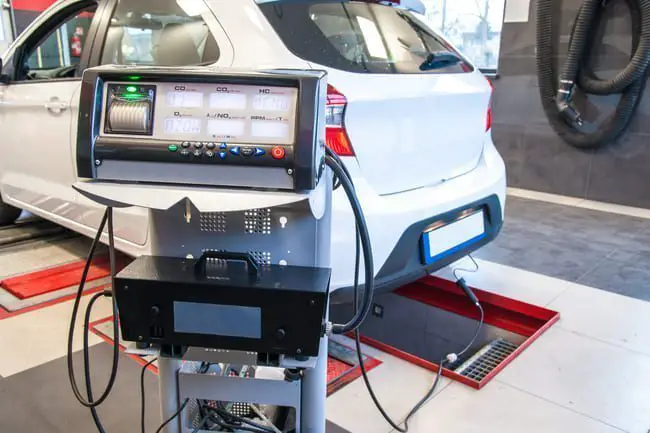
You can check your lambda sensor with an exhaust tester or a four-gas emission analyzer. This is done in the same way as your emissions test and can also be done in a garage. The lambda value is calculated by examining changes in the exhaust gas composition over 60 seconds.
You can also use a multimeter. Connect it in parallel to the sensor’s signal line and set it to 1V or 2V. When you start your engine, a reading between 0.4 and 0.6 V should appear. Once the engine is at temperature, the reading should alternate between 0.1 and 0.9 V.
Finally, there are devices specifically designed to test your lambda sensor. As you would with a multimeter, connect the tester to the signal line, and when you reach the correct temperature, your reading will be displayed using the LED scale.
WHAT SHOULD A LAMBDA SENSOR READ?
It’s quite simple – it should read 1. If it’s less than 1 (λ <1), it means your air-fuel mixture is rich and if it's greater than 1 (λ> 1), it means the mixture is lean.
WHY DO LAMBDA SENSORS FAIL?
There are a number of lambda sensor failure issues. The heating element is a resistive material that resists the flow of electrons, thus producing heat and this is the most common cause of early failure. The resistance burns out by opening the circuit, meaning the sensor fails. Here, the sensor must be replaced. If the circuits connecting the electrical circuits linking the sensing electrodes to the PCM fail, this will also cause the sensor to malfunction. Contaminants from outside the sensor can also accumulate, either from the road or from the engine itself, blocking the air inputs and thus preventing assessment of the oxygen level in the exhaust gases.
SYMPTOMS OF A BAD LAMBDA SENSOR
If the lambda sensor is faulty, no data will be sent to the ECU, which will then use incorrect information. This will most likely increase fuel consumption and subsequently, polluting emissions. It could also mean that the catalytic converter clogs up and then needs to be replaced.
 Symptoms
of a bad lambda sensor” width=”650″ height=”433″ />
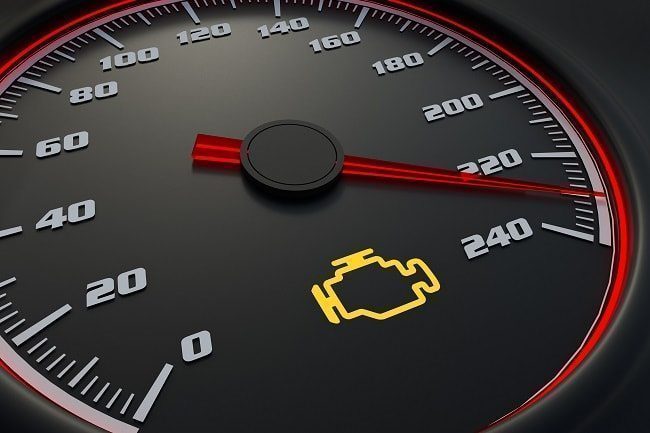
The first indicator of a lambda sensor fault will be the check engine light on your dashboard – if this light is on, your lambda sensor may be faulty.
There are also performance issues that can indicate a faulty sensor: when starting, the car may be jerky and stutter; there might be abnormally high fuel consumption; the engine does not accelerate as well as usual; the amount of emissions has increased.
When should I replace the lambda sensor?
The lifespan of a lambda sensor is about 93,000 miles driven. However, this could be shorter depending on many factors that can damage it, mainly due to abnormalities from the engine. Exhaust leaks can also damage the sensor.
Many people want to know how to clean lambda sensors when they are, for example, covered in carbon and no longer working. However, this is a difficult process and should be left to a professional.
HOW LONG DO LAMBDA SENSORS LAST?
Due to their operation and the fact that they are located in an extremely hot and dirty environment, lambda sensors wear out over time. Several things can affect the lifespan of your sensor, but generally, it should last between 50,000 and 100,000 miles.
Early sensors did not have a heating element and they needed the exhaust temperature to reach a specific heat to function. Modern sensors are equipped with a heating element, which takes a lot of the pressure off the sensor and means they have a much longer lifespan.
If you are soon taking your car for an MOT test, be aware that a faulty lambda sensor will cause your car to fail. If you think it is faulty, get it sorted first. Driving without a lambda sensor is strongly discouraged as it ensures your car does not emit more CO2 than allowed by European legislation.
WHAT LAMBDA SENSOR DO I NEED?
There are hundreds of lambda sensors available, but you should always make sure to replace your sensor with one that exactly matches the same specifications as the previous one. You should always check what your manufacturer recommends because you will need the right option for your ECU.
HOW MUCH DOES A LAMBDA SENSOR REPLACEMENT COST?
A new lambda sensor costs on average between £100 and £200 (the spare part itself) and it takes the mechanic some time to replace it – about 1 to 1.5 hours. This means a total cost of around £250. You can try to replace it yourself, although it is a tedious process.