
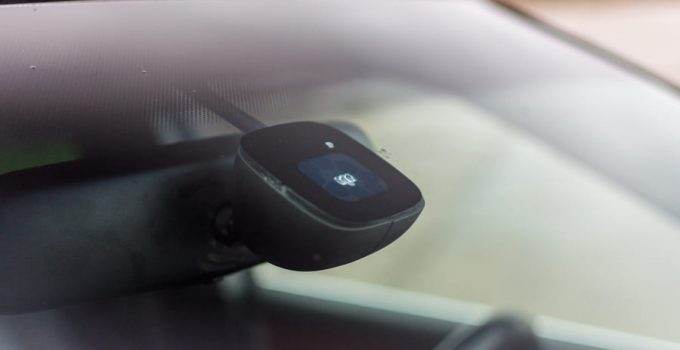

Car rain sensors are ingenious devices that detect the amount of rain falling on a car’s windshield and then adjust the operation of the wipers accordingly. They provide an additional layer of safety in bad weather and help ensure that drivers are not caught off guard. But how do they work and can their functionality be improved? Let’s find out below.
HISTORY
Believe it or not, automotive rain sensors have been around for decades. However, the earliest sensors were not integrated into the wiper control system. Instead, they were found in some Cadillac convertibles and served to automatically close the convertible top and raise the windows in case of a downpour. The most commonly used sensors today stem from a design invented and patented by Australian Raymond Noack in 1978. Cadillac would again equip some cars with rain sensors in 1996, but this time to operate the wipers instead of the convertible top.
HOW RAIN SENSORS WORK
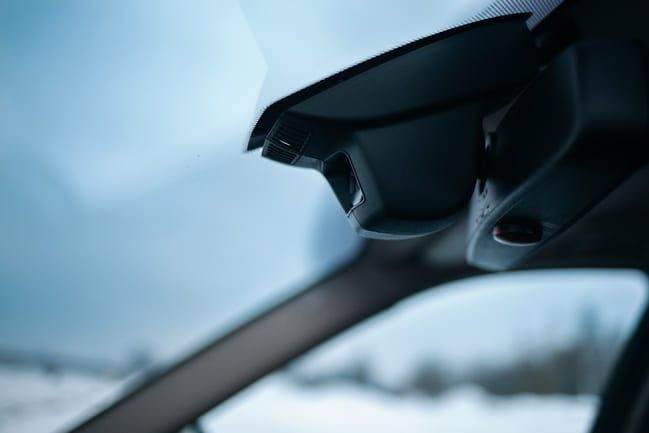
Most modern rain sensors use total internal reflection to detect whether raindrops are smearing the surface of the windshield. This works on the following principle: a constant beam of infrared light is projected onto the windshield from inside the car at a 45-degree angle. This beam is read by a device. The received values remain constant as long as the glass is dry. Once the windshield begins to be covered with raindrops, the way the light is reflected and refracted changes, because water behaves differently from glass. The more rain covers the windshield surface, the less light is reflected back to the sensors. This difference is measured by the aforementioned device, which then sends the appropriate signal to the wiper system to turn it on or adjust the speed at which it operates.
HOW AUTOMATIC WINDSHIELD WIPERS WORK
There is little difference in the construction of rain sensor wipers compared to ordinary wipers. The difference lies in the operation of the system that controls them. Standard wipers are activated by the driver, usually via a stalk on the steering column. This stalk also controls the intensity, i.e., the frequency and speed at which the wipers wipe the windshield.
Cars equipped with automatic systems and rain sensors may have a similar lever, but do not require driver intervention to activate. Instead, the stalk serves as a manual control to turn the wipers on or off. The system operating the wipers works by interpreting signals from the sensor to determine how heavily the windshield is covered with water, and then adjusting the speed at which the wipers sweep across the glass. Since the sensor constantly sends and receives new signals, the operation can be adjusted in response to changing conditions almost instantly. Rear windows rarely have these sensors for automatic wipers, as they are not as critical for safe driving as the front windshield and do not receive as much rain. However, some cars are equipped with sensors, especially those that activate when reversing.
DRAWBACKS
While having a system that automatically adjusts the intensity with which water is prevented from obstructing the driver’s view is convenient and allows the driver to keep one less thing in mind, there are problems that rain sensors can encounter and a few potential points of failure when using a system that relies on sensors and electronic components to function properly.
THE FUTURE OF RAIN SENSORS
Rain sensors have been available on the regular car market since at least the 1990s, but only became increasingly common around the turn of the century. Even though rain sensors are being used more and more, their use for rear windows has not taken off as much and remains an area of innovation. Similarly, combining the functionality of the rain sensor with that of a light sensor allows for a dedicated system that not only automatically activates the wipers but also turns on the headlights in dim light, fog, or darkness. This adds an extra layer of safety, especially in jurisdictions where lights are required and in conditions where it can be difficult to tell if the lights are even on. Companies such as Hella already manufacture such combined sensors. On the other hand, Tesla has experimented with using the cameras installed in its cars to replace the sensor functionality. Eliminating the need for an additional system helps reduce the complexity of future car designs.
Overall, the future of rain sensors looks promising. And if not, they will turn on and wipe away all the problems.