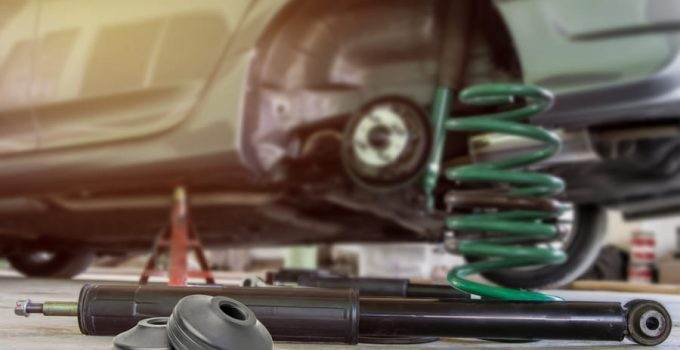

In an ideal world, all road surfaces would be flat and smooth, allowing you to drive freely without worrying about your tires or your suspension system. Unfortunately, bumps, potholes, and rough roads are a daily reality for drivers. Fortunately, modern vehicles are equipped with effective damping systems that reduce vibrations and unwanted movements caused by driving on uneven surfaces. Shock absorbers play a key role in this regard.
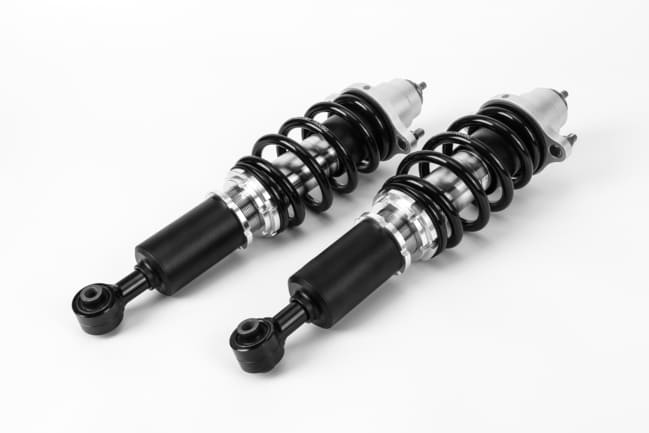
Shock absorbers, also called suspension dampers or “shocks,” are devices that balance the compression and extension movements of the suspension springs. They also cushion the body components from shocks and reduce the intensity of vibrations. They do all this by converting kinetic energy into thermal energy. For example, when a car goes over a bump, the springs react and absorb the kinetic energy. To stabilize the car’s movement, this energy must then be dissipated. A piston is activated in the shock absorber’s cylinder, forcing the oil inside out. This oil must be forced through small openings or absorption valves, creating resistance. In turn, the resistance slows down the movement of the piston and suspension while generating heat.

These components are essential for maintaining road contact, stability, and vehicle control. If your shock absorbers are not working properly, you may notice the vehicle bouncing uncontrollably and swerving when turning. This will also negatively affect the vehicle’s braking efficiency.
TYPES OF SHOCK ABSORBERS
Nowadays, the most common suspension shock absorbers are hydraulic; however, there are many types of hydraulic devices with various designs and components. Here are three popular types of shock absorbers used in modern vehicles:
- Twin-tube shock absorbers
They have two cylinders. The inner cylinder contains the piston and rod, and the outer cylinder acts as a fluid reservoir, also containing a low-pressure gas to absorb vibrations. A valve controls the fluid flow between the cylinders. One of the main advantages is that they are very affordable. However, the risk of oil foaming is higher when subjected to severe driving conditions, ultimately reducing the shock absorbers’ efficiency. - Monotube shock absorbers
As their name suggests, these components consist of a single tube that houses the piston, the shock absorber fluid, and the gas. They have larger pistons and contain more oil than traditional twin-tube shock absorbers, allowing for greater damping precision and better heat dissipation. Foaming is avoided because the oil and gas remain completely separated at all times, thanks to the floating piston that separates them. On the other hand, you may notice that the ride is stiffer due to the high gas pressure. The components are also much more expensive to produce and more vulnerable to external damage.
- Remote reservoir shock absorbers
These are advanced products designed with an external tank and an external hose that connects the main cylinder to the oil reservoir. Their design increases the shock absorber’s oil capacity and thus dissipates heat more effectively. There is also less pressure buildup, making the components more durable. They are ideal for off-road and high-performance vehicles. The downside is that due to these features, they are very expensive and not recommended for standard vehicles.

HOW LONG SHOULD THEY LAST?
Typically, you can expect your shock absorbers to last at least 4 to 5 years unless they are subjected to extreme driving conditions. The replacement interval will largely depend on the driver’s habits, the type of vehicle (e.g., light or heavy), road conditions, and the vehicle’s mileage. Off-road driving, carrying heavy loads, or frequent driving over potholes and rough surfaces will cause the components to wear out faster. It is advisable to inspect them annually or at least every 50,000 miles.
It is important to replace them when they are faulty for your own safety and that of the passengers. If you don’t, you could lose control of your vehicle the next time you encounter a bump in the road or a pothole.
SIGNS THAT THE SHOCK ABSORBERS NEED TO BE REPLACED
- !A rough or bumpy ride. If the vehicle bounces more and you feel like you’re losing control when driving on rough surfaces, there’s a good chance the shock absorbers are failing.
- !The vehicle’s nose dives when braking. This can happen if the shock absorbers or struts are worn or damaged.
- !Fluid leaks. If you notice hydraulic fluid leaking, it’s a clear sign of damage. Loss of fluid will reduce pressure, making the components ineffective.
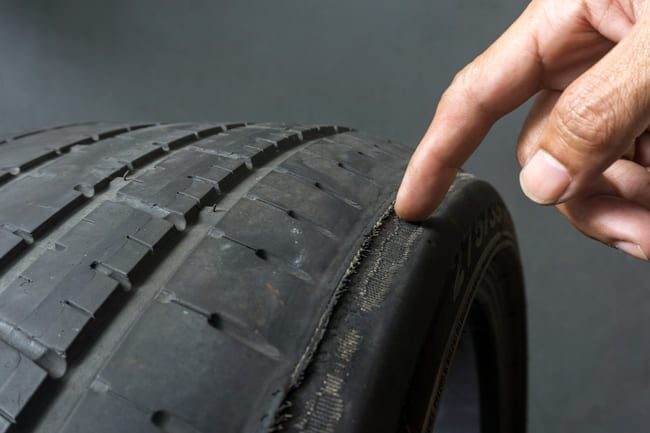
- !Uneven tire wear. A faulty suspension system will directly impact the wheels.
- !Steering difficulties. If the steering wheel is unusually stiff or the vehicle sways or leans to one side when turning, it could indicate that it’s time to replace them.