

Are you afraid that your mechanic is trying to scam you? Perhaps they speak gibberish or use fear as a tactic to force you into unnecessary work so they can charge you more.
Although most repair shops are ethical, there are bad apples who try to take advantage of vulnerable people or those lacking automotive knowledge.
Here are 20 tips to avoid dishonest mechanics and car scams in general.
#1 – Look for Reviews
One undeniable advantage of living in the technical age is that reviews for most businesses are now easily accessible online. Websites like Yelp and Google My Business allow users to access endless reviews for any establishment with a simple click of a mouse or tap of a finger.
Before going to an auto repair shop or a dealership’s service department, browse through a number of these reviews, checking for any indication of questionable business practices.
#2 – Know Your Rights as a Consumer

It’s important to understand that you have certain rights as a consumer. You have the right to refuse any service that you do not deem necessary or prefer to opt out of. A shop cannot perform any unauthorized work or work that you do not agree to have done.
Avoid falling for questionable language such as “you must” or “it’s mandatory.” All services to be performed should be explained to you in detail before work begins.
#3 – Call a Friend
If you don’t feel comfortable assessing the truth of what a mechanic is telling you on your own, ask a friend or family member who is more knowledgeable about mechanics to accompany you.
This person can help you separate fact from fiction, ensuring that you are not misled, misquoted, or misrepresented.
#4 – Ask to See the Faulty Components
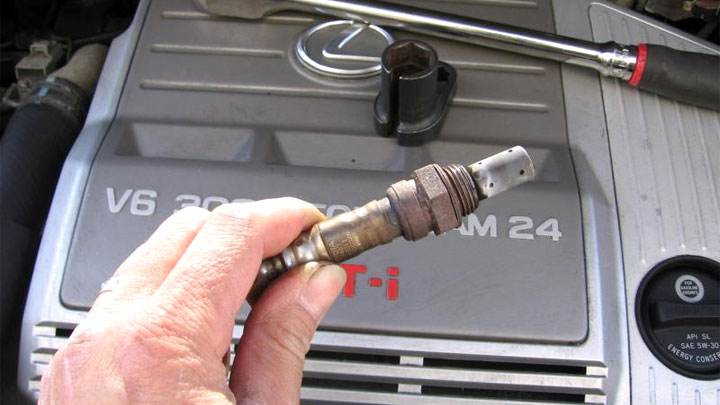
If you are told that a certain component has failed on your vehicle, ask to be shown the component in question and have it explained to you exactly how that component failed.
This is especially true in situations where news of this nature is unexpected.
#5 – Mark Filters in an Identifiable Way
A great way to ensure the honesty of quick lube shops is to mark your vehicle’s filters (oil filter, air filter, cabin air filter) in an identifiable way with a permanent marker.
You can then inspect these filters once the maintenance is completed, to see if they were actually changed or if your vehicle’s old pre-sale filters are still installed.
One of the most common scams is when a dishonest technician shows you a dirty engine air filter or cabin air filter from another car while you are in the waiting area, when they haven’t even inspected your car’s filter.
They are counting on the fact that you have never inspected your filter or plan to do so once you leave the shop.
#6 – Ask to Be Contacted Before Any Additional Work Is Done
If you drop your vehicle off at a shop for repair, ask to be contacted before any additional work is performed.
This not only ensures that no other work is done, outside of what was proposed, but also allows you to request an “upfront” quote for any work recommended as an additional service.
#7 – Get Multiple Quotes for Larger Repairs
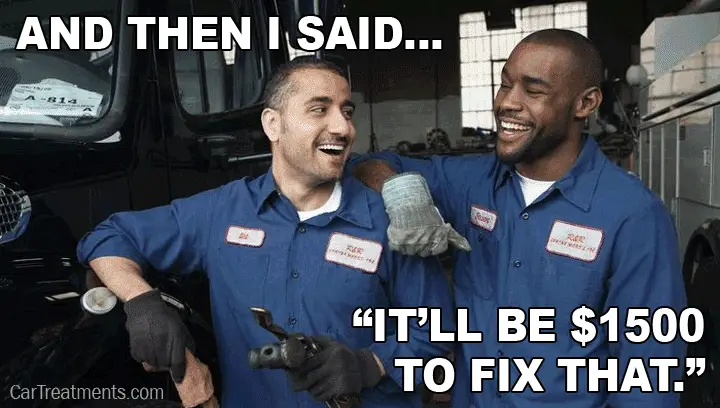
When anticipating the need for substantial work, be sure to get quotes from multiple shops. Any quote that is odd compared to all the others is likely a scam, at least to some extent.
Some shops significantly mark up parts to increase their profits, making projects of this nature easily detectable when receiving many quotes.
#8 – Ask for Detailed Receipts
Before agreeing to any repair, inform the service writer of a shop that you will need a detailed receipt. If they ask why, say it’s for business purposes.
In at least some cases, this will deter questionable mechanics from inflating costs or imposing unnecessary fees, as they will be easier to detect and challenge.
#9 – Watch When Possible
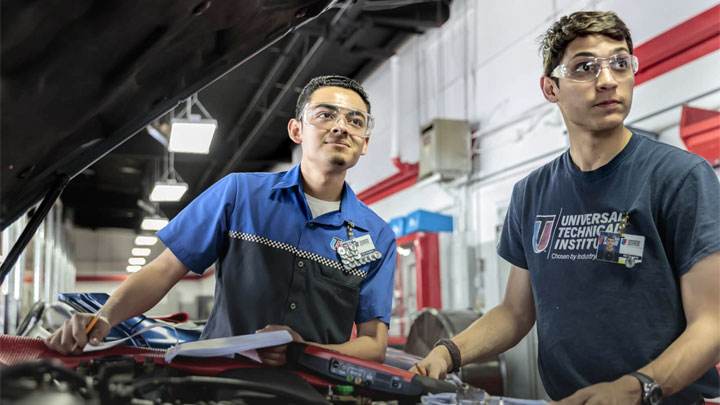
Many shops leave their doors open throughout the workday during the warm season. Use this to your advantage by staying within sight of the technician working on your vehicle.
Pretend to step out for some air or to take a phone call. No matter what you do outside, as long as the technician in question feels they are being observed.
#10 – Always Get a Written Warranty
Whenever you are assured that a particular repair will be covered by a parts/service warranty, make sure all such claims are provided in writing.
Nothing is worse than being forced to resort to such a warranty, only to be told that you were never covered under any warranty terms.
#11 – Know Your Vehicle’s Maintenance Intervals
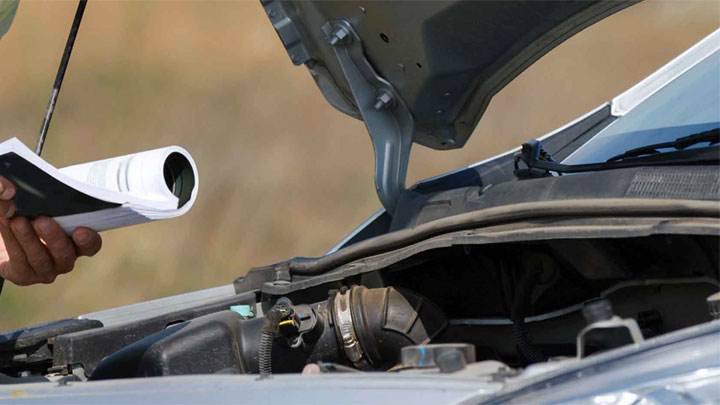
Don’t be pressured into buying additional services at a quick lube shop simply because you are told that a particular service is recommended for your vehicle’s current mileage.
Your vehicle manufacturer’s recommendations should be the only true source of guidance on these matters. Learn these recommended maintenance intervals (which you can find in your owner’s manual) and stick to them.
#12 – Beware of Scare Tactics
Most automotive professionals are perfectly capable of conveying the importance of a repair without trying to scare customers into an impulse purchase.
If a mechanic tries to scare you into a repair by telling you that your engine “will blow up tomorrow” or that you risk having an accident, their motives are often questionable.
The worst of the worst is when unethical mechanics try to take advantage of elderly people using alarmist tactics.
#13 – Never Agree to Uncapped Diagnostic Fees
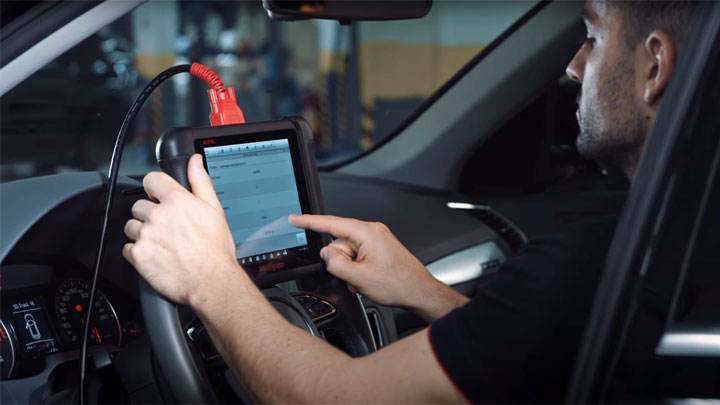
Some shops have a habit of charging hourly diagnostic fees that are in no way capped or limited. This is almost always a bad deal for the consumer, as it gives a shop a blank check that they can write for whatever amount they deem appropriate.
If a particular job cannot be quoted initially, or after previously agreed-upon diagnostic fees, take your business elsewhere.
Even better, get a basic OBD2 scanner so you can easily scan your vehicle for trouble codes when a Check Engine light comes on. You will now know what is wrong with your car.
#14 – Ask to Speak to the Technician
In some shops, service writers receive a commission. Therefore, it is not uncommon for service writers to push repairs or services with a sense of urgency that could otherwise wait.
If you think this might be the case, ask to speak to the technician working on your vehicle. In most reputable shops, a technician will be much less likely to perform unnecessary repairs than an unscrupulous service writer.
#15 – Minimize Your Lack of Automotive Knowledge

If you don’t know much about vehicles in general, keep that information to yourself.
While it’s fine to ask any necessary questions, openly discussing that you know nothing about your vehicle serves as a sort of dinner bell for mechanics with questionable motives. After all, a shady mechanic’s worst nightmare is having an informed car owner.
#16 – If You Have Questions, Ask Them
If you are unsure about what a mechanic or service writer is telling you, ask as many questions as come to mind. Those with good intentions should be more than happy to answer all your questions.
On the other hand, technicians or service writers who repeatedly avoid questions are likely suspect.
#17 – Research Parts Costs
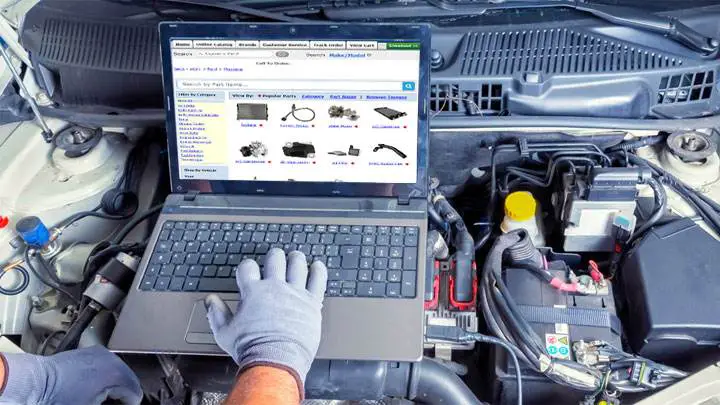
If you take your vehicle to a shop for a scheduled repair, research the cost of the parts associated with those repairs in advance.
To see if you are being taken advantage of, calculate a 10 to 20 percent markup on the average cost of the component to be replaced, then compare that figure to the one quoted as the anticipated parts cost.
If the quoted number far exceeds the pre-researched cost, ask for additional explanation.
#18 – Inquire About Labor Rates Upfront
All shops have designated labor rates on which they base the cost of their work. This rate is usually posted somewhere within the service advisor department or the shop’s reception area itself.
Most reputable shops will be happy to provide their hourly labor rate to any potential customer. If a shop cannot or will not provide this information, there is probably a reason.
#19 – Conduct Your Own Research
Sometimes it is helpful to investigate the problem your vehicle is experiencing before taking it to the garage. Even if you might not be able to fully diagnose the issue in question, you will at least be better able to determine if what you are told at the repair shop actually makes sense.
This essentially prevents you from flying blind and being forced to accept whatever you are told on a whim.
#20 – Trust Your Instinct
As with anything, your initial gut feeling about a particular shop’s business dealings has merit. If something just doesn’t feel right, there is probably a good reason.
Keep this in mind and avoid overriding your instinct at all costs. Your vehicle is an investment that deserves to be protected and should always be treated as such.