
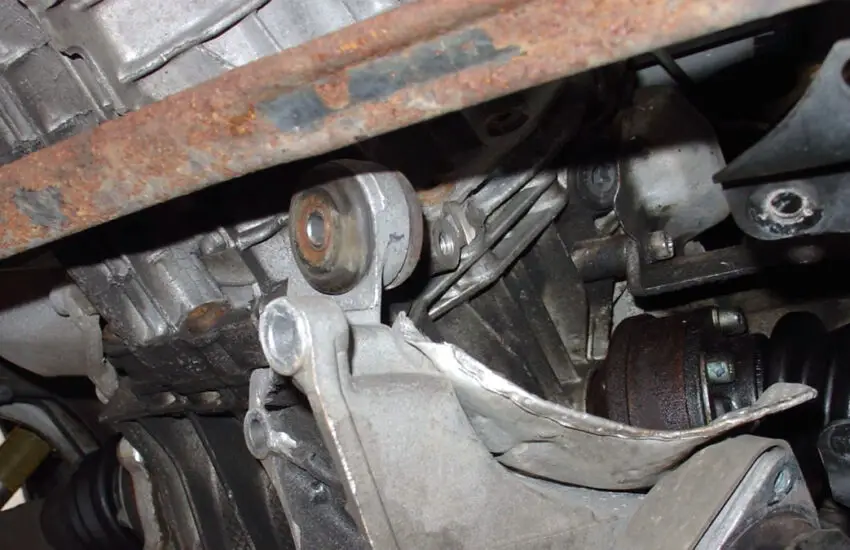
Abnormal shaking or dull noises coming from underneath your vehicle, especially during acceleration, are warning signs. They may indicate a faulty transmission mount. Do not ignore them!
What is a transmission mount?
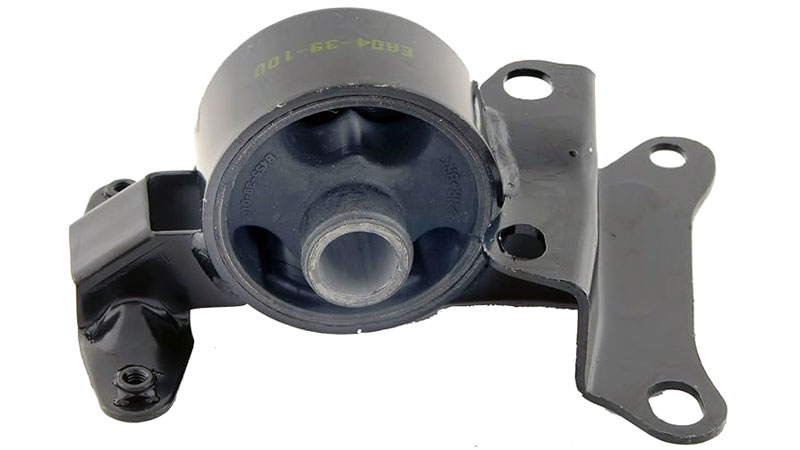
- It is a crucial part that securely fastens the transmission to the vehicle’s chassis.
- Its roles:
- Keep the transmission in position to transfer power to the wheels.
- Absorb the natural vibrations from the transmission.
- Without it, the transmission would vibrate excessively and damage surrounding parts.
- Often made of rubber (sometimes hydraulic in high-end vehicles), it is located at the transmission end of the gearbox (different from engine mounts).
- Typical lifespan: 60,000 to 120,000 miles, reduced by aggressive driving, extreme heat, or oil leaks.
Symptoms of a faulty transmission mount:
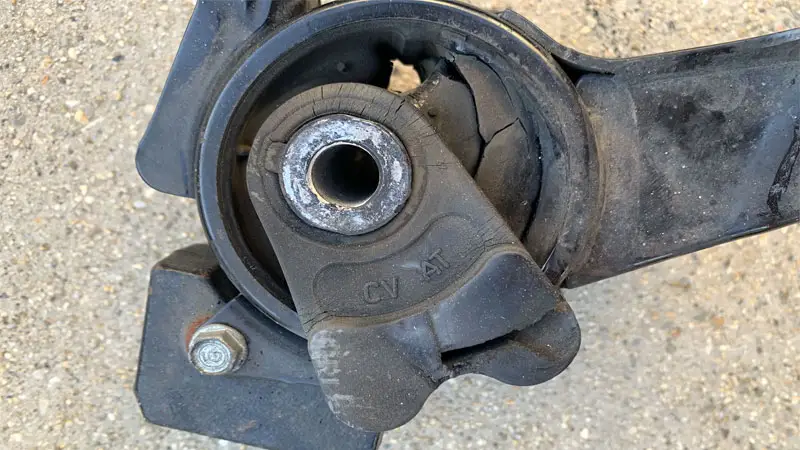
- Excessive vibrations: Shaking in the cabin (steering wheel, seat, gear lever), very noticeable at idle (red light) or during acceleration. Not to be confused with tire vibrations.
- Clunking or knocking sounds: Dull metallic noises coming from underneath, especially during acceleration, braking, or over bumps. They intensify over time.
- Harsh gear changes: Jerky gear shifts or delayed engagement (especially from P to D/R), even with a well-functioning automatic transmission.
- Visible transmission movement: (Often visible on front-wheel drive) The transmission moves abnormally at idle or when shifting from P to D/R (careful inspection required).
- Increased road/cabin noise: The mount no longer absorbs vibrations and sounds, making driving noisier, particularly at steady speeds or during acceleration.
- Dashboard/interior vibrations: Cockpit elements (dashboard, center console, gear lever) shaking at idle or low speeds.
Replacement cost:
- Range: $250 to $550 (part + labor at an independent mechanic).
- Details:
- Labor: $200 – $400 (varies depending on the mount’s accessibility).
- Part: $50 – $150 (depending on the vehicle and type of mount).
- More expensive at a dealership: $400 – $700 (original parts, warranty).
- The price depends on the car model (front-wheel drive often more accessible) and the complexity of access.
Causes of failure:
- Normal wear: Natural degradation of the rubber (hardening or softening).
- Heat: Proximity to the transmission and exhaust accelerates deterioration.
- Oil contamination: Leaks (transmission, engine, steering) that cause the rubber to swell and rot.
- Aggressive driving: Sudden acceleration/braking, high engine RPMs.
- Age: Increased risk after 10 years, even with moderate mileage.
Can you keep driving?
- Strongly discouraged long-term!
- Immediate risks:
- Collateral damage: Premature wear of seals, cooling lines, electrical components, or nearby exhaust parts (much more expensive repairs: $200 to $4000+).
- Safety issues: Unstable transmission potentially interfering with other parts or affecting handling (sudden acceleration/braking).
- If absolutely necessary:
- Drive extremely gently (no sudden acceleration/braking, moderate speed).
- Schedule an appointment with a mechanic as soon as possible.
Conclusion: A failing transmission mount does not fix itself. Its symptoms (vibrations, noises) are clear warnings. Prompt replacement (average cost $250-550) avoids much more expensive and potentially dangerous repairs. Have it checked without delay!