
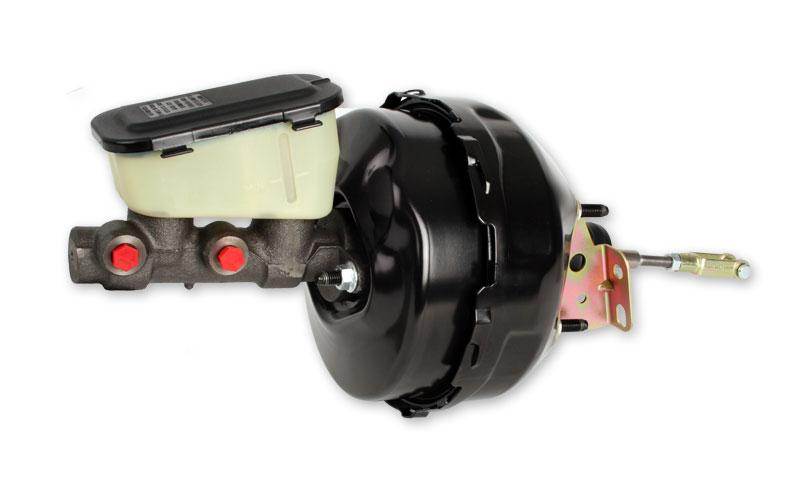
In terms of functionality, a brake booster does the same thing for a braking mechanism as power steering does for steering. The recent addition to automotive braking systems is designed to improve braking performance and safety.
With a brake booster, the driver does not need to apply excessive force to the brake pedal when stopping the car.
Definition of Brake Booster
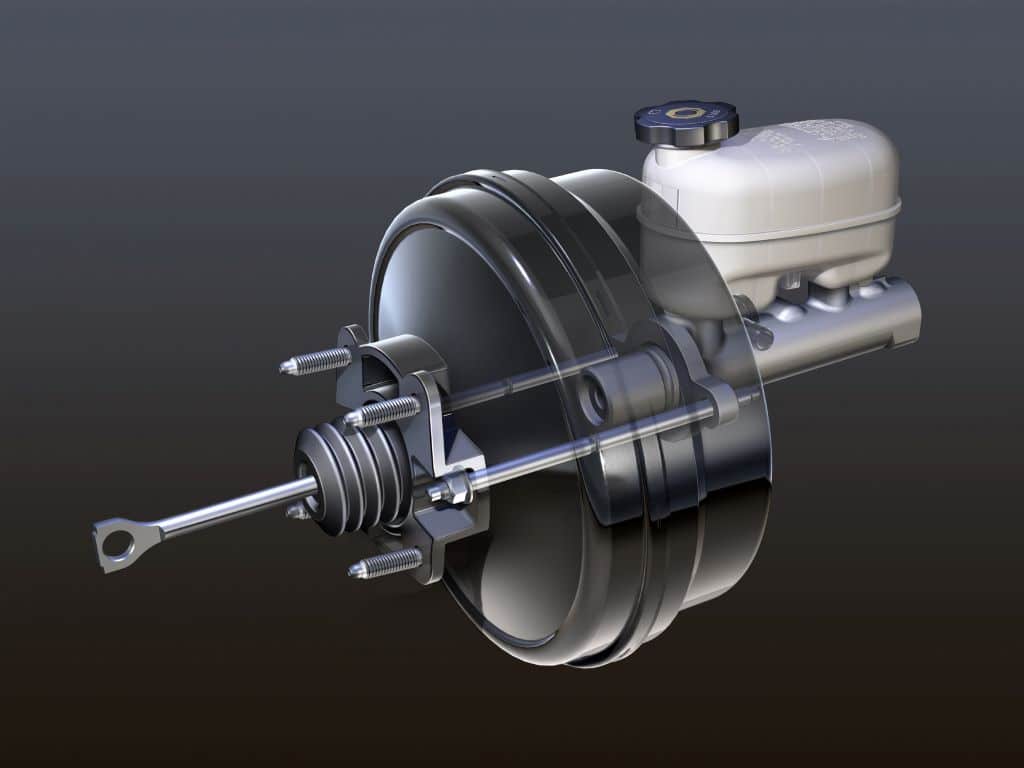
Crucial for vehicle functionality and passenger safety, a brake booster resembles a circular black canister.
It works with the master cylinder to provide higher pressure to the brakes, thereby reducing the amount of pedal pressure required for braking.
The device is located at the rear of the engine block, specifically between the pedal and the master cylinder. It uses vacuum to balance the high fluid pressure in a vehicle’s braking system, thus facilitating effective braking.
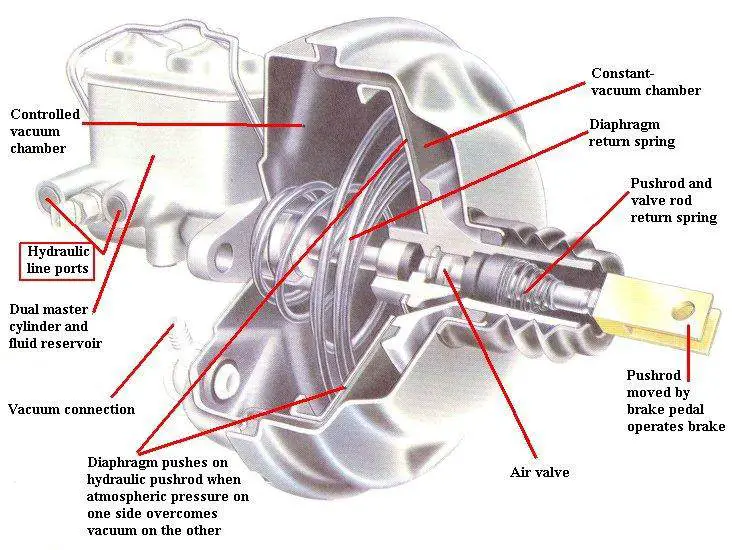
Brake Booster: How It Works
Brake boosters are available with two different diaphragms: single (for small vehicles) and tandem (for larger cars and trucks). They work by multiplying the force applied to the brake pedal.
When the driver presses the brake pedal, a fluid transmits this pressure to the brakes. However, even this force is not sufficient to stop the car. Thus, the brake booster multiplies this force to 2 to 4 times the size of the diaphragm.
When the brake pedal receives pressure from the driver, a shaft attached to the brake booster moves forward, pushing a piston towards the master brake cylinder. As a result, the brake fluid flows through the braking system.
The brake booster, on the contrary, imparts increased force to the pedal by using engine vacuum, thereby counterbalancing the high pressure of the braking system.

When the fluid reaches the wheels after passing through the brake cylinder, it squeezes the brake disc pads, thereby slowing the vehicle. The friction force involves transferring energy from the brakes to the tires, and then to the road.
The Advantages of Using Brake Boosters
The main function of brake boosters is to increase the power applied to the pedal. You would need to apply enormous pressure to slow down and stop your car if there is no brake booster.
Therefore, it is a blessing for people who are not physically strong or who have to drive a lot because they no longer need to struggle with the brake pedal.
Furthermore, easy braking with just a small pressure on the pedal reduces the risk of an accident.
Signs of a Bad Brake Booster
Installing a booster improves your vehicle’s safety; but, like any other vehicle component, it can wear out and deteriorate over time.
Therefore, it is essential to be aware of the indications and symptoms of a failing brake booster to ensure prompt diagnosis and repair.
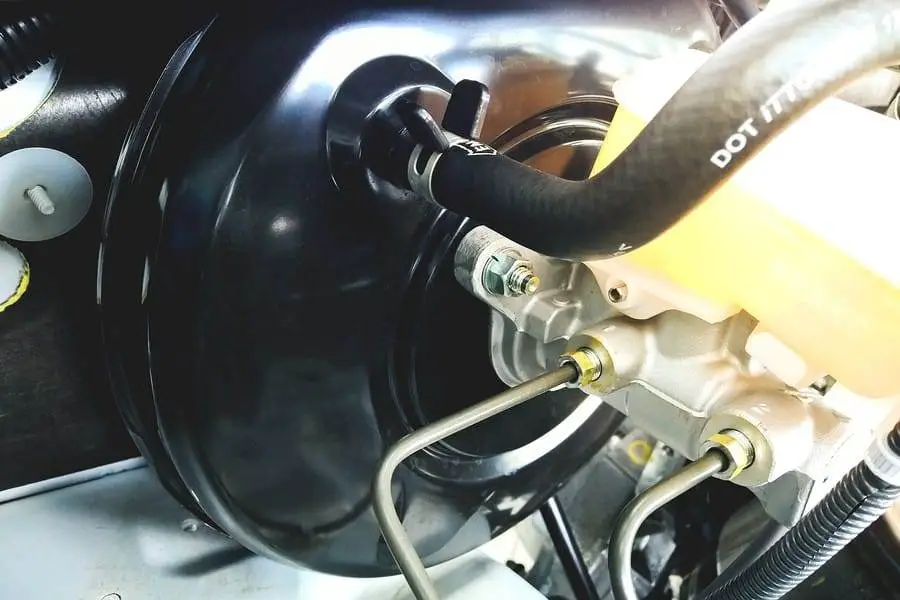
Here are some frequent indications that something is wrong with your brakes. Remember that driving with a defective brake booster system can cause your car to accelerate uncontrollably and cause an accident.
- The brake pedal is hard to press. This frequently occurs when the vacuum decreases over time. Schedule an appointment for maintenance as soon as you notice this problem, as it can reduce your vehicle’s braking capability.
- You notice that the braking distance has increased. This could be due to the suction of air bubbles entering through the master cylinder. Again, this reduces your booster’s braking capability.
- You notice that the brake pedal is a bit higher than normal. This could imply that it has been pushed out by the vacuum. This could cause problems while driving.
- The engine stalls and emits a hissing sound. This is when the vacuum starts to “leak” or escape.
How Much Does It Cost to Replace a Brake Booster
You may now be wondering how much it costs to exchange or replace brake boosters when they fail. Brake booster replacement typically costs between $300 and $750. Given that parts prices range from $160 to $550, labor costs vary from $140 to $170.
Other factors that influence the cost include the make and model of your automobile, as well as the type of damage to your system.
Modern cars are often equipped with complex braking systems. It is quite difficult to detect faulty brake boosters with these systems. Furthermore, if you have faulty brake boosters on a modern car, the repair costs are sometimes significantly higher.
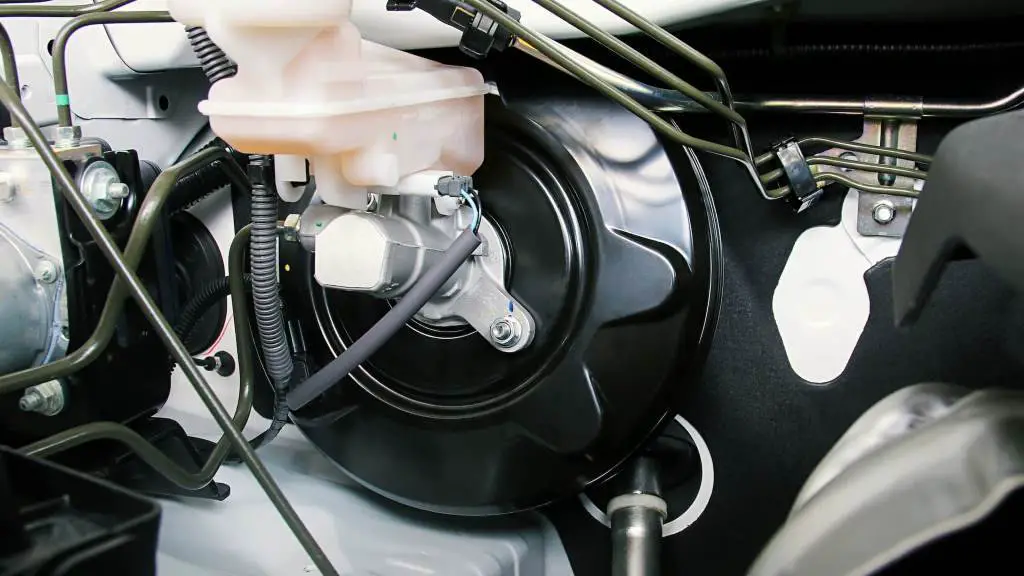
Before choosing a mechanic to go with, you should always evaluate multiple alternatives. This gives you the opportunity to select the one that best suits your scenario.
You want to find someone who will do a good job while respecting your budget. Pricing all your alternatives can help you assess the pros and cons of each shop.
Brake Booster FAQ
- Why are brake boosters installed in contemporary vehicles?
Most current automobiles are equipped with disc brakes, especially on the front wheels, which requires power brakes and, consequently, a brake booster to amplify the braking force.
Brake boosters are used in vehicles equipped with drum brake systems as well as in cars equipped with disc brakes to provide uncompromising safety.
- What are the different types of brake boosters?
There are different types of brake boosters today. The most common are the dual-piston master cylinder, vacuum brakes, dual-diaphragm vacuum brakes, hydro-boost brakes, and electric hydro-boost brakes.
- What is the most popular type of brake booster?
Engine vacuum is the most widespread form of brake booster. Hydraulic boosters, on the other hand, are available. They utilize the fluid pressure generated by the power steering pump. Some cars also use an electric brake booster.
- Is a larger brake booster better?
Remember that if you have a disc brake system, use the largest brake booster with the most diaphragms possible to provide maximum assistance.
If you own a car with drum brakes, be very particular with your options and opt for the smaller side so that the car remains comfortable to drive.
- How long does it take for a brake booster to wear out?
Generally, the hydraulic brake booster will last longer than your vehicle. Several factors can damage the booster and require replacement.
- Is it possible for a brake booster to cause a spongy pedal?
Your brake booster gives your braking system the power it needs to activate your brakes. When your booster fails, your brakes may not activate even when you press the pedal, making the pedal soft or spongy.