
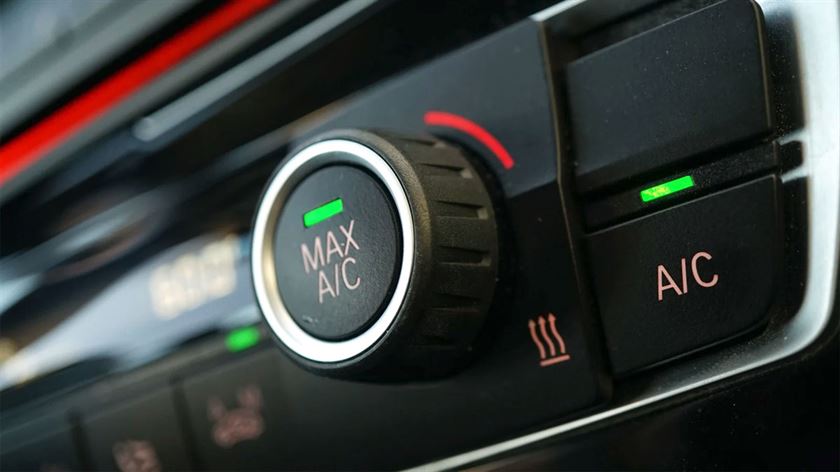
The car overheats when the air conditioning is on. Your car should never overheat under normal operating conditions. If you are experiencing intermittent overheating issues, your vehicle may have one of the problems on this list.
Reasons Why Air Conditioning Causes a Car to Overheat
When a car overheats, it usually indicates a mechanical problem with the cooling system. Sometimes, a car can also overheat because the cooling system is overloaded. Here are some reasons why your air conditioning might cause your vehicle to overheat.
1) Low Coolant Level
If you are experiencing car overheating issues, one of the first things you want to check is that your coolant level is full. A low coolant level will introduce air pockets into the cooling system. Air does not cool as effectively as a liquid, so your engine will heat up more.
Wait for the engine to cool down completely before removing the radiator cap. If you need to add coolant, make sure to bleed the air from the cooling system to ensure no air pockets remain.
2) Overloaded Cooling System
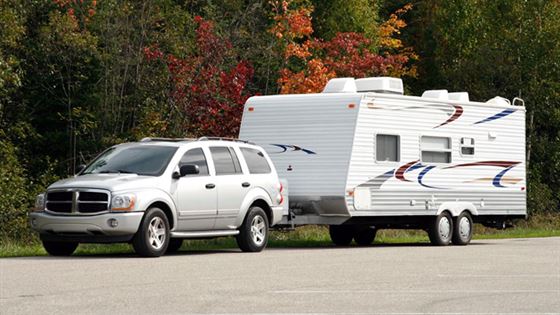
If you are climbing a steep hill on a very hot day, your cooling system may not be able to dissipate heat quickly enough. This is especially true if you are towing or carrying a heavy load.
The air conditioning moves heat from one place to another. This heat must be dissipated through the AC system’s condenser. Your car may have just enough cooling capacity to cool the engine by itself, but not when the air conditioner is running.
Sometimes, your radiator or condenser can be upgraded to increase your vehicle’s cooling capacity. This is a common modification on sports cars that are heavily used on tracks and on towing vehicles.
3) Restricted Airflow
If debris is blocking the radiator or a significant number of fins are bent, your radiator and condenser may not be able to get enough airflow to cool the engine. Since the radiator and condenser are usually stacked next to each other, an airflow issue is likely to affect both units.
A few bent fins will have a negligible impact on cooling capacity. However, if your radiator has a large number of bent fins, it could cause problems under heavier loads.
Although it is quite tedious, fins can sometimes be straightened to improve airflow. Be careful if you try to do this yourself; you don’t want to puncture the radiator.
4) Bad Radiator Fan
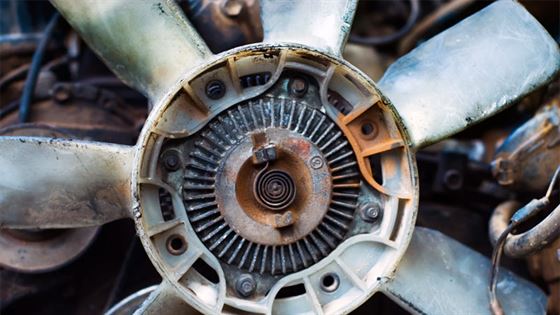
If your radiator fans fail, there will not be enough airflow through the radiator and condenser when idling or moving slowly. If your car only overheats when stationary, the problem may be due to a bad radiator fan.
Why Do Cars Overheat?
An internal combustion engine is powered by small explosions. Air and fuel are injected into the combustion chamber, and then the combustion chamber is sealed. When the piston rises, the air-fuel mixture is compressed.
At a precise moment in the piston’s stroke, the spark plug ignites to ignite the fuel. This ignition forces the piston back down, turning the crankshaft.
Engines are designed to operate within a specific temperature range. If the engine is too cold, it will not operate efficiently. If the engine is too hot, parts can melt, cylinder heads can warp, the engine block can crack, and head gaskets can leak.
Coolant circulates through an engine to prevent the engine from running too hot. Once the engine starts to get a bit too hot, the thermostat opens to allow coolant to flow from the radiator to the engine block. Once the engine has cooled down to the target temperature, the thermostat closes, and the process repeats.