
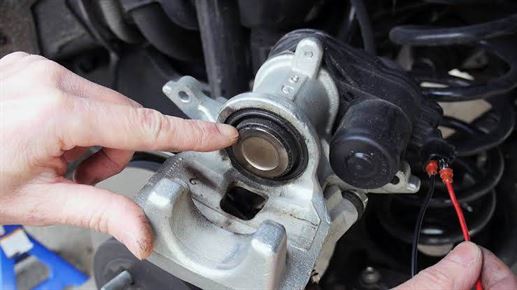
Car owners may encounter the issue of “brake caliper piston not compressing” in their vehicles. They might notice that their vehicle pulls more to one side during braking or that the brakes do not fully release after letting go of the pedal.
Such situations must be addressed immediately so they do not affect your vehicle’s safety. To help you resolve the caliper piston issue, here are some potential causes and reasons listed below.
How does a caliper piston work?
Caliper pistons operate through hydraulic pressure, forcing the brake pads to press against the rotor, thereby slowing or stopping the vehicle’s movement.
The caliper, an enclosing housing, accommodates the piston (or pistons) as well as other brake components.
When the brakes are engaged, hydraulic fluid from the master cylinder propels into the caliper, pushing the piston(s) outward.
Consequently, the brake pads exert pressure against the rotor, generating friction and facilitating the reduction or cessation of the vehicle’s speed.
When the brakes are released, the hydraulic fluid pressure decreases, prompting the piston(s) to retract, allowing the pads to disengage from the rotor. This cyclic process repeats with each braking action.
Causes of “The caliper piston does not compress”
There are many potential reasons responsible for the caliper piston not compressing issue. Before taking your vehicle to an auto repair shop, let’s explore some possible causes of these problems.
1. Worn caliper bolts
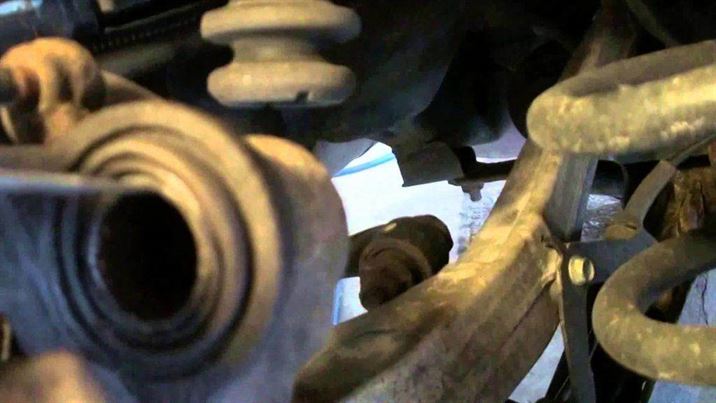
Caliper bolts consist of slides that require lubrication. The protective rubber boots on them help retain lubrication.
But sometimes, these boots are torn off by rushed mechanics when installing new brake pads. As a result, the caliper piston fails to compress.
Sticky pistons
During braking, the brake piston seal deforms slightly. When car drivers release the brakes, they unroll and help compress the pistons for drag-free operation.
If the piston does not slide properly on the seals, it prevents the piston from compressing permanently.
Vehicle inactivity
One of the main causes of the caliper piston not compressing is inactivity. If you do not use your vehicle for months, the piston may rust.
Consequently, the corrosion that accumulates on the caliper prevents it from compressing fully, thereby hindering the proper functioning of your vehicle.
Solving the caliper piston compression problem
It is necessary to carefully diagnose and resolve these issues immediately, as they could endanger your vehicle. One of the main ways to fully compress your caliper piston is to take care of the brakes.
If you top up the brake fluid and replace the brake pads as needed, you may not encounter any issues with the caliper piston.
For a stuck caliper piston, there is a special tool that allows applying force and compressing the pad. You can use a simple C-clamp to solve this problem.
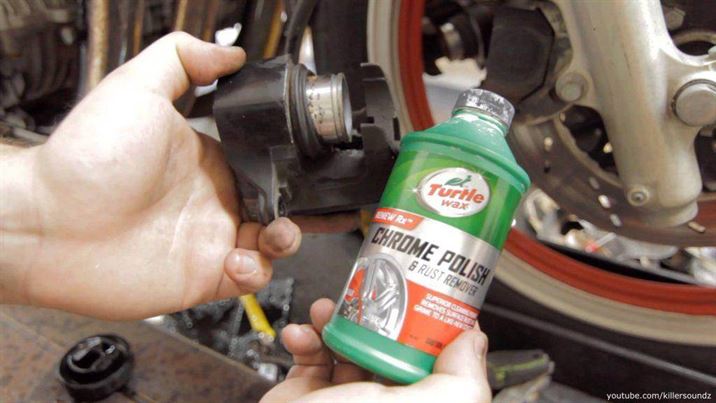
To learn how to use a C-clamp to repair such a problem, you can read some car maintenance tips on the web. Additionally, you must also properly clean the piston and apply a light layer of grease to compress the caliper well.
FAQ on the caliper piston not compressing
- How can contaminated brake fluid affect caliper piston compression?
Contaminated brake fluid, often due to moisture or debris, can lead to caliper piston corrosion and restricted movement, resulting in poor compression.
- How does air in the brake lines contribute to this problem?
Air in the brake lines can make the brake pedal feel spongy and hinder the proper compression of the caliper piston, thereby reducing braking efficiency.
- What role does a corroded caliper play in this problem?
Corrosion on caliper components, such as the slide pins or caliper housing, can obstruct piston movement and prevent it from compressing smoothly.
- How does a faulty master cylinder affect caliper piston compression?
A faulty master cylinder may not distribute hydraulic pressure correctly, leading to insufficient force for caliper piston compression.
- What can cause a caliper piston to seize?
Lack of maintenance, exposure to moisture, or debris intrusion can cause the caliper piston to seize, preventing adequate compression.
- What are potential solutions for a non-compressing caliper piston?
Solutions include bleeding the brake system to remove air, flushing and replacing contaminated brake fluid, cleaning and lubricating caliper components, and inspecting for corrosion. In severe cases, caliper replacement or rebuilding may be necessary.
Watch this video by ScrewsNutsAndBolts to learn a simple way to compress a brake caliper piston without needing special tools!
- Can I repair a non-compressing caliper piston myself?
Some basic maintenance tasks, like bleeding brakes or cleaning caliper components, can be performed by DIYers. However, for complex issues, it is recommended to seek professional help.
- Is it safe to drive with a non-compressing caliper piston?
It is dangerous to drive with compromised braking performance. A caliper piston that does not compress can lead to reduced braking efficiency, uneven wear, and potential safety risks. Address the issue promptly.
- How can I prevent caliper piston compression problems?
Regular maintenance of the brake system, including checking fluids, inspecting pads and rotor, and keeping components clean and lubricated, can help prevent caliper piston compression issues.
- Should I replace the caliper if the piston does not compress?
Depending on the severity of the issue and the condition of the caliper, replacement may be necessary. Consult a professional mechanic to determine the best course of action.
Conclusion
So, you may now know the possible causes and ways to resolve the caliper piston not compressing issue. In case you think the problem is quite difficult to handle, remember to ask for help from an automotive professional.
These certified mechanics will provide the best solution to the problem of your caliper piston compression.