
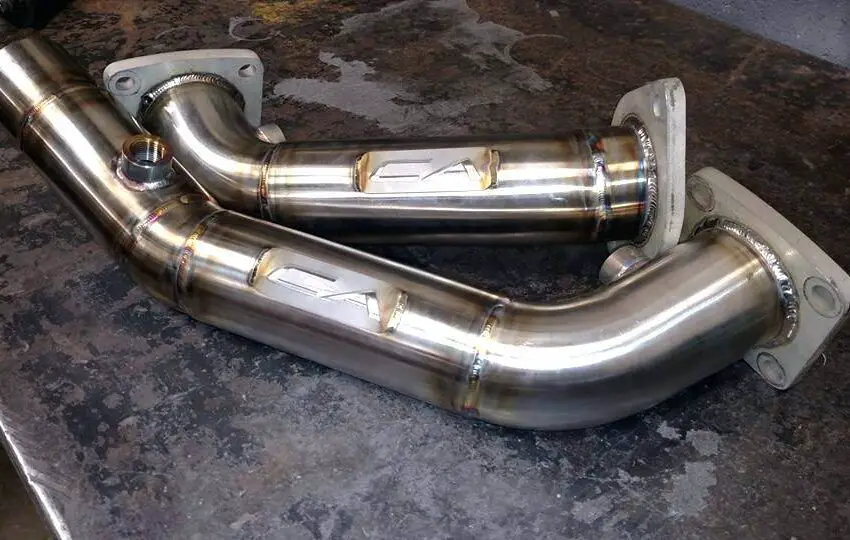
People’s choice to remove the catalytic converter is based on the fact that it reduces engine power. There are arguments for and against.
Removing the Catalytic Converter: Why Do People Want to Do It?
The catalytic converter has been used in automobiles since the 1970s. Its role is to reduce the amount of harmful gases a vehicle emits into the environment.
The converter reduces the harmful effects of gases by releasing a kind of chemical catalyst.
Proponents of its removal believe that it creates too much backpressure on the exhaust system and affects the vehicle’s performance by preventing it from operating at its optimal power.
Another reason is a clogged or failing converter, as replacing it with a new one is an expensive solution.
Most people choose to replace it with something energy-efficient but cheaper, and others prefer to get rid of it completely. However, performance improvement is the main reason for removing the catalytic converter.
The basic principle is that the engine can draw in more fresh air if it is possible to release a larger amount of exhaust gases in a short period.
More air in the engine means it can burn fuel more efficiently, allowing more power to be directed to the vehicle’s operation.

Converter Removal or Straight Piping
The converter is removed as part of the process called straight piping. This creates a straighter path for exhaust gas evacuation.
Along with the converter, this involves the removal of resonators and mufflers. This creates an exhaust system that has no obstruction to the release of exhaust fumes.
The car’s power depends on the degree of restriction of the removed converter. It will also depend on whether you opt for a high-flow replacement racing catalytic converter.
However, you must not remove any part of the original emission system. Furthermore, instead of discarding the converter, you can improve performance by installing a wider exhaust pipe and less restrictive mufflers.
Problems with Removing the Catalytic Converter
Without a catalytic converter, you can increase engine performance. But it causes so many other problems that you will wonder if it’s a good idea to go through all that trouble just for a bit of extra power.
Polluting the Environment
The converter reduces the harmful effects of exhaust fumes. Some of them can even reduce harmful elements by 90%.
Without this component, your car will release toxic fumes directly into the atmosphere and cause more pollution than it should.
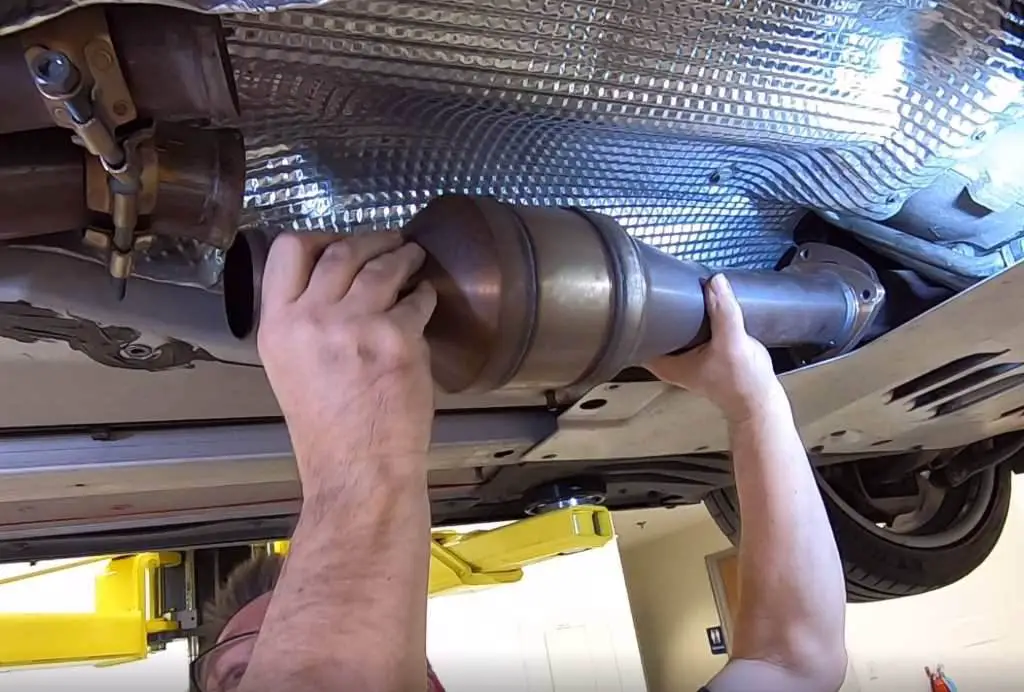
Breaking the Law
Removing the catalytic converter without replacing it with a new one or any other alternative is illegal.
Laws and regulations regarding automobile emissions and air quality require that a car emit within a certain limit. However, the limit depends on the state and city you live in.
Your car’s emissions must comply with the emission standards of your area. Seizure and scrapping of the car could be the consequence of violating emission laws.
However, unlike the UK, there is no MOT test (annual vehicle test for technical inspection, safety, and emissions) in the United States.
A car is considered roadworthy as long as it has functional front and rear lights and can accelerate above 55 mph.
But the car must pass an emissions test every two years (not in all cities, however).
Annoying Sound
Completely discarding the converter also leads to noise pollution. Without this component, there would be no muffler to suppress the engine noise.
Therefore, the sound will be quite loud whenever you rev the engine.
More Fuel Expenses
It’s exciting to find a way to increase your vehicle’s acceleration. But remember that it won’t save you fuel. Removing the component means consuming more oil and increasing your car expenses every month.
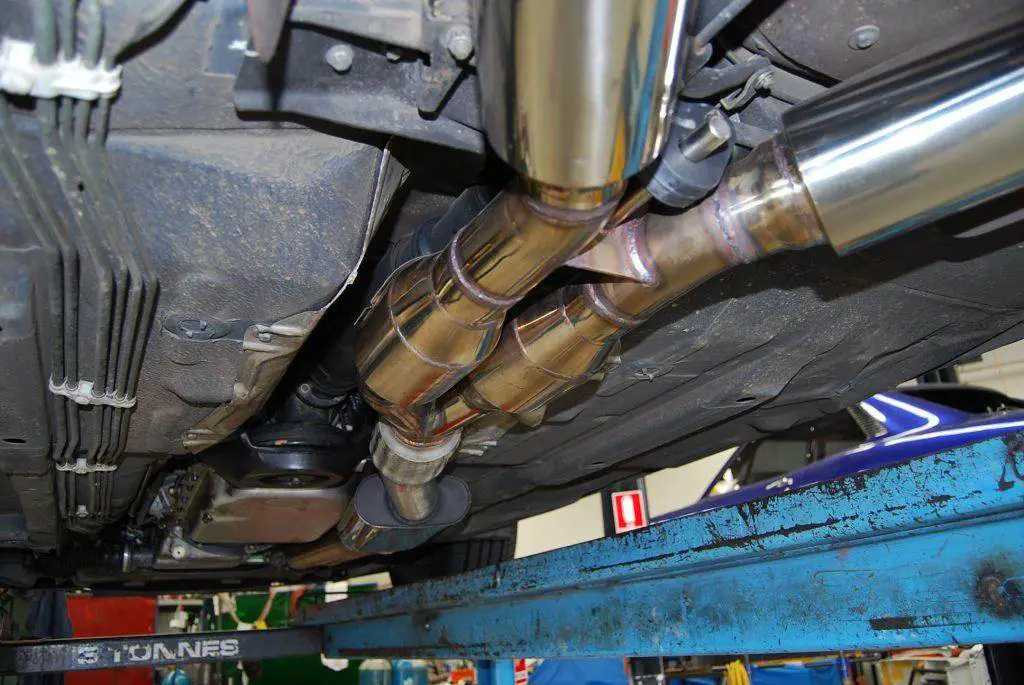
How to Remove the Catalytic Converter?
If you are still ready to take risks for a few notches on the performance indicator, follow the procedure for removing the catalytic converter from the exhaust system below!
- Disconnect the O2 Sensor: The first step is to disconnect the O2 sensor. You can do this with a special tool called an O2 wrench.
- Removing the Converter: The next step is to separate the converter from the exhaust system. You need to unscrew it and slide the exhaust pipe. If it is welded to the system, cut it with a rotary saw.
- Getting Rid of the Converter: It is possible to scrap the converter in pieces and resell it to a junkyard. However, the converter core contains precious metal. You can sell it for a good price if you manage to separate it from the core.
Can Your Car Run Without a Catalytic Converter?
Technically, nothing prevents you from driving a car without a catalytic converter. Even though there will be additional noises and performance issues, your car will still run.
On the other hand, driving without a catalytic converter is illegal, so it’s not always a good idea.
All states require your car to be equipped with a catalytic converter to reduce air pollution. Driving without it probably won’t harm the car, but it will harm the environment more.
You shouldn’t drive for long periods without this system for that reason alone. The best solution is to have it replaced immediately!
FAQ on Catalytic Converter Removal
- What does a car without a catalytic converter sound like?
If you own a car without a catalytic converter, you will hear a loud rumble or roar when you start the engine.
When you press the accelerator, this sound becomes louder. Because the exhaust is not working properly, the car runs more roughly than usual, often stuttering when you shift gears.
- Will removing the catalytic converter damage the engine?
No, removing the catalytic converter will not damage the engine. The role of the catalytic converter is to clean the exhaust gases produced by the engine.
Most modern automobiles will not run properly if the catalytic converter is removed. As mentioned earlier, without the cat, the oxygen sensors installed before and after the cat will not be able to function within range.
This will lead to the generation of engine error codes, which will have a detrimental influence on engine performance. Although removing the catalytic converter does not damage the engine, you should expect a decrease in engine power and fuel economy.
Watch this video from Car PROblems to learn more about all the pros and cons of removing a catalytic converter!
- Is it legal to remove catalytic converters?
Yes, driving without a catalytic converter is prohibited in most US states. However, the Environmental Protection Agency (EPA) has created several provisions allowing driving without a CAT.
Although legislation varies by state, it is advisable to be cautious and always keep a functioning catalytic converter in your car.
The Clean Air Act of 1970 requires all automobiles to be factory-equipped with catalytic converters compatible with carburetors.
Most automobiles built before 1970 (the year the Clean Air Act was enacted) were not factory-equipped with catalytic converters as standard.
As a result, some jurisdictions (like Georgia) will allow you to pass emissions tests if your car is over 25 years old.
- How long can I go without replacing a catalytic converter?
Although they are supposed to last at least 10 years, catalytic converters do not necessarily need to be replaced after that period.
It should only be changed if service specialists advise it and whenever you start to notice these problems.
- Does removing the catalytic converter increase fuel consumption?
The catalytic converter circulates exhaust gases and engine air through tiny channels. Its removal allows the engine to breathe more freely and produce greater power.
Depending on the type of vehicle, the sound is also improved, and fuel consumption can be reduced by up to 10%.
- How much does it cost to remove the catalytic converter?
You should budget between $300 and $1,650 (excluding labor) for removing the catalytic converter for the majority of current vehicles.
However, parts costs and local labor rates generally affect these prices. For example, the cost of replacing a typical catalytic converter in a contemporary vehicle can range between $500 and $2,200!