

The use of nitrogen tire inflation is becoming more common every day. Nitrogen-filled tires are an alternative to regular air-filled tires.
The idea has been gaining traction lately among average consumers, even though the U.S. military, NASCAR, and the aviation industry have been using nitrogen tires for years.
Like other things, using nitrogen in tires has unique advantages and disadvantages. Let’s take a look at the pros and cons of nitrogen in tires to make your own decision:
Advantages of Nitrogen Tire Inflation
Most car owners wonder what fills their tires? Some of them think it’s air, but it’s something else. Since nitrogen is much more stable than oxygen, it is the ideal candidate for tire filling.
To be more precise, race cars, airplanes, spacecraft, and industrial machinery require tires that can withstand precise settings. So, what does nitrogen actually do for us?
Stable Tire Pressure
Nitrogen-filled tires remain stable in the long term because nitrogen barely passes through the tire rubber. Underinflated tires also show fewer pressure fluctuations with temperature changes.
As a result, they are popular in racing because conventional air-inflated tires display fairly inconsistent pressure when they heat up and require the TPMS to regularly check tire pressure during trips to ensure driver safety.
However, drivers must understand that nitrogen does not have the power to improve your handling, especially during daily commuting.
Nitrogen offers minor benefits for daily driving by optimizing and stabilizing tire pressure, which is surprisingly suitable for race cars.
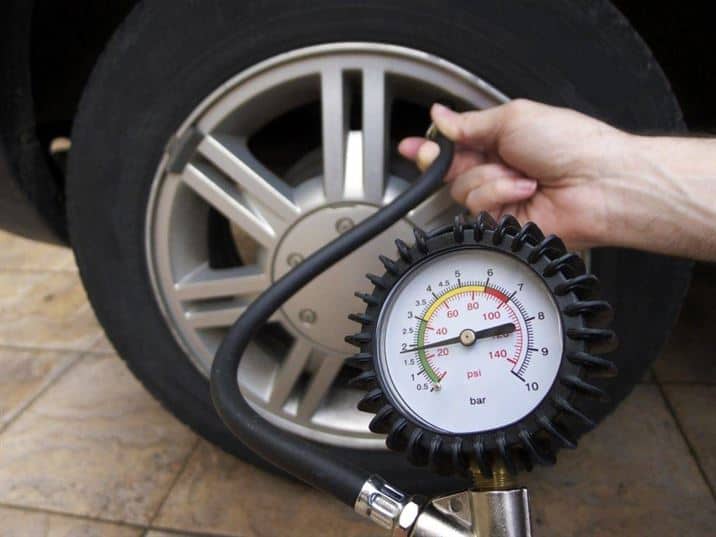
Fewer Tire Leaks
When we discuss the pros and cons of nitrogen in tires, we are talking about the air escaping from tires. When the car is moving, the rubber flexes and stretches while rolling, which slowly deflates the air.
According to chemistry, an oxygen atom is structurally smaller than a nitrogen atom. For this reason, nitrogen is less likely to escape from a tire and penetrate the rubber.
And it’s not just a theory: nitrogen has actually been proven to escape from a tire 1.6 times slower than air.
Fuel Efficient
Correct and constant tire pressure has improved the energy efficiency of nitrogen tires. It is believed that having correct air pressure significantly increases fuel economy.
Since higher tire pressure leads to much better energy efficiency, it is very useful for drivers. To be more precise, higher tire pressure decreases the car’s rolling resistance, as well as inflation.
A single tire can save you 3 to 6% in fuel over its lifetime, which is not huge but still counts in the discussion of the pros and cons of nitrogen-filled tires.
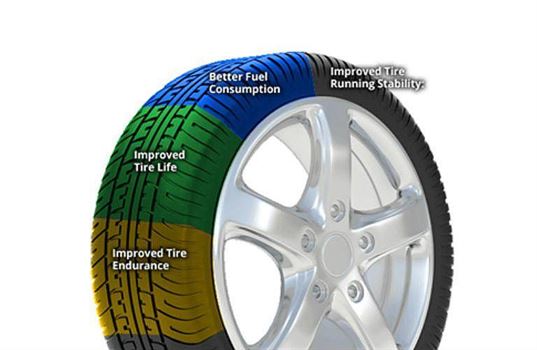
Environmentally Friendly
Without a doubt, nitrogen is a green alternative in discussions about the pros and cons of tires. Over 300 million tires are discarded every year.
However, using nitrogen in tires can reduce this number by 30%. To be more precise, nitrogen-filled tires maintain good pressure, offer better fuel consumption, and reduce emissions.
Not to mention that they extend the tire’s lifespan, reduce the demand for tires from car owners as well as natural resources.
As a result, nitrogen is the key to making the world greener. Moreover, nitrogen tires reduce the carbon footprint by reducing fuel combustion.
Durability
Durability is by far the biggest advantage when talking about the pros and cons of nitrogen in tires. Nitrogen tires have a longer lifespan because they do not have the corrosive properties of standard air-inflated tires.
Drivers typically fill tires with nitrogen to reduce wear and tear on the wheels, as well as other car parts. Nitrogen is dry, so it does not form rust that would degrade the tires and metal wheels.
Compared to air containing water vapor, while nitrogen does not, nitrogen will decrease tire pressure as it heats up.
Not to mention that water vapor will corrode sensitive sensors and rust the inside of the valve stem and wheel.
Safety
Nitrogen is not combustible, which makes safety an advantage of nitrogen in tires. For this reason, nitrogen tire inflation will not worsen a fire, unlike air-inflated tires.
Disadvantages of Nitrogen Tire Inflation
Expensive
Here is the biggest disadvantage of nitrogen in the pros and cons of tires. Nitrogen is expensive, that’s for sure.
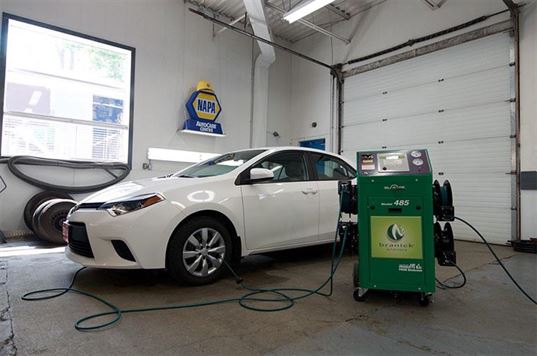
For this reason, nitrogen tire inflation is more expensive than conventional air inflation, as well as free air compressors at local gas stations.
You may have to spend more than $5 to inflate a single tire, not to mention the time it takes for staff to operate. Ten years ago, car owners cost about $30 per nitrogen-filled tire.
Unavailability
Unavailability is also one of the disadvantages in the discussion of the pros and cons of nitrogen in tires. Not only is it much more expensive than air, but nitrogen is actually harder to find.
To be more precise, the services are not found everywhere. Nitrogen tire inflation is only available at certain professional service stations or selected tire shops.
Sometimes you have to fill your tires with regular air, because nitrogen inflation may not be available where you are. And this action will dilute the remaining nitrogen that already fills your tires.
Maintenance is Still Required
Inflating tires with nitrogen does not mean you fill the tires once and then forget about them. On the contrary, maintenance is actually more essential in the discussion of the pros and cons of nitrogen in tires.
They need maintenance and pressure checks from time to time because the inflation level and tire pressure will not always be the same. Not doing so leads to loss of tire wear as well as fuel consumption.
Thus, if car owners cannot perform routine maintenance on their tires, they certainly will not wear evenly. This applies to tires with or without nitrogen.
Time-Consuming
Last but not least, one of the disadvantages of nitrogen in tires is that it is time-consuming. Car owners indeed need skills to perform nitrogen refills due to its complexity.
To maximize the benefits of nitrogen filling, drivers want to purge and fill the tires several times in order to remove as much air as possible.
If the tire shops you have chosen have a filtering machine capable of removing oxygen from nitrogen, it can help speed up the process even though it is costly.
Conclusion
As you have now seen the pros and cons of nitrogen in tires, you can decide for yourself which type of tire will best meet your needs.
However, nitrogen tire inflation should be your first choice if you enjoy racing, motorsports, or simply love enjoying speed on the highway! Remember that maintenance is a crucial aspect if you choose to use a nitrogen tire.
Advantages:
- Better road holding
- Limited risk of bursting
- Reduced tire wear
- Fuel savings
- Protection of rims and tires
- More stable pressure
- Less sensitive to temperature variations
- Reduces internal corrosion
Disadvantages:
- Higher cost than compressed air
- Less accessible than compressed air
- Requires specific equipment
- May not be compatible with all tire types
- Potential benefits unproven for all drivers
Other keywords:
- Tire inflation
- Nitrogen
- Compressed air
- Tires
- Safety
- Performance
- Economy
- Environment
Questions:
- Should you inflate your tires with nitrogen?
- What are the advantages and disadvantages of nitrogen tire inflation?
- Is nitrogen better than compressed air for tires?
- How much does nitrogen tire inflation cost?
- Where can I get my tires inflated with nitrogen?
Brand names:
- Michelin
- Continental
- Pirelli
- Goodyear
- Bridgestone
Websites:
- https://www.continental-tires.com/fr/fr/b2c/tire-knowledge/nitrogen-in-tires/
Hashtags:
- #tires
- #nitrogen
- #inflation
- #car
- #safety
- #performance
- #economy
- #environment