
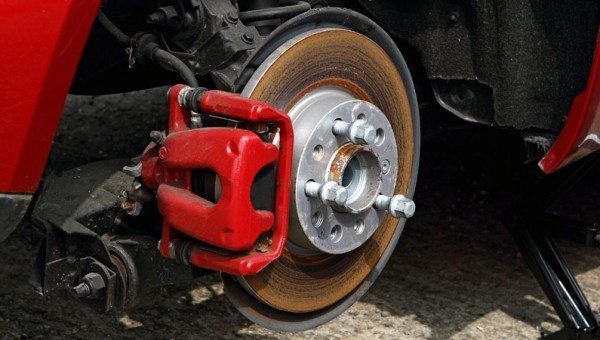

Brake calipers are important components of the braking system. Brake calipers hold the brake pads against the brake discs. Once pressure is applied, friction and adhesion forces convert the kinetic energy of the rotating rotor into thermal energy, which slows down the vehicle.
A vehicle could not stop quickly at all without a functioning brake caliper. On vehicles equipped with disc brakes on all four corners, each wheel has a caliper and a rotor behind it. The brake discs are mounted on each wheel hub, so they rotate with the wheels.
When you want to slow down your vehicle, you press the brake pedal, which causes the brake calipers and their brake pads to produce friction with the rotors.
A few vehicles are sold with drum brakes at the rear, even today. These vehicles only have brake calipers on the front wheels.
It is very rare for you to have a stuck brake caliper, but it happens. If it happens to your vehicle, it is important that you understand the symptoms to look for and their likely causes. This way, you can take your vehicle to the nearest mechanic and have your brake caliper repaired or replaced immediately (or do it yourself).
1) Car Pulling to One Side
This is one of the most common symptoms of a sticking brake caliper. If you notice your vehicle pulling too much to the right or too much to the left, replace your brake caliper immediately.
2) Brake Pedal Stays Down
Another common symptom of a sticking brake caliper is the brake pedal staying down after you remove your foot. The brake pedal will eventually come back up, but it will probably take a few seconds.
3) Brake Fluid Leak
An easy symptom to watch for is brake fluid leaking from your vehicle. If you check under your vehicle, around your wheels, or if you notice a trail of fluid leaking as you slow down on the road, you might have a leak causing your brake caliper to stick.
4) Vehicle Hard to Stop
The brake caliper depends on the proper amount of brake fluid pressure to slow the vehicle. If you have brake fluid leaking from your vehicle, it will be difficult to stop the vehicle. Furthermore, this will also make the brake caliper stick.
5) High-Pitched Sounds
You will immediately notice problems with the brake caliper when you start hearing these high-pitched sounds occurring when applying pressure to the brake pedal. This could mean the caliper is sticking or another caliper issue as well.
6) Difficulty Steering
If one of the front calipers is stuck closed, you may notice the vehicle starting to pull to one side.
If one of the front calipers is stuck open, you may notice the vehicle pulling strongly to one side during braking. This is because only one of the front brakes is working to slow the vehicle. The front brakes perform the vast majority of the braking on most vehicles.
7) Burning Smell
If you notice smoke or a sharp, burning odor coming from a wheel, you may want to check the brakes. When a brake caliper gets stuck in a tight position, it generates an excessive amount of heat.
This heat will melt the brake pads and heat up one wheel more than the others. In extreme cases, it can even start a fire. The rotor will often have a bluish tint once it has overheated.
If you have overheated your brakes, it is wise to replace the discs, brake pads, and flush the brake fluid. Once the brake components take more heat than they were designed for, they will be less effective at stopping your vehicle.
Common Causes of Sticking Brake Calipers
Here are the main causes of a brake caliper sticking.
1) Caliper Slides
The caliper has grooves that hold the brake pads in place and allow the pads to slide inward after stepping on the brake pedal.
However, there are tabs on the brake pads that can get stuck in these grooves due to accumulated debris that may be there. This will make the brake pads unable to slide, causing the caliper to stick.
2) Caliper Bolts
There are slides on the brake caliper bolts that must always be lubricated. Each bolt has a rubber boot that maintains their lubrication. If this rubber is torn, it could reduce lubrication and quickly cause the brake caliper to stick.
3) Brake Hose
Brake hoses eventually wear out and break down internally. This will direct the brake fluid to flow in only one direction after applying pressure to the brake pedal.
If this happens, the fluid cannot return to the master cylinder once you remove your foot from the brake pedal. The result is the brake caliper sticking.
4) Caliper Piston
A caliper piston that does not fit properly into the caliper housing can cause the piston to stick during braking or when releasing the brake pedal.
This is more likely to happen on a lower-quality remanufactured caliper, but any caliper assembly could have a defect.
5) Brake Pads
If you do not replace your brake pads early enough, they will wear out. Then, your caliper will not be able to create the necessary friction against the rotor, causing extreme caliper sticking.
6) Torn Piston Boot
Wheels, tires, and brakes are among the dirtiest parts of your vehicle. If the caliper piston boot is torn, dirt, dust, and debris can sneak past the boot and into the piston housing.
This debris will then rub against the piston and its housing, causing excessive wear on the internal components of the caliper. Eventually, this can interfere with the piston’s movement. The piston could even get stuck in the housing.
7) Corrosion
If the caliper piston or the slide pins corrode, they can get stuck in one position. This is more likely to happen in areas that are already prone to rust, such as those that salt their roads in winter.