
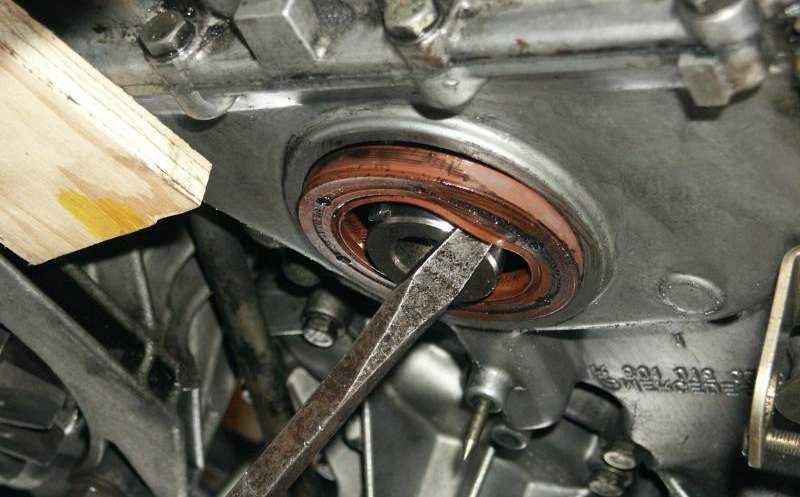
Do you have oil stains in your driveway, or an engine block that leaks when you look under your vehicle? Sorry, very bad news: you might have a rear main seal leak. Few words from a mechanic will stop all drivers in their tracks faster than “You have a rear main seal leak!”
A rear main seal leak is one of the worst things that can happen to any vehicle, because the rear main seal is very difficult to access and requires disassembling a large part of your engine.
On most modern engines, seal failure is due to a condition inside the engine or a component connected to the rear of the engine and is more common in older cars.
For many drivers, the announcement of such a problem means it might be time to buy a new vehicle, as repairing the rear main seal usually costs more than the value of vehicles old enough to develop such leaks.
Replacing a rear main seal is one of the most dreaded, labor-intensive, and expensive tasks you can perform on your car, after replacing head gaskets or rebuilding your transmission. It can easily cost you between $800 and $1,200 at a mechanic.
Furthermore, there are no shortcuts or quick fixes if the seal has expired. A replacement is not something you’ll want to undertake yourself, and even a seasoned mechanic might struggle with it because it’s in an extremely difficult position.
That said, a proper diagnosis will save you a lot of money by having a mechanic check if your current oil leak situation is indeed a rear main seal leak. Plus, in some mild cases, you can spend less than $20 to fix the issue.
Read on to learn everything you need to know about the rear main seal leak, including how it works, the symptoms and causes of a rear main seal leak, how to troubleshoot, and what to do.
What is the purpose of a rear main seal?
The rear main seal is designed to prevent oil leaks between the block and the crankshaft. Originally, manufacturers intended rear seals to last the lifetime of a vehicle, so no replacement would be needed, unlike many other engine components under the hood that need replacing every few years.
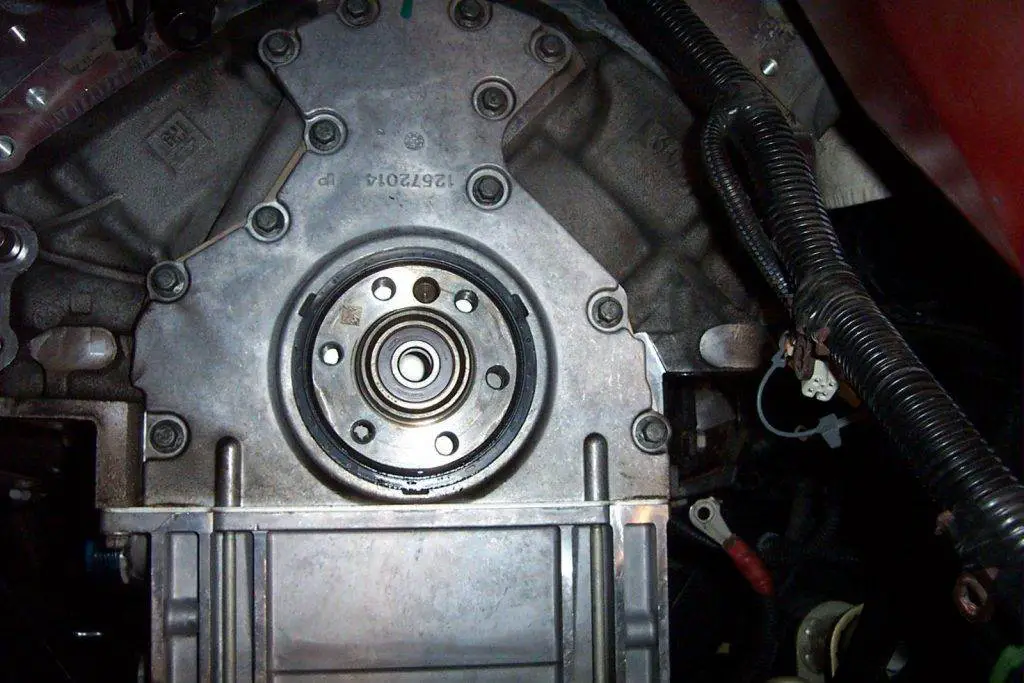
It is located just outside your rear main bearing, which supports your engine’s crankshaft in your engine. These bearings support the majority of your engine’s load and play a crucial role in converting the axial motion of your piston into the rotational motion of the crankshaft.
The main bearings achieve this by absorbing the axial load from the piston pushed down by combustion, while allowing the crankshaft to rotate.
To accomplish this task, these bearings must be incredibly smooth and remain well-lubricated by your engine oil. In other words, the correct oil for your engine is extremely important for creating the optimal conditions allowing the main bearings to do their job without excessive wear.
This oil must also be contained within your engine so that everything remains constantly lubricated, and that’s exactly where the rear main seal comes in. The rear main seal allows the crankshaft to exit the engine block so it can bolt to the flywheel or flexplate and transfer its energy into the transmission.
The rear main seal also holds the engine oil and keeps it inside your engine where it can keep your main bearings lubricated.
Rear Main Seal Repair Cost
The average cost to repair a leaking rear main seal is between $800 and $1,200. In rare cases, some drivers have reported getting quotes as high as $2,500 on certain vehicles.
Is a Rear Main Seal Leak Serious?
Rapid Leak and Permanent Engine Damage
Driving with a rear main seal leak is dangerous due to the high possibility of a very rapid leak. A rapid leak will cause the engine oil level to drop very quickly to dangerous levels, which can lead to permanent engine damage.
The possibility of a rapid leak is very likely, as the rear main seal is in a location that receives a lot of oil and has the additional wear of the crankshaft spinning inside it.
If the seal tears or cracks, even slightly, the rotation of the crankshaft can cause a very rapid tearing of the seal, leading to a rapid leak.
A quick side note is that when a vehicle is parked on a slope, an oil leak is bound to worsen much more quickly. Therefore, if your driveway is built on a slope, park your car on the flat street in front of your house until the issue is resolved.
On vehicles with a manual transmission, the clutch disc can become soaked in oil if you let a leak persist for too long.
High Risk of Leak
Some seals and gaskets in your engine never cause major leaks due to their design or because they are not subjected to high oil pressure in the engine.
In contrast, the rear main seal is an engine component very prone to developing a leak. This is because it is subjected to high oil pressure since it is right next to the rear main bearing as well as the rotating crankshaft, which constantly wears against the inside of the seal.
No matter how often you change your oil, the rotating metal crankshaft will eventually wear the seal enough to cause a leak.
Expensive Repair and Replacement
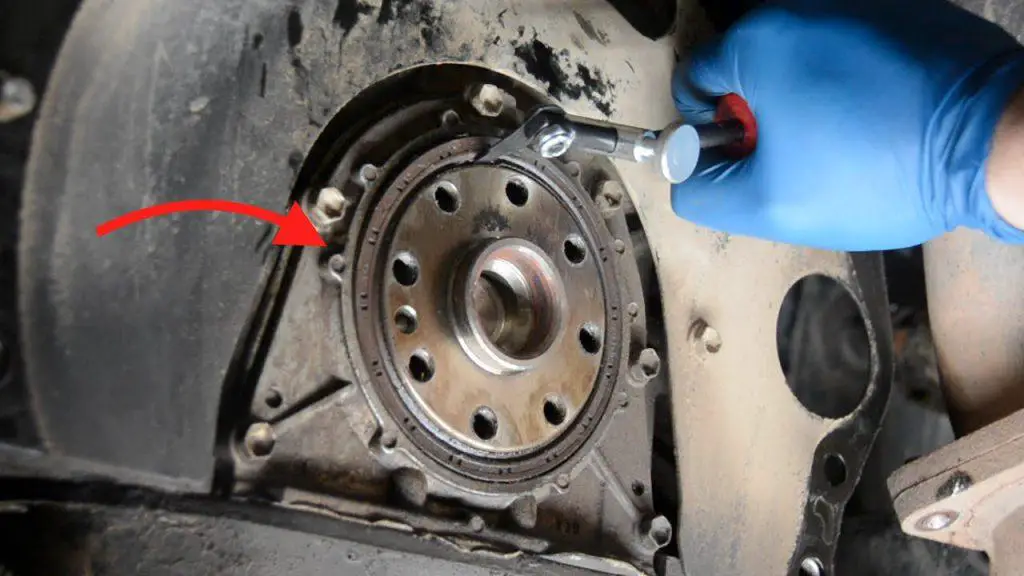
As mentioned earlier, inspecting and replacing the rear main seal requires disassembling a large part of your engine. Therefore, labor costs would be very high, and of course, if you’re not a professional DIYer, it would be a very complicated project.
The problem comes from the location of the rear main seal. It is located at the rear of the engine and seals the crankshaft where it exits the engine. The flywheel or flexplate of your vehicle is then bolted to the crankshaft flange, sandwiching your rear main seal between your engine and your transmission.
To replace the seal, either the engine or the transmission will need to be removed. Once one of them is removed, the oil pan must also come out, so this maintenance work is extremely labor-intensive.
Types of Rear Main Seal
The majority of older vehicle models use the rope or wick seal, with a small number using split seals. Meanwhile, newer models use the one-piece seal for improved performance.
Rope seals and split seals are much more universal and can work on almost any engine, while one-piece seals are less prone to leaking.
Rope or Wick Seal
Named for its resemblance to rope and lamp wicks, this seal is designed to withstand the impacts of intense crankshaft rotations and the friction caused by temperature fluctuations.
Therefore, a rope/wick seal can fail in two ways: shrinking in cold weather or expanding in hot weather. The seal is lubricated to prevent drying out with a small amount of oil, which also keeps it in place next to the crankshaft.
In modern cars, the new design of rope seals doesn’t have the resilience of the old version when it comes to preventing oil leaks.
According to many professionals and specialists, such a design change is due to stricter environmental regulations, which restricted the use of materials like asbestos.
Such regulations forced manufacturers to cut costs to reduce the production cost of the rear main seal. As a result, most modern rope/wick seals are vulnerable to contact with the crankshaft and engine RPM and therefore must match your engine’s RPM requirements.
To avoid bad rope/wick seal replacements, only buy from reputable parts suppliers, and it’s best to check reviews on Amazon before making a purchase.
Neoprene or Split Seal
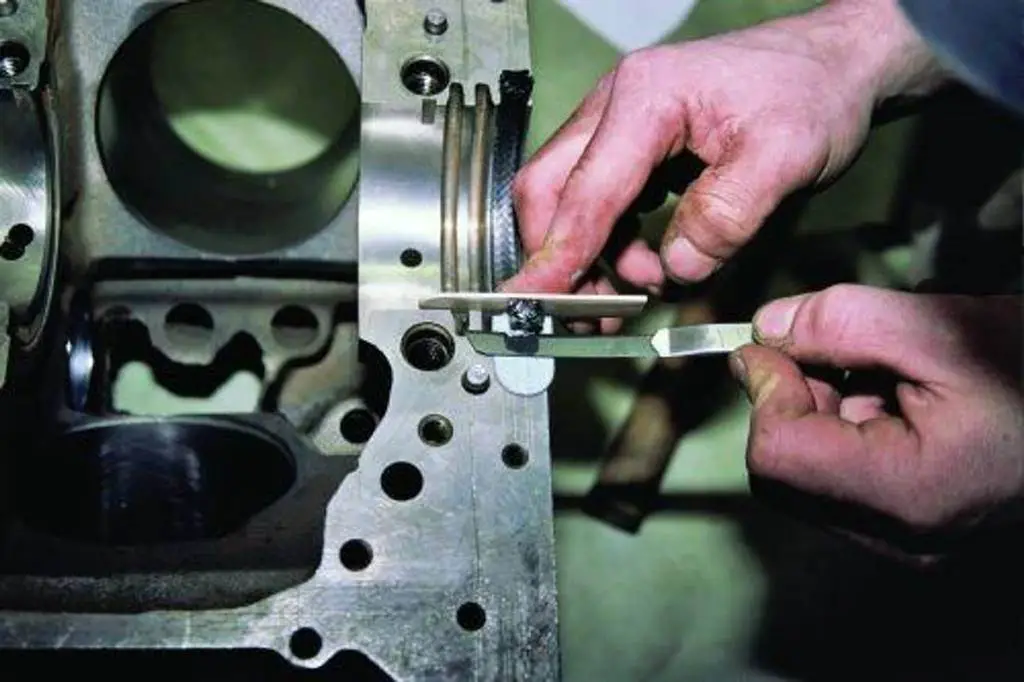
Made of rubber-like material, the split seal has a lip shape and is installed in one direction to prevent oil from passing through. Although effective for this purpose, neoprene seals are just as vulnerable to leaks as rope/wick seals.
One-Piece Seal
One-piece seals are the most difficult to maintain and don’t have the universality of rope seals and split seals. With its unique round design, the one-piece seal only works on specially manufactured crankshafts.
Therefore, you cannot install one-piece seals on older engines without replacing the crankshaft.
Symptoms of Rear Main Seal Leak
The problem can be difficult to identify because the parts in question are relatively unknown to most car owners. The hard-to-reach location of the rear main seal shows that this part of the vehicle was never really intended to be replaced during the car’s ownership period.
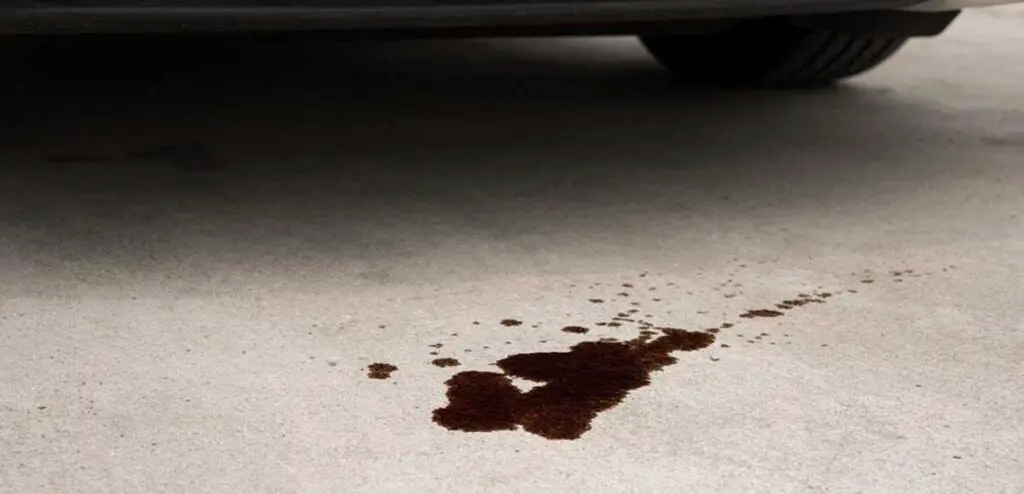
How to tell if the rear main seal is leaking? The main symptom of a rear main seal leak is when your car starts leaving black spots on your driveway or parking spot.
Another sign is aggressive oil loss: you find yourself having to top up oil more frequently, despite the same routes and driving conditions. At the start of a leak, the oil loss may not be fast enough for black spots to appear where the vehicle is parked.
While you might see an oil spot in your driveway overnight, the leak might not be fast enough to leave its mark on the supermarket parking lot during your grocery run. Therefore, you may need to perform tests to determine if you are losing oil or not.
Rear Main Seal Leak Causes
There are many causes of rear main seal leak. Any of the following conditions can cause your rear main seal to leak because they can deform or deteriorate the seal.
Worn Main Bearings
If your vehicle has worn main bearings, the crankshaft is able to move excessively inside the bearings, which will stretch and displace the rear main seal while the engine is running. This will allow oil to flow past the seal.
It is difficult to know if your engine has worn main bearings without removing many components.
If this is the cause, you are likely looking at a full engine rebuild, which would involve removing the engine and replacing many other components in addition to the rear main seal itself.
Clogged or Blocked PCV System
Most rear main seals have a lip that rests on the shaft. Pressure inside the crankcase will push the lip against the shaft. Too much pressure will eventually cause the lip to swell and allow oil to pass.
So when will there be too much pressure? If the Positive Crankcase Ventilation (PCV) system is blocked, it will increase pressures inside the crankshaft and push the seal out.
Otherwise, if the engine is supercharged or turbocharged, excessive blow-by from worn or damaged piston rings can lead to increased crankcase pressure, which can also damage the rear main seal, causing a leak.
Engine Oil Condition
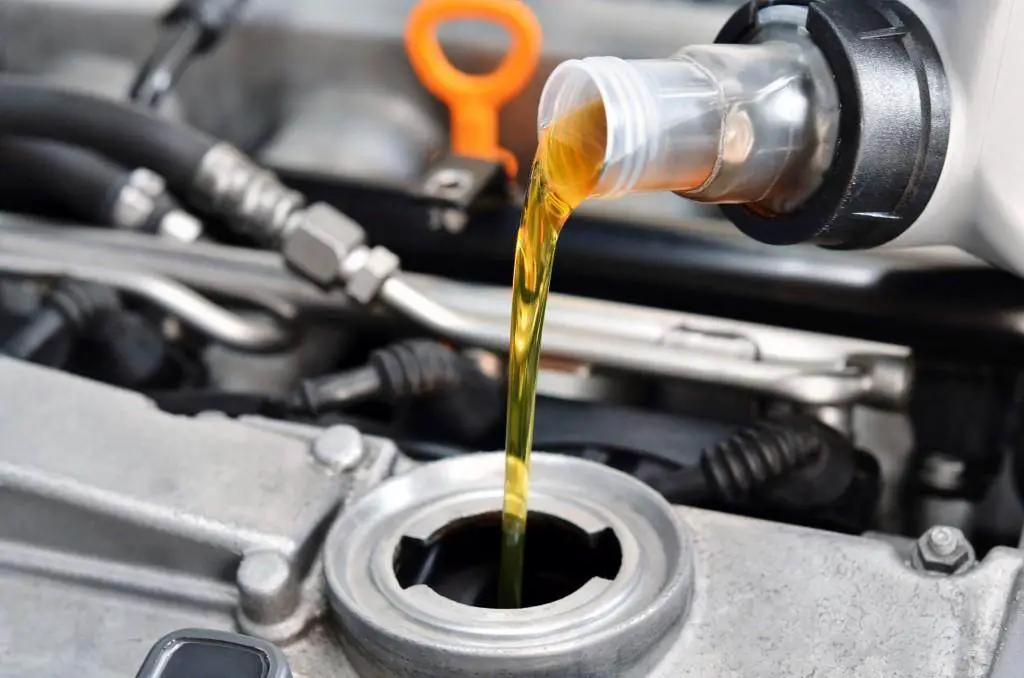
Another frequent cause could be a low oil level or using the wrong type of oil. Most oils contain chemicals in their additives that condition the engine seals. If the oil isn’t changed regularly, the seal will deteriorate.
The sealing conditions deplete over time, just like the additives present in the oil. The lip that rests on the crankshaft will become stiff and will no longer be able to seal against the crankshaft.
Crankshaft Condition
Rear main seals have a lip that rests directly on the crankshaft. Therefore, the condition of the surfaces the rear main seal rests on