
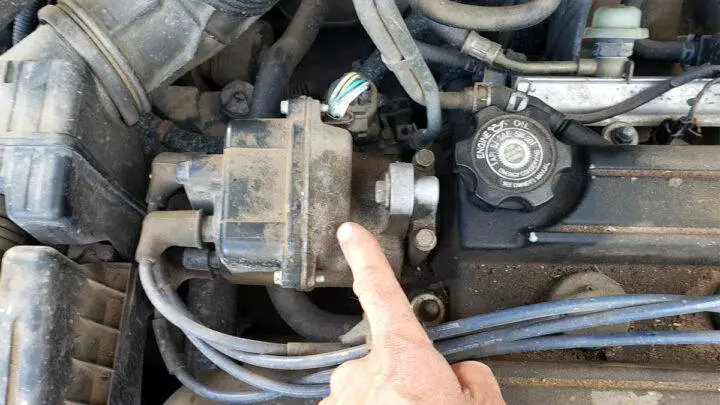
Is your vehicle currently operating with far from optimal efficiency, or worse yet, not running at all? If so, distributor-related issues might be the cause.
This essential component might be the most valuable of all modern automotive ignition systems, but it can be the source of numerous difficulties when it fails.
The following guide will detail the various symptoms associated with a distributor failure, while also addressing a number of the most common distributor-related symptoms.
What is a Distributor?
An automotive distributor is perhaps best described as an electromechanical device designed to deliver a spark to each respective cylinder, in a precise manner. This spark originates from an engine’s coil, before being “distributed” cylinder by cylinder.
The distributor itself is mechanically synchronized with the engine on which it is mounted, via a specialized drive gear. This drive gear is located at the end of a rotating shaft equipped with a replaceable electrical contact called a rotor button at its opposite end.
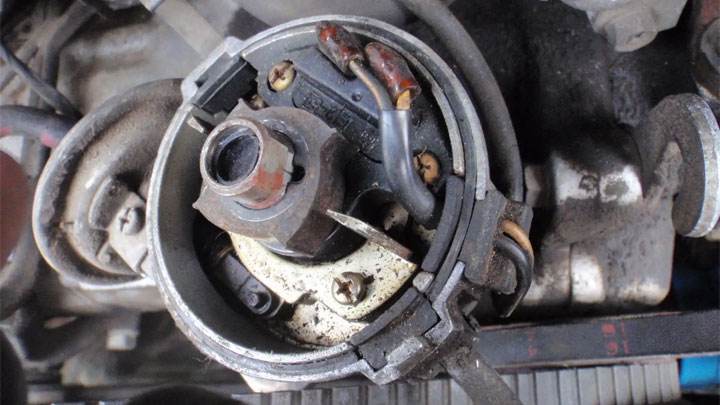
The aforementioned rotor button is powered by coil-induced energy, which is then distributed to the individual contacts mounted on the cap for each respective cylinder in a precisely timed manner.
Essentially, a distributor’s rotor button serves as a rotating electrical contact that powers each spark plug wire, via intermittent continuity with individual electrodes mounted on the cap.
When the finger of a rotor button touches the electrode of a specific cylinder, energy is discharged via the corresponding spark plug wire to that cylinder’s spark plug.
Symptoms of a Bad Distributor
The failure or impending failure of a vehicle’s distributor is often attributed to a multitude of secondary symptoms, some of which tend to be rather severe in nature. Recognizing these signs often proves essential when attempting to expedite replacement and, ultimately, repair.
Here are some of the most common symptoms associated with a faulty distributor.
#1 – Check Engine Light Illuminated
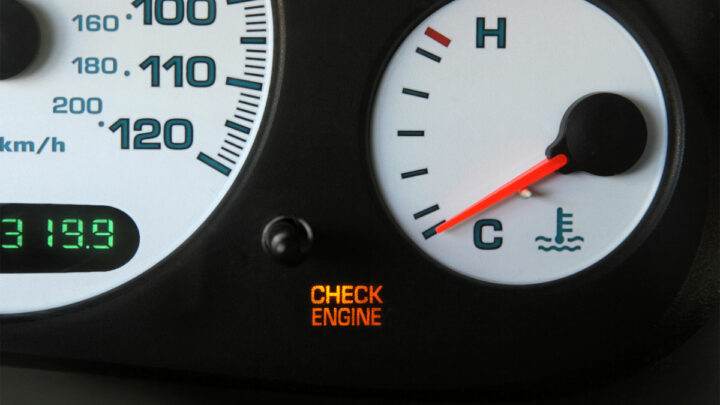
>A distributor failure will almost always cause a vehicle’s Check Engine Light to illuminate. This typically occurs when multiple misfire codes are logged and stored.
The Check Engine Light itself will remain illuminated as long as these codes remain active.
#2 – Repeated Stalling
When a distributor fails, ignition timing is often lost. This creates a condition in which efficient engine operation is impossible to achieve. This will typically result in repeated stalling if the engine in question is running at all.
#3 – Failure to Start

Just as described in the scenario above, a faulty distributor can quickly lead to a scenario where an engine fails to start or continue running after its initial combustion cycles. Starting attempts will typically be accompanied by a volley of misfires.
#4 – Constant Misfires/Backfires
If an engine’s distributor is no longer able to maintain correct ignition timing, constant misfires and backfires are to be expected. This will generally continue until the engine itself is no longer able to keep turning.
Significant vibration may also be felt, in most cases, when such symptoms are present.
#5 – Squealing Noises

Although rare, the internal bearings of a distributor can fail in service. This leads to a distinctly audible squealing noise that can often be heard during normal engine operation. This sound is often heard more pronounced during startups.
Distributor Replacement Cost
Best Places to Order Parts?
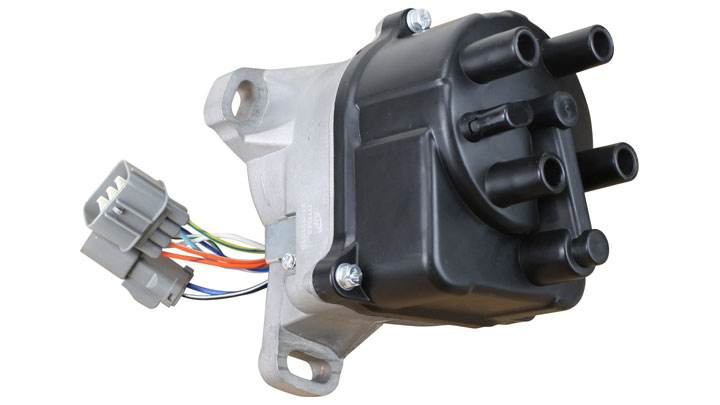
The cost of distributor replacement often varies from one vehicle model to another, due to variations in parts costs and labor requirements to perform such a repair.
However, you can generally expect to pay between $450 and $800 to have your vehicle’s distributor replaced, with the vast majority of this cost being attributed to the parts cost.
Repair
On the other hand, you can maintain a viable distributor for much less. This involves replacing a worn or damaged rotor button and a worn or cracked distributor cap. This repair can often be performed for less than $50 in parts and about $100 in labor fees.
Distributor vs Distributor Cap
It is not uncommon to hear the terms “distributor” and “distributor cap” used interchangeably. However, these two components are not actually one and the same.
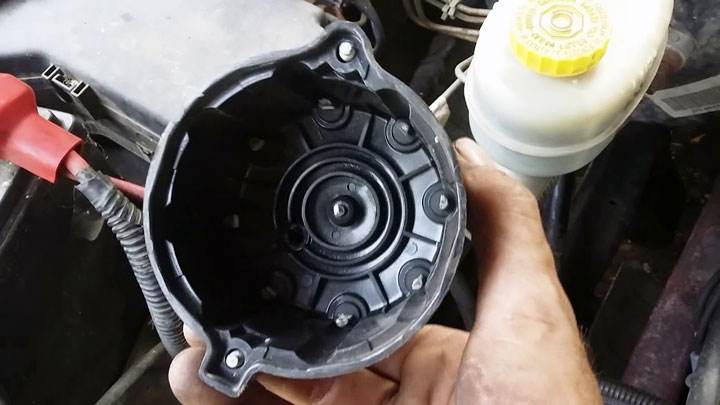
Specifically, a distributor cap is an individual part of the entire distributor assembly as a whole. The fact that a distributor will not function without a distributor cap, and a distributor cap would be useless without a distributor, perhaps best illustrates this concept.
The term “distributor” describes the drive assembly responsible for maintaining proper spark timing relative to base cam/crank timing. This assembly uses a coil (internal/external) and features a built-in timing advance mechanism.
Meanwhile, a “distributor cap” mounts on top of the distributor itself and features output contacts that allow power to be distributed to each respective spark plug wire.
FAQ
Do All Vehicles Have a Distributor?
The common automotive distributor is becoming less and less common over time. The vast majority of recent vehicles are now equipped with individual coils for each respective cylinder, thereby eliminating the need for spark distribution via a traditional distributor.
The latest distributorless ignition systems power these independent coils with high-voltage control modules, designed to provide a precisely timed spark.
That being said, there are still many vehicles on the road today equipped with distributors. As a result, distributor-related failures remain a consideration, particularly in the aging sector of vehicles in service.
However, it is reasonable to assume that a time will soon come when distributors become completely obsolete, much like the old points/condenser type distributors of years past.
What Causes a Distributor to Fail?
A distributor can fail for several reasons. Among the most significant of these causes are the eventual wear of components and bearings of the basic drive assembly, as well as internal arcing induced by carbon buildup.
Individual distributor-related components can also fail with age. Distributor caps can crack, allowing moisture intrusion or causing electrode erosion. Similarly, rotor buttons can degrade over time, or even break completely.
How Many Miles Do Distributors Last?
An average automotive distributor can be expected to last for the entire lifespan of the vehicle it is equipped on. However, as with any component, unexpected distributor failure can and sometimes does occur.
On the other hand, several distributor-related components are considered wear items, thus requiring periodic replacement. This notably includes a distributor’s cap and rotor button, which typically need replacement every 20,000 to 25,000 miles.
Can a Car Run Without a Distributor?
An engine can certainly run without a distributor. Most recent vehicles are now designed to forgo the use of a traditional distributor, in favor of a fully distributorless ignition system. In such cases, individual coils or coil packs are fired via a computer-controlled driver.
However, the integrity of the distributor remains a deciding factor for vehicles designed with a traditional distributor-based ignition system. Without a viable distributor, such a system is incapable of generating a spark at the correct time.
Can You Tell a Distributor is Bad Just by Looking at It?
It can be quite difficult to condemn a distributor based solely on a visual inspection. Unless visible wobble of the distributor body itself is observed or excessive play in a distributor’s drive gear can be verified, you will struggle to spot an impending failure.
On the other hand, you can condemn individual distributor-related components, such as a rotor button or distributor cap, through simple visual inspection.
Where Should the Distributor Rotor Point?
A distributor’s rotor should always point towards the individual electrode mounted on the cap that corresponds to the next cylinder scheduled to reach its top dead center position. This places increased importance on the correct timing of any distributor to be installed.
If you are only replacing the distributor’s rotor button itself, timing will pose little issue, as most rotor buttons feature a specially indexed tab. This prevents the rotor button from being installed incorrectly.