

Today’s vehicles rely on complex networks of terminals, wires, and sensors powering the electronic modules that control vital systems. One such module is the Body Control Module (BCM), which is the brain for various comfort and safety features.
Although rare, a vehicle’s body control module can experience serious operational issues, potentially leading to complete failure. Here are the most common symptoms of a faulty BCM and its replacement cost.
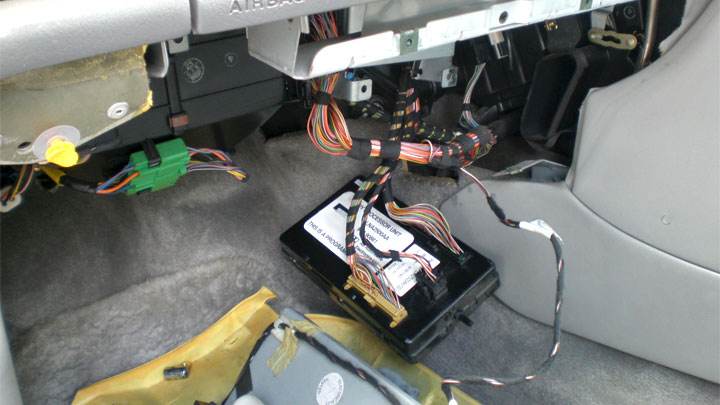
What is a Body Control Module?
A body control module is an electronic driver responsible for overseeing and operating a number of functions related to a vehicle’s body.
The exact functions a vehicle’s body control module is tasked with overseeing vary from one particular vehicle model to another. However, in most cases, a vehicle’s BCM facilitates wiper, lighting, heating, air conditioning, and anti-theft system functions.
The body control module is also responsible for communicating with a vehicle’s other control modules. This communication further streamlines the integration of a vehicle’s vital systems for more efficient and trouble-free operation.
Where is a Body Control Module Located?

In the vast majority of vehicles, the body control module is located beneath the dashboard. This is generally a fairly standardized location, with most modules of this type being situated in the immediate vicinity of this area.
However, the exact side on which the BCM is located (driver/passenger) varies from one vehicle model to another.
In some cases, accessing the BCM might require partial disassembly of the dashboard and surrounding trim. Fortunately, this can often be done with minimal difficulty, as many dashboard-related components are assembled with little more than push-type clips.
Symptoms of a Faulty Body Control Module
There are a number of signs associated with body control module failure. However, some of these symptoms tend to be much more common than others, although it is important to familiarize yourself with each in case you face such a fault in the future.
Here are some of the most common symptoms associated with body control module failure.
#1 – Repeated Battery Drain

One of the most common symptoms associated with body control module failure is repeated, excessive battery drain, also known as parasitic draw.
While a certain amount of parasitic draw is permissible, excessive draw allowed by a BCM fault can drain a battery within hours. This draw occurs when a BCM continues to power a particular accessory at incorrect times.
#2 – Erratic Electrical Function

A faulty body control module can also cause intermittent operation of various electrical functions, such as the horn, headlights, power windows and mirrors, and windshield wipers.
Widespread instrument cluster gauge failure is also a telltale sign of body control module failure, as is erratic door locking and radio operation. The risk of such issues being BCM-related increases when several of these symptoms are present at one time.
#3 – Security System Issues

In almost all cases, a vehicle’s security system is driven by the body control module. Therefore, it is easy to assume that persistent, yet puzzling, issues associated with a vehicle’s security system are the byproduct of a failing or faulty body control module.
This can also include issues with a vehicle’s keyless entry or passive entry functions.
#4 – Dashboard Warning Lights

A faulty body control module can wreak havoc on a vehicle’s instrument cluster. An otherwise mundane dashboard display can suddenly be lit up to the point of resembling a Christmas tree.
This occurs when a BCM is unable to communicate with another of a vehicle’s supplementary control modules, such as the transmission control module, powertrain control module, or airbag control module.
#5 – Failure to Start

A malfunctioning or faulty body control module can also prevent a vehicle from starting, in some cases.
Although somewhat rare, a bad BCM might fail to identify the key’s transponder chip, or might simply fail to deliver a “start” signal originating from a vehicle’s ignition switch, thereby preventing starter engagement.
A lack of BCM communication with other corresponding control modules can also lead to starting difficulties.
Can You Drive With a Bad BCM?
While it is theoretically possible to drive a vehicle with a faulty body control module in most cases, it is not advisable. This stems from the unpredictable nature of a failing computer module.
It is simply impossible to predict which of a faulty computer’s functions will operate as intended, on any given basis. The problem is that there is no way to determine whether or not a safety-sensitive issue will arise as a result of BCM failure.
Even if no such issue has occurred in the past, there is no guarantee that a faulty BCM will operate a vehicle’s headlights at the intended time. This presents a reasonable risk to a vehicle’s occupants.
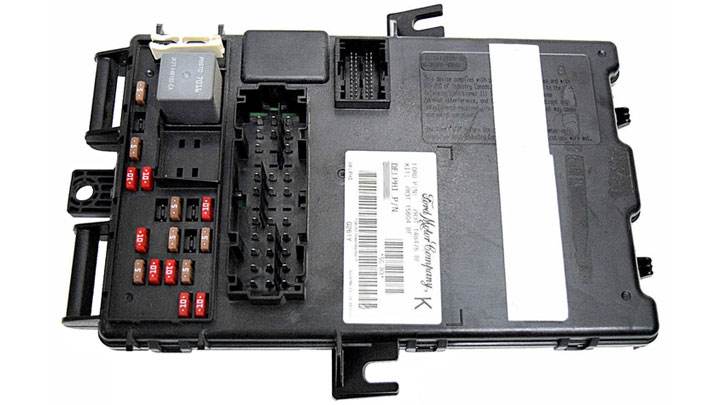
The exact price for body control module replacement differs from one vehicle make and model to another. This stems from the fact that the cost associated with particular body control modules varies, as do the labor times associated with their replacement.
However, the following is an account of the average expenses associated with body control module replacement.
The average cost for body control module replacement ranges from $300 to $600. The most significant variable in this price is the actual cost of the faulty module itself.
At present, the shipping fees associated with locating and purchasing these modules can also affect the bottom line of such repairs, as module availability has become an issue.
What Causes BCM Failure?

Heat and Mechanical Wear
Your vehicle’s body control module is sensitive to heat and high temperatures. When your car’s engine is running, it generates heat, affecting the BCM’s electronic components. Over time, this can lead to mechanical wear and ultimately module failure.
Water and Fluid Damage
In some situations, your BCM can be exposed to water and other fluids. Although reasonably protected against water damage, severe leaks or exposure to moisture can lead to corrosion of connections or short circuits, potentially causing failure.
Shocks and Collisions
A car accident or sudden impact can cause severe shock to the BCM. Although typically located in a protected place, high shock levels from collisions can damage the module’s circuits, wiring, or electronic components, thereby leading to failure.
Short Circuits and Faulty Wires
The module relies on a network of wires and electrical circuits to function properly. However, faulty wiring or short circuits can damage the BCM. Be sure to address any issues related to your vehicle’s wiring (easier said than done) to avoid placing unnecessary strain on the BCM.
Overused and Worn Relays
Your body control module uses relays to control various functions in your car, such as headlights or windshield wipers. Over time, these relays can become overused and worn, forcing the BCM to work harder and potentially leading to its failure.
It’s a good idea to periodically check and replace body control module functionalities related to worn relays.
How a Faulty BCM Affects Other Modules

Powertrain Control Module
When you have a faulty body control module, it can disrupt communication with the Powertrain Control Module (PCM), which is considered a vehicle’s main computer. This can lead to several issues, such as reduced engine performance, stalling, and even failure to start.
A faulty BCM can also cause warning lights to appear on your dashboard, affecting the efficiency of systems managed by the PCM.
Airbag Control Module
A faulty BCM can also impact the airbag control module, potentially compromising your safety.
If the BCM does not communicate properly with the airbag module, it could result in airbag warning lights illuminating or even prevent the system from deploying airbags during a collision. ALWAYS take any airbag-related issues seriously and have them checked.
Transmission Control Module
The Transmission Control Module (TCM) manages your vehicle’s transmission, providing smooth gear shifts and optimal performance. When the BCM experiences issues, it can even affect the TCM’s ability to function as it should. This can manifest as transmission-related problems, such as erratic shifting, reduced fuel economy, and compromised vehicle performance.
A faulty BCM can create a sort of chain reaction, causing failures of multiple modules and systems in your vehicle. If you or your mechanic suspect a bad BCM, you will need to take it seriously before larger problems arise.
FAQ
Does a New Body Control Module Require Programming?
Yes, when you get a new BCM, it typically requires programming. Once installed, it must be programmed to match your car’s specific settings. This way, the new BCM can properly manage all the different electronic systems and functions in your vehicle.
You will almost certainly need the professional assistance of a mechanic or authorized dealer, as specialized tools or software are usually necessary.
Can a BCM Be Reset?
In some cases, a vehicle’s BCM can be reset to restore all its functions. Of course, this depends on the proper functioning of a module’s internal circuits, as no reset will remedy compromised internal electrical circuits.
If a “glitch” has caused BCM issues in your vehicle, a reset might be the exact repair needed. The procedure for performing a body control module reset generally differs from one vehicle make and model to another.
Ford, Dodge, and Chevy/GMC all have their own procedure for performing these procedures, although most involve cutting power to a vehicle’s BCM for a specified period of time.
In many cases, this is done simply by disconnecting a vehicle’s battery, while other vehicles require the removal of a specialized fuse.
In any case, you should always consult factory-specific service documentation for your specific vehicle before attempting to reset your car, truck, or SUV’s body control module. Failure to do so can result in irreversible damage to the unit.