
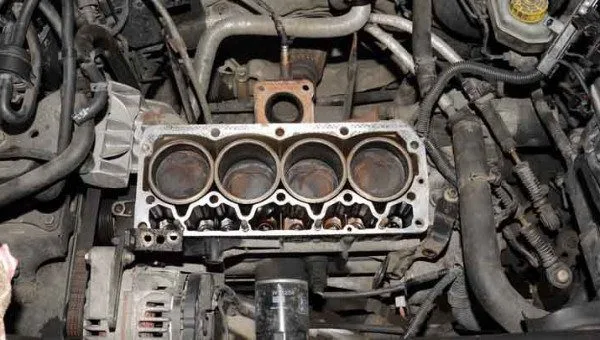
The two main parts of any engine are its cylinder head and engine block. The block contains the pistons and cylinders, while the cylinder head contains the rocker arms and valves.
Between the block and the cylinder head is the head gasket. This gasket serves as a seal for all the cylinders inside the block. The gasket prevents coolant from leaking out of the cylinders and also prevents oil from leaking into the cylinders and mixing with the coolant.
More importantly, if there is a problem with the engine block or cylinder head, the gasket will allow the mechanic to separate these two large engine pieces so they can be repaired individually.
If you think you have a blown head gasket, it might actually be a cracked engine block, and vice versa. The symptoms of each can be similar.
3 Symptoms of a Blown Head Gasket
A head gasket is meant to blow after a certain amount of time. This could cause engine oil, fuel, and/or coolant to mix in the internal combustion chamber.
Since the head gasket is meant to prevent these fluids from mixing, a blown head gasket could cause this and the results can be catastrophic. Here are three of the most common signs indicating you have a blown head gasket.
1) Antifreeze and Oil Mixing
A blown head gasket can cause oil to mix with the antifreeze fluid. But the same thing can happen with a cracked engine block, so another symptom must also be present.
2) Engine Overheating
If the coolant leaks into the oil, it won’t be able to do its job of cooling the engine components properly. This would cause the engine to overheat. The smart thing to do if your car is overheating is to simply pull over to the side of the road and not continue driving.
3) Poor Engine Performance
Once you have an overheated engine, its performance decreases significantly. The biggest issue will be slow acceleration and engine stalling, as you will then likely have low engine compression.
5 Symptoms of a Cracked Engine Block
The engine block is what houses and protects the cylinders of your engine. The engine block casing is lubricated to prevent any overheating of the cylinders or components inside.
The top of the engine block is where the cylinder heads are located. It seals the cylinders from the top and allows for the formation of the combustion chamber. It is quite rare for the engine block to crack, but it has happened before.
Once it does, the engine will start having all sorts of problems and exhibit very bad symptoms. After all, if the engine block can no longer protect the internal components from excessive heat and cold, then the entire engine is literally fried.
Here are five common signs you can expect from a cracked engine block.
1) Oil and Antifreeze Mixing
Engine oil and antifreeze fluid can mix if there is a severe crack in the engine block. The antifreeze fluid will be able to find its way through the crack and then circulate with the oil. This will cause major problems for the engine.
As mentioned above, oil mixing with antifreeze can also indicate a blown head gasket, so also consider other symptoms.
2) Engine Smoke
A huge symptom of a cracked block is smoke coming from the engine. If you let this go on for too long, it will lead to other engine problems.
The smoke is due to emission fumes leaking through the crack instead of the exhaust system and out the tailpipe. With this, you will likely experience a considerable loss of power when attempting to accelerate.
3) Seeing a Crack in the Block
If you really need to confirm that you have a crack in the engine block, simply perform a visual inspection of the block to see if there is a crack. Of course, this is usually not as simple as just opening the hood.
If you don’t have mechanical experience, you can hire a mechanic to do it for you and get some diagnosis.
4) Engine Overheating
The engine block casing helps keep the engine components cool and lubricated. If there is a crack in the block, the engine will not have proper cooling, which will cause the engine to overheat and potentially lead to internal damage if driving continues.
5) Low Compression
The internal combustion process allows for engine compression. Since combustion takes place in the engine block, any crack that forms on the block will result in reduced compression as air escapes. Once this happens, engine performance decreases.