
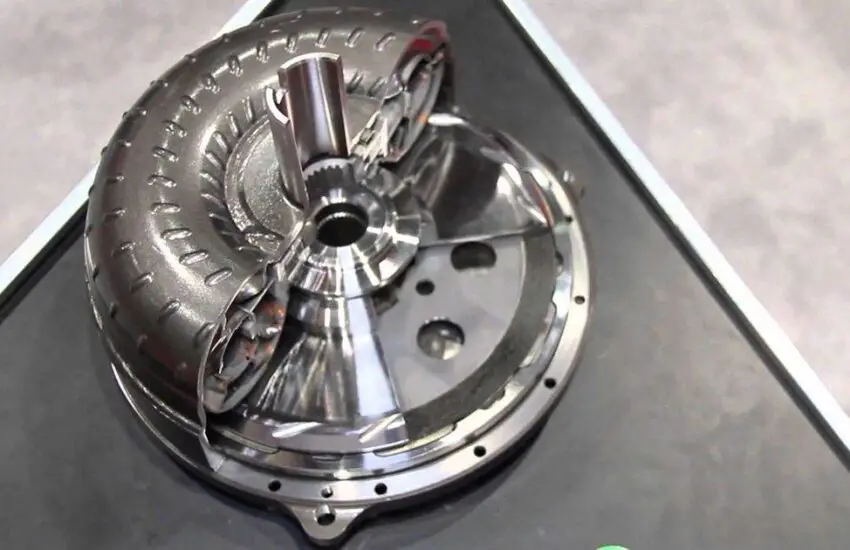
Any car enthusiast is always on the edge of their seat when it comes to technical details of the engine block. One topic of interest that can add to the curiosity is the operation of lock-up torque converters. These converters have garnered interest from many due to their energy efficiency and the improved lifespan of the transmission.
To learn more about its operation and the new locking mechanism, read on.
Lock-Up Torque Converters – From Scratch
All modern models with automatic transmissions are equipped with a torque converter lock-up. It is an innovative mechanism that is popular in the market for the efficiency it provides. Let’s explore the basics and operation of these systems from scratch.
1. What is a Torque Converter?
Torque converters are similar to fluid couplings (a device for transmitting rotational mechanical power) that have the ability to transfer power from an internal combustion engine to the driven load. Regarding positioning, torque converters are located between the engine’s flexplate and the automatic transmission.
The basic function of torque converters is to multiply torque to cope with decreasing rotational speeds. These converters prove to be a blessing when it comes to driving a heavy vehicle on the road. Now that you know what a torque converter is; let’s move on to understanding lock-up torque converters.

2. The Basics of Lock-Up Torque Converters
What is torque converter lock-up? It’s important to know that a torque converter is prone to causing efficiency loss. When the engine power is below a standardized threshold value, slippage inside a torque converter is likely to occur. Slippage leads to heat, which in turn results in a loss of fuel economy. To eliminate the underlying issues, a lock-up clutch is thus introduced.
The innovative locking system connects the impeller to the turbine, turning the torque converter into an absolute mechanical coupling. The result of an implanted locking mechanism includes improved slip transmission power and less wasted heat. You can also check out maintenance tips when better transmission speeds are all you desire and how a lock-up torque converter works.
3. The Operation of Lock-Up Torque Converters
A lock-up clutch is engaged as soon as the engine and transmission are spinning at approximately the same speed. The speed at which a locking mechanism automatically activates is around 64 km/h. However, for the transmission to be locked, certain requirements must be met.
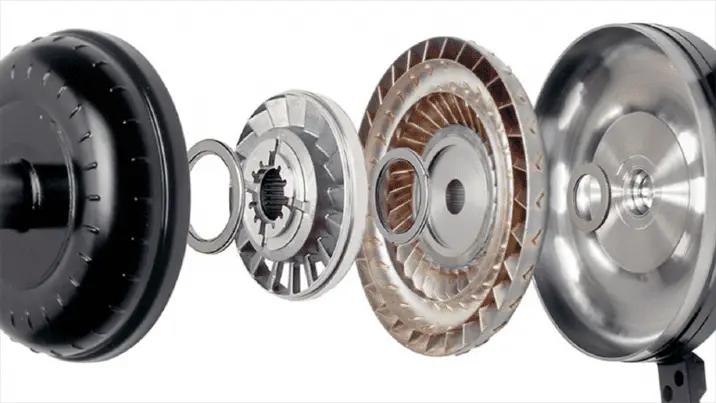
Coolant temperature, lock-up threshold speed, cruise control, and gears are some parameters that affect the functionality of lock-up converters. If all factors align and the lock-up activates, the impeller and turbine connect. As a result, you can expect 100% power transfer through the torque converter. Isn’t that everything you want?
Wrap Up
This is primarily about lock-up torque converters which add to the overall lifespan of the automatic transmission. There are also some issues related to poor lock-up action that you need to take into consideration. Before diagnosing any of the problems, it is necessary to understand the operation of lock-up torque converters. This explains the hype around the topic!