Whether it’s about bringing your engine back to life to restore it to like-new condition, customizing it for maximum performance, or as a hobby for a classic car, there are many cases where an engine rebuild is better than just repairing parts. Rebuilding an engine can be a challenging and intimidating task, but it’s still possible in your own garage with this comprehensive guide on how to rebuild an engine.
In this guide, you’ll not only find detailed step-by-step procedures and practical professional tips but also an informative and important discussion on the different options for any car owner needing an engine upgrade or overhaul. These include when to rebuild an engine and when to repair it, as well as a comparison between rebuilding the engine and replacing the existing engine with a “remanufactured engine.”
Partial Repair vs. Complete Engine Rebuild
There are two approaches to improving an engine that is deteriorating after many miles. You can either replace individual parts as needed to save money, known as the “piecemeal” approach, or perform a complete engine rebuild.
The piecemeal approach involves replacing only the worn or broken parts and leaving everything else intact. This maintenance approach typically tries to make do with standard-sized spare parts such as bearings, rings, pistons, and valves.
Obviously, the only underlying motivation here is economic, and you can expect such standalone repairs to keep your vehicle running without significantly improving engine performance.
So, when does the piecemeal approach make sense? When the vehicle and/or engine aren’t worth spending a lot of money on due to old age or low resale value, only the parts that absolutely must be replaced for the engine to keep running are changed. Other repairs can wait for the next owner.
The second approach to engine upgrade is to perform a complete overhaul when the engine needs major repairs and/or you’re hoping for significantly improved performance. This is certainly the more expensive approach, but it also yields much more durable and enhanced results.
By replacing major wear components such as rings, pistons, bearings, exhaust valves, the timing chain or belt, the engine is restored to “like-new” condition. This approach may involve purchasing an engine kit or buying the necessary components individually based on the owner’s preferences.
This usually also requires performing machining work, such as turning the crankshaft and resurfacing the cylinder heads.

Rebuilding the Engine vs. Replacement with a Remanufactured Engine
If you opt for a complete engine overhaul, you have two options: rebuild it or replace it with a “remanufactured engine.” There are pros and cons to each choice.
First, not all engines are rebuildable. If the engine block is cracked or severely damaged, rebuilding it is probably not possible.
Second, the internal parts needed for your engine may not be available, although the aftermarket usually has a sufficient supply of components for the most popular engines. It’s always wise to check availability first before starting the actual work.
The third consideration is your level of DIY automotive skill and the time you have. Rebuilding your engine yourself makes more sense if you’re sure the engine block can be reused, if the necessary parts are available and affordable, and if you have the time and ability. The rebuilding process typically requires machining work and you should expect to spend up to a week, probably more, on this project.
If the above conditions aren’t met, consider replacing your old engine with a remanufactured engine. Most remanufactured engines are made by reputable companies and come with a warranty.
Shop around to estimate whether this option will be more affordable than rebuilding an engine yourself, the availability of a remanufactured engine compatible with your vehicle, and the logistics needed to unload a 600 lb engine from a freight truck.
How to Rebuild an Engine: What You’ll Need
If you’re considering disassembling your existing engine down to the bare block and rebuilding it, you’ll need a few things.
Engine Hoists
You’ll need to start by removing the existing engine from your vehicle. Most DIYers use an engine hoist, also called an engine crane. To remove an engine in your own garage, basic engine hoists with a lifting capacity of 1 or 2 tons will be more than adequate for this task.
Load Leveler Bars
When your engine is supported by chains on both sides, it can tilt to one side if the weight is unevenly distributed, which is a challenge when removing an engine. To correct this, an engine load leveler bar allows you to move the horizontal support bar left or right as needed to balance and straighten an unbalanced load. Some load leveler bars are included with hoists.
An Engine Stand
Once you’ve removed the engine from the vehicle, you’ll need to take it off the hoist. An engine stand allows you to securely and safely mount the engine block. Most stands offer the ability to rotate an engine block into any position so you can easily work on all sides.
Other Tools
- Engine rebuild kit
- Camshaft bearing tool
- Cylinder bore honing tool
- Cylinder bore ridge reamer
- Piston ring compressor
- Rod bolt protectors
- Silicone gasket maker
- Timing gear puller
- Torque wrench
- Wheel chocks
- Engine assembly lubricant
- Water-displacing lubricant
- Basic hand tool set
- Electric drill
- Brass punch
- Air compressor
- Air blow gun and hose
- Fender covers
- Jack stands
- Flashlight
- Masking tape
- Permanent marker
- Oil drain pan (at least 2)
- Plastic sandwich bags and boxes: for storing and organizing hardware and parts
- Service manual
New Components for an Engine Rebuild
When an engine has accumulated a lot of miles, the internal parts may be worn or damaged and need replacement. The engine parts you’ll replace when rebuilding your engine will depend on their condition.
In the engine block, typical wear items include pistons, piston pins, piston pin bushings, piston rings, connecting rod bearings, and main bearings. Crankshafts are machined if possible and replaced if they can’t be machined. Connecting rods can be reused or replaced.
You may need head gaskets, valve covers, valve cover gaskets, oil pans, oil pumps, harmonic balancers, and timing covers. If you’re rebuilding your existing cylinder head, you’ll need new intake and exhaust valves, valve springs, rocker arms, pushrods, and their associated hardware. Sometimes, you might be able to purchase complete cylinder heads with associated camshafts and valves. You’ll also need new head bolts to secure the heads to the block.
Some other necessary parts include water pumps, associated pans and gaskets, throttle body assemblies, and flywheels.
How to Rebuild an Engine: The Steps
Below are the steps to follow for a complete car engine rebuild.
1. Remove the Engine
Step 1: Position the vehicle near your hoist
You’ll need a large, well-lit garage with a flat surface, with enough space to position your hoist and maneuver.
Step 2: Remove the engine hood
Mark the hinge bolts so you can find them later. While carefully loosening them, ask someone to help you as you slide it. Note that some hoods have electrical connections for the headlights, turn signals, and fog lights mounted on them. Disconnect these as well. Step 3: Disconnect the external engine components
For safety reasons, it’s important to note that you should disconnect the battery ground cable before doing anything else.
- Next, drain the coolant and radiator hoses. Be very careful not to damage the metal clamps, which are harder to replace than the rubber hoses.
- Remove the radiator and fan shroud.
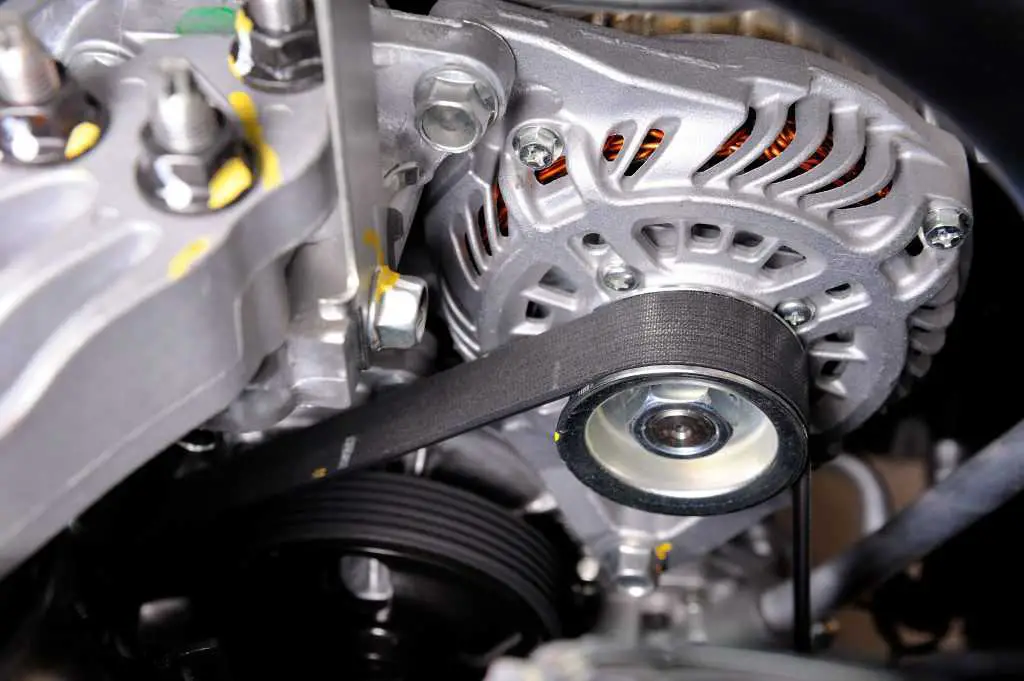
- Loosen the alternator, tensioner assembly, cooling fans, and belts.
- Disconnect the intake air supply and fuel lines. If your car has a pressurized fuel system even when the engine isn’t running, drain the fuel and release the pressure before disconnecting them.
Tips: It’s recommended to take close-up photos and label parts with markers for reference as you go, considering the many parts of an engine. This will greatly facilitate the reassembly process later.
Step 4: Remove all electrical connections from the engine
To disconnect the transmission, you must first disconnect the exhaust manifold and unbolt all visible electrical connections to the transmission. You can leave the spark plug wires for later.
Step 5: Remove the bolts that secure the transmission bellhousing to the engine
Lift the car and place it on jack stands, then support the transmission from underneath with additional jack stands. It’s very important to use a support under the transmission before disconnecting the bolts, because once you loosen them, there will be nothing supporting the transmission.
Note: In most cases, the transmission itself doesn’t need to be removed from the vehicle, as long as it can be safely supported when the engine is lowered.
Step 6: Use the hoist to remove the engine
Connect the hoist to the lifting points on the cylinder heads or the largest bolts near the top of the engine and slowly adjust the leveler to begin lifting the front.
2. Disassemble the Engine Block
Step 1: Get the manual for your specific vehicle
It’s essential that you refer to the engine manufacturer’s instructions to understand all the necessary specifications and peculiarities for rebuilding your specific engine.
Tips: Check the identification and casting numbers of your engine to make sure the engine you think you’re working on is indeed the engine you’re working on.
Step 2: Inspect the engine
Look for any signs of overheating, cracking, and burning on the block. Check for any fluid leaking from the many plugs and seals between components. Also check for any excess gasket sealant left from previous maintenance.
Step 3: Inspect external components
Inspect the alternator belt for any signs of wear by spinning the pulley and listening for any unusual noise. Then, inspect the distributor for any signs of play by applying some pressure to it. Also inspect the clutch assembly for wear.
Step 4: Remove the exhaust manifold
If the exhaust manifold bolts or studs are corroded, be careful to loosen them without damaging them. Using lubricants can help. Otherwise, extremely stubborn bolts may require heat to loosen.
Step 5: Disassemble the rest of the engine
Start with the oil pan and valve covers, then the cylinder heads. Protect the lifters when lifting the cylinder heads: if they are bent or damaged, they will need to be replaced.
Step 6: Check the cylinder bores
If the cylinders are too worn, the chances of a successful rebuild will be slim. You may want to use a micrometer to determine the bore diameter, or you can get a good idea of cylinder wall wear by looking at the cylinder ridge. The ridge is the point where the cylinder isn’t worn because the rings don’t go that high in the bore. Cylinder wear must be below this point.
Generally, if the wear is less than 2/1000 of an inch, the original pistons can be reused; otherwise, the engine will need to be bored and oversized pistons used.
Next, remove the cylinder ridge near the top of the bore with a cylinder ridge reamer. This will allow the pistons to be removed without damage and allow the pistons to be reinstalled with new rings.
Step 7: Removal of piston and rod assemblies
After removing the rod caps from the rods, place rod bolt protectors on the rod ends and protect the bolts to prevent them from scratching the engine block. Once removed, put the same rod cap back on the corresponding rod and keep them as numbered, matched, or paired sets. Keep the parts marked or in order to put them back later into the correct cylinder from which they were removed.
Step 8: Remove and inspect the crankshaft
Remove the crankshaft using the crank mounting plates. Keep the old main bearings in order, inspect them for any wear and excess dirt. Remove the camshaft, balance shafts, and auxiliary drives. Keep everything organized as you’ll need to put them back in the correct order. Remove the cam bearings, paying attention to their position.
Check for cracks and any signs of overheating. Measure different dimensions of the crankshaft: journal diameter, out-of-round, taper, and runout. Compare this to the dimensions specified in the workshop manual.
If some dimensions don’t match, mark them and send the crankshaft to a machine shop to have it resurfaced. Then, measure the crankshaft again so you can replace the bearings to get a clearance between the crank and bearings that meets specifications.
Step 9: Finish disassembly
Remove the core plugs, brackets, guide pins, and everything else still attached to the outside of the engine block. Check the engine block for any cracks.