
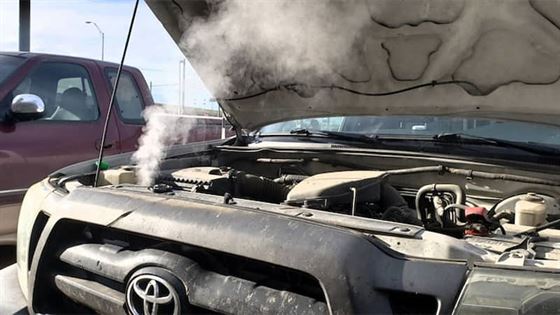
What should you do if your car overheats and then returns to normal? Overheating leads to many serious consequences for your car, which is why it is absolutely necessary to resolve this issue. If you notice your engine overheating periodically, don’t worry! We will cover everything on this topic:
Why Does Your Car Overheat and Then Return to Normal?
While driving, the engine temperature will rise to a certain temperature level to ensure the most efficient operation. Then, the cooling system begins to intervene to help the engine maintain that stable temperature without continuing to increase. Generally, there are many reasons why a car overheats. The most common cause is a problem with the cooling system or the engine system. So, if the car overheats and then returns to normal, is it as serious as other overheating cases? Find out Why My Car Overheats So Suddenly:
1. Carrying Heavy Loads
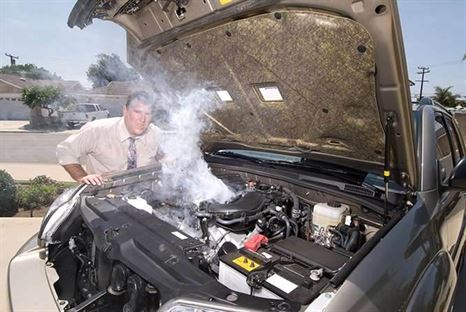
This is a very common reason for temporary overheating. Fortunately, there is no mechanical problem in this situation. Carrying heavy loads, such as towing cargo or a trailer, puts extra strain on your car’s engine and makes it overworked. At this point, your engine has to work harder to carry more weight, meaning the engine generates more heat while the cooling system cannot dissipate enough heat, and the consequence is that your car overheats. If you observe the car’s dashboard, you will see the warning light turn on and off until you unload the goods from your car. Towing or carrying too much weight not only causes the engine to overheat but also overheats the transmission system and puts excessive load on the car’s brakes.
2. Driving in Traffic Jams
In some situations, when driving in heavy traffic jams, your car will start to overheat. Normally, your car gets hotter when the engine runs faster than when idling, but at the same time, the car’s movement produces more airflow through the radiator to cool the engine. The lack of airflow will prevent the cooling system from maintaining the temperature at a normal level, causing overheating.
Whenever drivers stop their vehicle, they have to brake at least once and then accelerate again, thus putting the engine into a high-load operating state. This is not good for the engine and causes immediate engine overheating. Furthermore, high-speed braking and continuous braking will soon lead to car brake failure. Similarly, continuously pressing the clutch pedal to change gears also causes that part to break quickly.
3. Climbing Steep Hills
Your engine likely overheats when driving up a long, steep slope. The reason is that to climb a hill, the car’s engine will have to work harder to resist the force of gravity and maintain the same speed, meaning your engine generates more heat, but the speed of the air passing through the radiator and into the engine has not increased. Engine overheating is an unavoidable thing in these situations.
4. A Faulty Thermostat
The second cause that can lead to a car’s engine overheating and then returning to normal is a bad thermostat. The thermostat is part of the cooling system, responsible for regulating the coolant. When the engine temperature reaches a certain threshold, the thermostat opens to allow coolant to flow to the hot part of the engine. Therefore, when the thermostat gets stuck, it may operate sporadically and prevent coolant from being distributed to the engine for cooling, causing temporary engine overheating.
5. The Fan Not Working Properly
A common cause of a car’s engine overheating is poor fan performance. The fan is the part responsible for dissipating heat, working with the coolant and thermostat to cool the engine. If the fan is damaged, the engine’s cooling efficiency will be reduced and lead to overheating. Therefore, to ensure the fan always operates stably, car owners should periodically check the fan, detect, and promptly handle any issues that arise.
6. Engine Problems
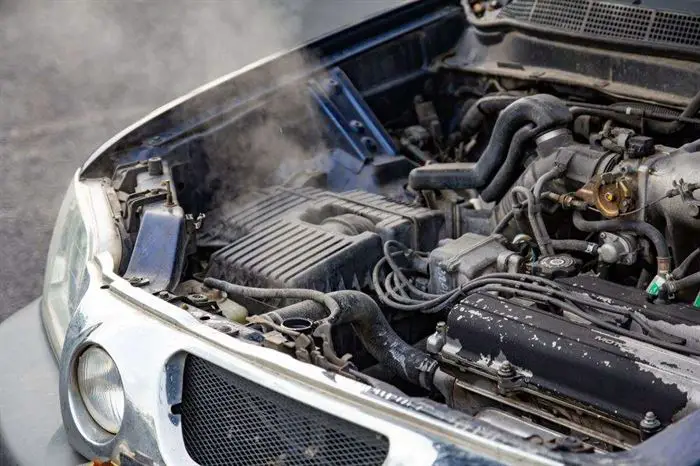
In addition to the reasons above, problems within the engine system can easily cause the vehicle to overheat. For the engine to operate efficiently, good coordination between many parts is needed. Most important is the coordination of the air intake system and the ignition system.
If just one part has a problem, it will affect the entire fuel combustion process and lead to many associated issues, such as vehicle overheating. According to experts, common errors include clogged injectors/misaligned injection angles, delayed spark plugs, faulty pressure regulators, engine cylinder combustion chambers with a lot of soot (obstructing the heat dissipation process), a clogged air filter,… can easily cause the vehicle to report a high temperature.
When you drive on the road, the engine is under load and burns more fuel, thus creating heat. This heat must be removed from the coolant by the radiator. If the cooling system is malfunctioning, your car will overheat. A faulty water pump can also cause this phenomenon.
When you stop and let the engine idle, much less heat is released by the engine, allowing the cooling system to catch up and cool things down.
Car Overheating Then Returning to Normal: How to Fix It?
Although it is only a temporary situation, whenever you notice your engine overheating, you need to address the problem as quickly as possible. Driving with an overheating engine can damage your car. If you see the temperature gauge go past the red line or the H level, steam escaping from under the hood, or if there is a smell of oil leak, you should immediately stop the car and check the car’s engine. Here are some tips to help you handle the situation:
- Turn off the car’s air conditioning and simultaneously open all the windows to lower the car’s temperature.
- Turn on the heater and the fan if the air conditioner still isn’t working. This might sound wrong, but believe me, they are extremely effective and will not damage your car at all.
- When you are in traffic, you can shift into P or N, and then rev the engine a little. This will help speed up the water pumping and ventilation process.
- If you have followed the steps above but there is still no change, you should pull the car over to the side of the road and turn off the engine to let it cool down. Then wait about 15 to 30 minutes for the boiling water to evaporate before opening the hood to check.
- If you have engine coolant prepared in your vehicle, you can add it before heading to the nearest garage or maintenance center.
To prevent engine overheating, your car should be maintained periodically, especially by checking and changing the coolant solution, ensuring the coolant level is always at a safe level, and not letting the coolant fall below the “min” mark. Furthermore, the engine oil should also be changed regularly.