
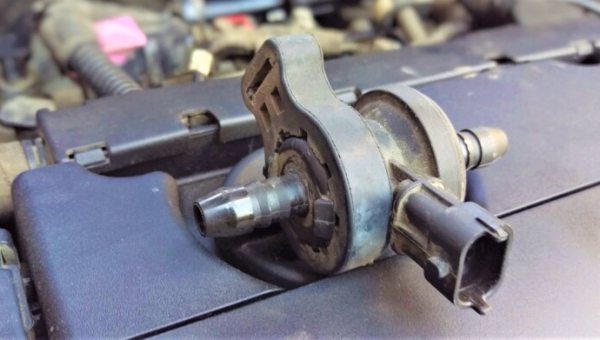

While the average driver has no idea what goes into their vehicle’s emission systems, there are many new components that have completely revised how modern engines operate.
One of these innovative technologies is the EVAP system, which includes various components that make everything work. But one of the integral components of the EVAP system is the vapor canister purge valve.
When everything is working correctly, it’s an excellent component that significantly reduces emissions. But when it’s not, you might notice a whole range of problems. Below is everything you need to know about this new technology making its way into vehicles.
Symptoms of a Faulty Vapor Canister Purge Valve
Although the vapor canister purge valve solenoid is an emissions component, that doesn’t mean you won’t notice a few performance issues if you don’t fix it right away.
The most common symptoms of a faulty canister purge control valve are the check engine light, poor engine performance, increased emissions, difficulty starting, or rough idle.
Below, we have highlighted the five most common symptoms you might notice if you have a faulty canister purge valve.
1. Check Engine Light
The most common thing you’ll notice with a faulty vapor canister purge valve is that you’ll get an unexpected check engine light. Although symptoms may change depending on whether the valve is stuck open or closed, one thing that shouldn’t change is that you should get a check engine light.
2. Increased Emissions
If the vapor canister purge valve is stuck closed instead of open, the valve won’t push any fuel vapors back into the engine. Instead, they will go straight out of the exhaust, leading to much higher emission levels.
Of course, you probably won’t notice this unless you take your vehicle for an emissions test.
3. Poor Engine Performance
When the vapor canister purge valve is stuck open, you get more air in the system than your vehicle expects. This means every time you press the accelerator; your vehicle doesn’t drop enough fuel into the engine for the amount of air it has.
Although these effects are more noticeable at lower RPMs, they can affect performance at all engine speeds; it’s just not as perceptible.
4. Hard to Start
The vapor canister purge valve does a lot of its work when you start your vehicle to empty the fuel tank of gases, so it makes sense that this is where you would notice most of the symptoms.
If the purge valve is stuck open, you’re going to have an excessive amount of air when you start the engine, and since your vehicle doesn’t account for it, it will mess up the fuel/air ratio.
Although your vehicle should still start, you’ll notice it takes a bit more effort to get it going. However, it’s quite rare for it not to start at all because of this valve.
5. Rough Idle
Vapor canister purge valves operate on vacuum, and if you have a vacuum leak, it can affect engine performance, especially at lower RPMs.
The result of a vacuum leak on a canister purge valve would be a rougher idle than usual. The size of the leak would affect how significant the issue is.
Function of the Vapor Canister Purge Valve
Unless you’re a mechanic or engineer, you’ve probably never heard of a canister purge valve before. To start, it’s an anti-pollution component that redirects excess fuel vapors into the engine.
The entire system it’s part of is your vehicle’s EVAP (Evaporative Emission) system. It works in conjunction with the charcoal canister to capture and redirect excess fuel vapors so the engine can burn them again.
This reduces your emissions by burning fuel vapors instead of letting them escape into the air, essentially maximizing the amount of energy produced and minimizing the number of harmful chemicals released as a byproduct.
Because it’s effective at reducing the overall amount of harmful emissions, many car manufacturers have started incorporating them into new vehicles to meet increasing emission standards.
But when the vapor canister purge valve gets stuck open, you get too much air in the system, which hurts performance. On the other hand, if it stays stuck closed, your emission levels skyrocket.
Location of the Vapor Canister Purge Valve
Depending on what you drive, there are two typical locations for the vapor canister purge valve.
The canister purge control valve is most often located in the engine compartment on a line running from the intake to the canister. It can also be located near the fuel tank.
The component won’t look like much. Typically, it’s nothing more than a small black plastic component with an electrical connector and a vacuum line at each end. Although it might be hard to identify, it’s usually quite easy to access once you’ve found it.