
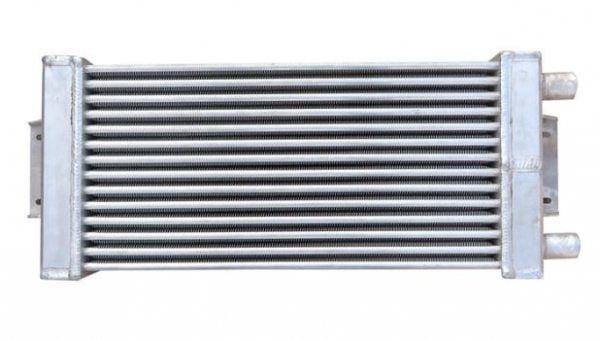

Since oil is the lifeblood of your car, you need to ensure the blood doesn’t boil. Discover how an oil cooler prevents this from happening.
- 1 What is an oil cooler in an engine?
- 2 Why is it important to keep engine oil cool?
- 3 How long does an oil cooler last?
- 4 Why else are oil coolers important?
- 5 What are common oil cooler problems?
- 6 What are the signs of oil cooler failure?
- 7 Oil cooler upgrades
When winter is deep, you struggle to clear ice from the windshield and your breath fogs up even inside the car, an oil cooler for your engine oil might be the last thing you think your car needs. But regardless of the weather, engine oil gets very hot inside your engine.
The constant movement of pistons and other moving parts that keep the engine running creates a lot of heat through friction, and it’s part of the engine oil’s job to remove this heat. Although oils are very well designed to do this, especially fully synthetic engine oils with additives, they can take all the help they can get, and that’s where the car oil cooler comes into play.
By helping to keep the oil and your engine cool, this device is a key part of the car’s cooling system, and although most drivers never interact with their oil coolers, keeping them in working order will ensure they last longer. Like any other component, they wear out over time, so use our guide to find out what an oil cooler is and how to maintain it properly. You might even consider upgrading your oil cooler!
WHAT IS AN OIL COOLER IN AN ENGINE?
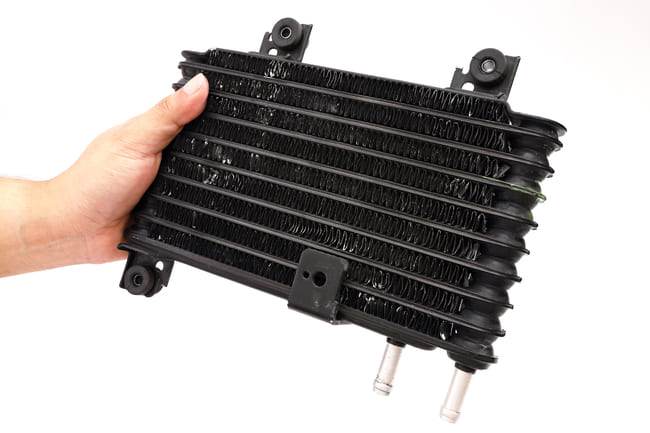
The first question many people ask is, “Is an oil cooler a radiator?” Essentially, yes, it’s a small radiator that does the same job as a normal radiator for oil. The purpose of the oil cooler is to allow the engine’s cooling system to remove excess heat from the oil. They look like small cross-flow heat exchangers, and the location of the oil cooler may differ depending on the car you have, although they are all used to maximize cooling efficiency. Since oil flows mainly through the engine block, the steering system, and a turbocharger in turbocharged vehicles, the oil can gain heat very quickly, especially during intense driving.
In most cars, engine oil is routed to the oil coolers from an adapter located between the engine block and the engine oil filter. The oil then flows through the cooler tubes while engine coolant circulates around the tubes. The heat from the oil is transferred through the tube walls to the surrounding coolant, similar in many ways to how a residential indoor air conditioning unit works. The heat absorbed by the engine cooling system is then transferred to the air as it passes through the vehicle’s radiator, which is located in front of the engine behind the vehicle’s grille.
WHY IS IT IMPORTANT TO KEEP ENGINE OIL COOL?
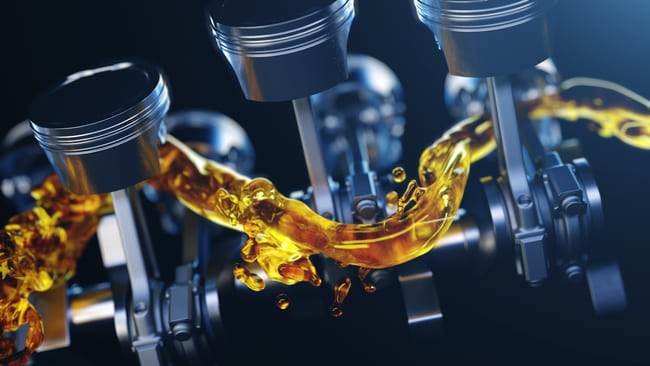
Oil circulates around the engine block to ensure that moving parts are lubricated and can move freely and also to remove the heat produced by friction. Before the oil enters the oil pan or oil reservoir after it has been around the system and is being returned, it must be cooled so that the oil does not reach an unusable viscosity. Viscosity is a measure of how easily a fluid flows, and as oils lose and gain heat, their viscosities increase and decrease respectively. So, thick, lumpy oil has high viscosity, and smooth, thin oil flows more easily and therefore has lower viscosity.
Automotive oils are specially designed to fall within certain viscosity ranges. Therefore, if too much heat is transferred to the oil, its viscosity decreases to a point where it would struggle to properly lubricate the required systems. So it becomes a balance; you want it sticky enough to cling to gears and moving parts, but free enough to circulate through the system and keep it cool. Since temperature is a major factor in oil viscosity change, cooling becomes an essential process.
HOW LONG DOES AN OIL COOLER LAST?
An oil cooler is designed to last the lifetime of a car. This doesn’t mean, however, that it will last that long in reality, as there are a few things that can go wrong. It’s important to keep an eye out for any of the symptoms listed below. In some situations, the cooler may need to be replaced, but it’s hard to say exactly when. The sooner you spot faults, the less damage will need to be repaired.
If you have your car serviced, they will also check the oil and filter. Make sure they check the oil cooler at the same time.
WHY ELSE ARE OIL COOLERS IMPORTANT?
Oil coolers are extremely important for cars equipped with turbochargers. One of the most common reasons for turbocharger failure is inadequate lubrication. If the turbocharger doesn’t receive oil, the high speed will cause a lot of damage in a very short time. The oil must remain precisely at the right viscosity, so it must be kept cool and at the right temperature.
Some turbochargers opt for a water-cooling system that enhances mechanical durability and extends the turbocharger’s lifespan. Many turbochargers are designed without water cooling ports and are sufficiently cooled by air and the lubricating oil that passes through them. Some even have both and are cooled by oil and water. Either way, it’s important to keep the turbo cool for it to function. The oil cooler temperature must remain as stable as possible.
WHAT ARE COMMON OIL COOLER PROBLEMS?
There are a variety of different problems you might encounter with an oil cooler, and most of them will require replacing some components or even the cooler itself.
One problem you might encounter is that the oil cooler adapter, which connects the cooling lines to the cooler itself, fails. The rubber gasket or O-ring in the adapter can become hard and inflexible over time, meaning it doesn’t act as an effective seal.
The lines themselves or the oil cooler can also fail and start to leak, which would result in a loss of engine fluid. This can happen as a result of general wear and tear.
It’s also possible for coolant to be forced out of the cooling system into the oil pan if the engine isn’t running and the cooling system is under pressure.
WHAT ARE THE SIGNS OF OIL COOLER FAILURE?
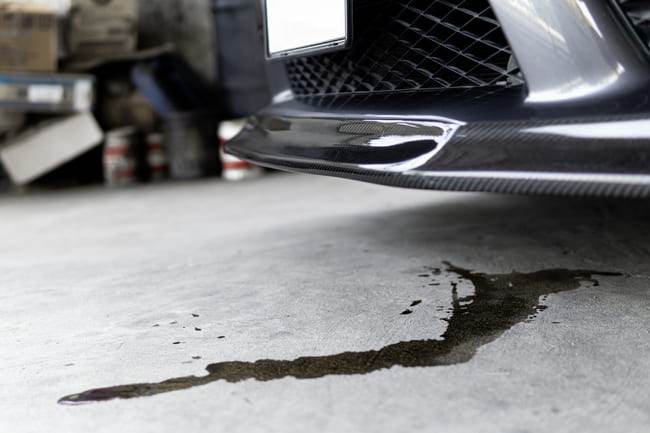
Common symptoms of oil cooler failure are usually related to fluid leaks. If the oil cooler adapter fails as mentioned above, engine oil can be forced out of the engine. If it’s just a small oil cooler leak, it might be a puddle of engine oil on the ground under your vehicle, or if it’s larger, it could be a stream of oil on the ground behind your vehicle. If either of these is the case, you should have it checked at a garage as soon as possible. When oil leaks, the engine loses its ability to lubricate itself. This could lead to increased engine temperature and premature wear of parts due to increased friction from lack of proper lubrication.
Another fluid that the cooling system can lose is engine coolant. Similar to an oil loss, engine coolant can leak from an oil cooler if the cooler body is damaged. Whether the coolant leak is large or small, the engine will overheat after a while if not repaired promptly. If the leak is small, you might notice puddles of coolant on the ground under your vehicle. If the leak is large, you’ll likely notice steam coming from under your vehicle’s hood. If enough coolant leaks from the radiator or oil cooler, it can lead to engine overheating issues and mechanical component failure, so have it checked as soon as possible!
Mixing of fluids can also be a sign of a problem with the oil cooler. If the oil cooler adapter fails internally (rather than externally, as mentioned above), you might notice engine oil in your cooling system. This happens because when the engine is running, oil pressure is higher than cooling system pressure. Oil is forced into the cooling system. This will eventually lead to a lack of lubrication and can seriously damage your engine. This can also happen in reverse, and coolant can get into your oil supply. For both, the cooling system and the engine both need to have all fluids flushed. If your oil cooler adapter is faulty, it will need to be replaced. The oil cooler itself will, of course, need to be replaced if it’s leaking.
If you need to repair your oil cooler or are not satisfied with its performance, you might consider an oil cooler upgrade. There are a variety of aftermarket kits available.
OIL COOLER UPGRADES
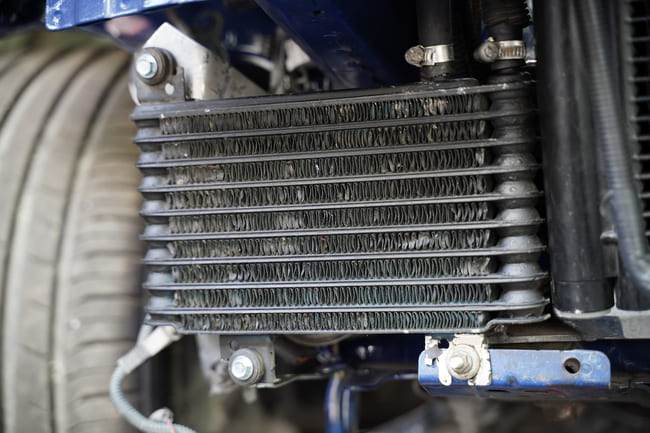
Most cars won’t need an oil cooler upgrade. For daily use, cars will never need more than the natural cooling effects of the oil being in the sump or passing through other lower-temperature areas to stay within the required viscosity limits.
If you plan to take your car to a track day, set it up for proper racing, or do a lot of off-roading, you might want to think about changing your oil cooler for something better. Most normal road cars aren’t designed to be beaten on a track lap after lap. Engine modifications can also bring the need for an oil cooler to the forefront of the shopping list. As an engine produces more power, it naturally creates more thermal energy, which will then be transferred to the oil. If this level of heat transfer is greater than what the original engineering was meant to handle, measures will need to be taken to remove this extra heat from the oil system.
You have a few different options here, but a front-mounted oil cooler is probably the simplest addition to your car. Sitting in or next to the radiator, a small heat exchanger should be able to cool the oil in an average sports car without taking too much away from the water cooling system.