

Causes of Car Power Loss During Acceleration
Few things are as frustrating as suddenly losing engine power when trying to accelerate. Whether you’re attempting to merge onto the highway or need to make a crucial pass, a sudden loss of acceleration can be completely shocking, not to mention dangerous.
Even though it might seem like your engine is giving up at the worst possible moment, in most cases, your car’s power issues have a mechanical or electrical culprit. Here are the most common causes of a car losing power during acceleration.
Common Reasons Why Your Car Loses Power While Driving
Unfortunately, determining the cause of your vehicle’s power loss isn’t as straightforward as other problems. For this reason, it’s always a good idea to start with the cheapest and/or simplest solutions when it comes to making a correct diagnosis.
1) Bad Spark Plugs
Your vehicle’s internal combustion engine relies on spark plugs to transmit the electrical signal from the ignition coils to the internal combustion chamber. Once this happens, an electrical spark ignites the fuel and air mixture.
Consequently, if you have faulty spark plugs that cannot transmit this electrical signal, then your engine’s performance weakens and you won’t be able to accelerate as quickly. This will eventually reach the point where it won’t accelerate at all.
2) Bad MAF Sensor
Your Mass Air Flow (MAF) sensor directly influences how your car’s Engine Control Unit (ECU) balances the air and fuel mixture. If you have a faulty MAF sensor, you will notice a drop in engine power because it results in an improper mixture. Keep an eye out for rough idling or difficulty starting the car, signs of a malfunctioning MAF sensor.
3) Faulty Ignition Coil
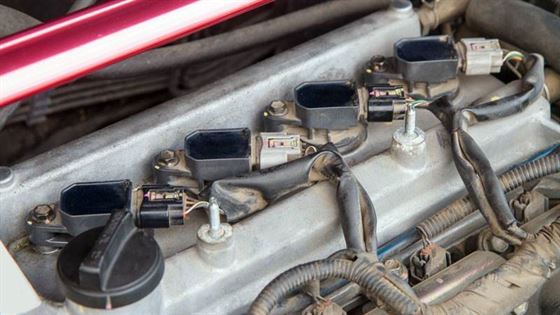
The ignition system is equipped with ignition coils that convert the 12-volt power from your battery into the 20,000 volts needed to start the engine. If you had a faulty ignition coil, the fuel and air mixture inside the engine would not ignite properly. This means you would lose power when you press the accelerator pedal.
4) Clogged Fuel Filter
Imagine your car trying to suck gasoline through a clogged straw: that’s what a clogged fuel filter will do. A dirty or clogged fuel filter will restrict the flow of fuel to the engine, leading to a drop in performance, particularly noticeable during acceleration attempts.
This is due to the simple fact that the engine needs more fuel as speed increases, and a clogged filter can prevent the necessary volume of fuel from reaching the engine.
5) Bad Fuel Injectors
A car engine depends on its fuel injectors inside the fuel system. A fuel injector is responsible for spraying the fuel brought by the fuel pump into each cylinder.
Obviously, if the fuel injector fails or is clogged, it will not be able to spray fuel into the engine properly. This would prevent the engine from producing enough power to accelerate.
Often, running a fuel injector cleaner through your system can clear a clogged injector, but other times, a replacement may be necessary.
6) Bad Fuel Pump
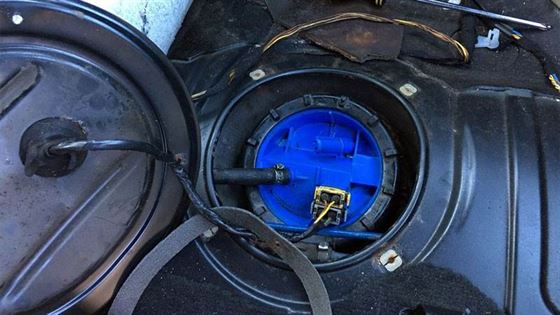
The fuel pump is how the fuel inside the gas tank is brought to the engine to be burned. The fuel pump also regulates the fuel pressure during transfer to meet the engine’s demands.
A faulty fuel pump would result in the transfer of an inconsistent fuel supply. This will lead to poor engine performance and acceleration.
7) Low Compression
The internal combustion process relies on strong cylinder compression for the vehicle to generate enough power to accelerate. If there is a low level of compression due to bad seals or another issue, the engine will generate a low level of power.
8) Clogged Exhaust Pipe

The exhaust system consists of two filters called the catalytic converter and the muffler. The catalytic converter reduces the pollution produced by the exhaust gases. The muffler reduces the noise produced.
If either of these filters or the exhaust pipe were clogged by something, it would deteriorate the engine and lead to a reduction in the power it generates. Before replacing a clogged or dirty catalytic converter, it’s worth using a good catalytic converter cleaner first.
9) Bad Throttle Body
The throttle body controls the amount of air entering the engine, and if it’s not working correctly, it can lead to various problems, including uneven acceleration, rough idling, engine stalling, and lack of power.
A faulty throttle body may not open fully or not respond properly to the accelerator pedal, which will result in poor engine performance and reduced acceleration.
10) Dirty Air Filter
When the internal combustion chamber mixes air and gasoline to produce power, the air first passes through an air filter before entering the chamber. This filter helps prevent any external debris and insects from entering the chamber.
If you had a clogged or dirty air filter, then not enough air would enter the engine for optimal combustion. Thus, you will experience a lack of power when you attempt to accelerate.
11) Turbocharger and Supercharging Problems
Do you have a turbo? Problems with the turbocharger or associated components in a turbocharged engine can lead to a lack of expected power during acceleration.
For example, damage to the turbo’s blades or bearings can prevent the turbo from properly generating increased engine boost pressure during acceleration. Air leaks in the pipes between the turbo and the engine will also decrease usable boost.
Furthermore, any sensors or controls related to the turbocharger and supercharging system could malfunction and not signal the engine to produce adequate power during acceleration.
12) Transmission Problem
Sometimes, what feels like engine power loss is actually caused by a transmission issue.
Worn clutch discs can slip when torque is applied, failing to properly transfer engine power to the wheels. Low transmission fluid levels can deprive internal components of necessary lubrication, causing delayed engagement or slipping.
Faulty solenoids that control gear engagement may not activate at the right time, causing bands to slip instead of locking firmly. Internal leaks can also reduce pressure in the lines, thereby compromising the transmission’s ability to shift gears firmly.
In all cases, the result is increased engine RPM without proportional vehicle acceleration due to inefficient power transfer within the transmission.
13) Engine Knocking
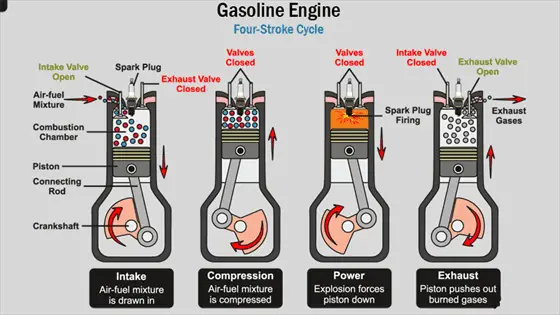
Engine knocking, also known as pre-ignition or “ping,” is the uncontrolled ignition of fuel inside the combustion chamber.
Combustion engines are precisely timed to maximize their power and efficiency. If the fuel burns before it’s supposed to, the piston may not be in the correct position in the cylinder. This could lead to power loss and even catastrophic engine damage.
14) Clogged Catalytic Converter
The catalytic converter is responsible for cleaning the exhaust gases, converting toxic gases such as NOx and carbon monoxide into less toxic molecules.
A restriction in the catalytic converter would prevent exhaust gases from exiting properly. In extreme cases, this can even cause a fire. Therefore, this problem must be resolved as quickly as possible.