
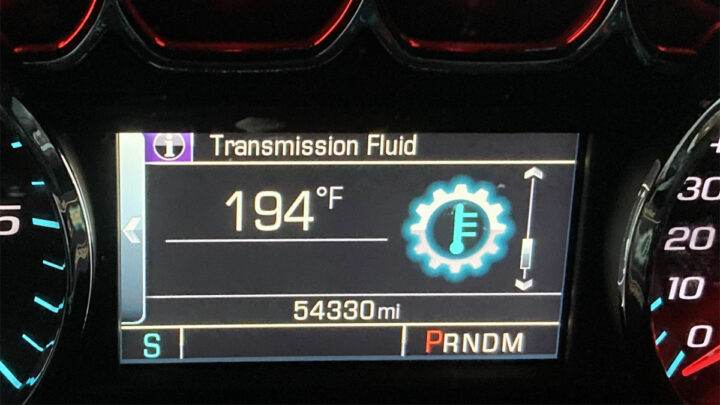
Have you ever wondered if your car’s transmission was running too hot or too cold? Transmission temperature can indicate serious problems or be perfectly normal. It’s important to get it right, as excessively high temperature can destroy the transmission, while a temperature that’s too cold reduces its efficiency.
Let’s examine what is considered a “normal” transmission temperature, the factors that influence this temperature, and what happens if your transmission temperature becomes too high (or not warm enough).
What is a Normal Transmission Temperature Range?
Generally speaking, the average operating temperature of a transmission typically falls between 170 and 225 degrees Fahrenheit.
Any temperature above or below this threshold after a sufficient warm-up period should be investigated and warrants further inquiry. Prolonged operation at temperature ranges outside of this range can cause accelerated wear and/or irreversible internal damage to the transmission.
Factors That Affect Transmission Temperature
Several important factors can affect a vehicle’s transmission temperature. The involvement of these factors varies widely from one vehicle model to another and the specific application applied.
Weather Conditions
The higher the ambient air temperature, the more difficult it will be to keep a vehicle’s transmission cool. Generally speaking, a transmission can run 10 degrees hotter on an extremely hot day than it would otherwise.
Fluid Health
A vehicle’s transmission will almost certainly operate at higher temperatures when the lubricating fluid inside it degrades significantly. Similarly, such conditions can also occur if the corresponding transmission fluid levels fall below predefined thresholds.
Cooler Efficiency
Many vehicles are equipped with auxiliary transmission coolers that dissipate heat, thereby lowering the overall operating temperature of the transmission. If these coolers become clogged or restricted, cooling capabilities will be limited.
Driving Applications
A transmission’s operating temperature also depends largely on how the vehicle in question is used. A vehicle driven aggressively or used in towing applications will typically see higher transmission temperatures than those that are not.
How is Transmission Temperature Measured?
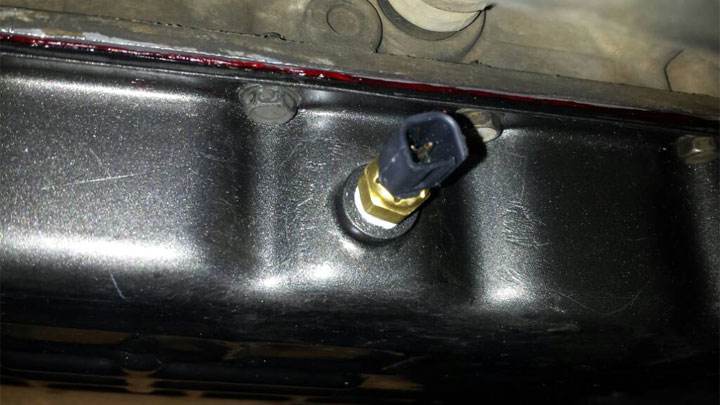
Transmission temperatures are measured via a system-specific temperature probe, mounted in the test port of a transmission or directly on the transmission oil pan in question.
This probe provides electronic feedback to a vehicle’s TCM (Transmission Control Module) and PCM (Powertrain Control Module). These readings are then interpreted and displayed via a gauge mounted on the dashboard, if applicable.
In applications where no dashboard-mounted transmission temperature gauge is found, the same readings mentioned above are typically used to illuminate a “transmission temperature” warning light or to trigger a transmission-related warning on the vehicle’s dashboard.
This light serves to warn the vehicle’s driver that unfavorable transmission temperatures have occurred.
At What Temperature Does Transmission Fluid Overheat?
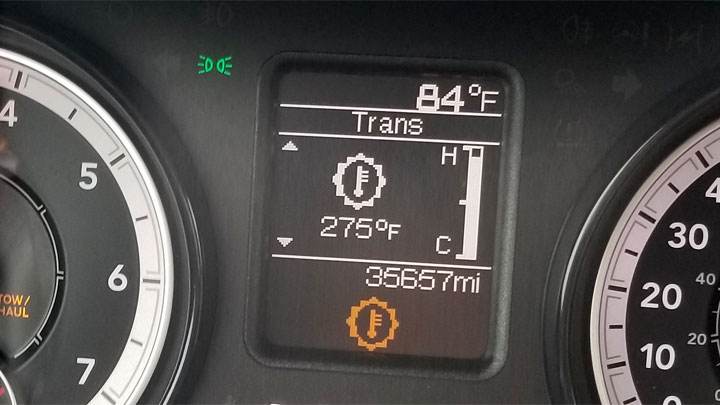
At temperatures above 240 degrees Fahrenheit, the chemical composition of most automatic transmission fluids begins to degrade. As a result, the included lubrication packages and corrosion inhibitors are less likely to function at maximum levels.
When operated under such far-from-ideal conditions for an extended period, internal transmission damage is almost certain to result.
Furthermore, repeated overheating of a vehicle’s transmission can prove just as harmful, even if the vehicle’s transmission is not operating at such excessive temperatures for long periods during each event.
The resulting condition is roughly the same, ultimately leading to rapid transmission fluid breakdown.
What Happens When a Transmission Gets Too Hot?
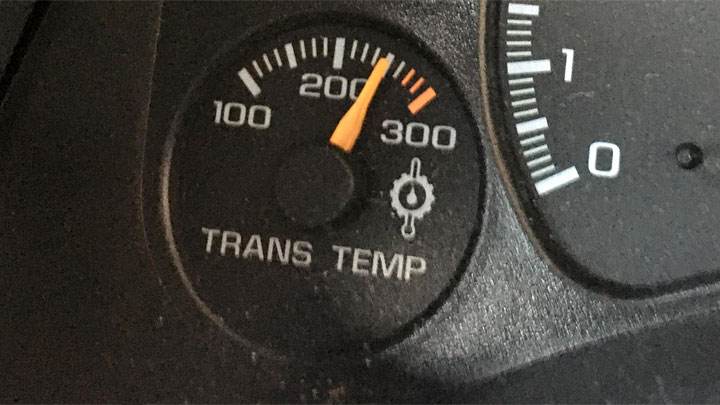
A vehicle can suffer a number of consequences when its transmission begins to overheat, some of which tend to be more concerning than others.
Generally speaking, transmission fluid begins to thin out as it overheats, thereby causing viscosity deviations. Simply put, as transmission fluid thins under circumstances such as those mentioned above, detrimental pressure changes occur within the transmission itself.
In many cases, a transmission will hesitate or shift harshly when its fluid begins to thin due to overheating.
Furthermore, wear is accelerated within the transmission itself, as the transmission fluid it contains begins to thin. Over time, this can have heavy consequences on a transmission, significantly reducing its longevity.
In any case, further diagnosis will be necessary if a vehicle’s transmission ever exceeds the normal operating temperature and remains at abnormal levels for an extended period. Failing to address these concerns can ultimately lead to catastrophic transmission failure in the short term.
Can Transmission Temperature Be Too Low?
While not as dangerous as excessive transmission temperatures, extremely low transmission temperatures can also be concerning.
The lower a transmission’s temperature, the thicker the viscosity of its lubricating fluid becomes. When such fluid becomes too thick, its flow is significantly reduced. A lack of adequate transmission fluid viscosity can lead to advanced internal wear and irreversible internal damage.
Generally speaking, prolonged transmission operation at temperatures below 150 degrees Fahrenheit constitutes a valid threshold for such concerns. This concern increases significantly when temperatures drop below this point.
What to Do If Your Transmission Starts to Overheat
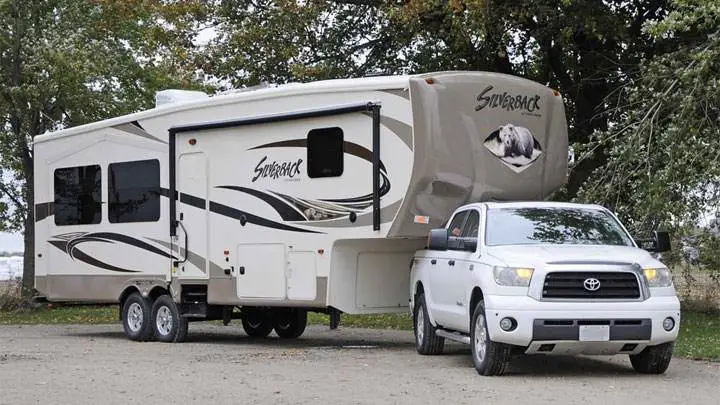
It is sometimes possible for a vehicle’s transmission to overheat. This occurs primarily when towing a trailer or hauling heavy loads.
Outside of these two conditions, the most common cause of transmission overheating is a mechanical failure of one sort or another. It is essential to know how to handle such circumstances if you are faced with overheating.
Above all, you must ensure to pull over to avoid additional strain if you notice your vehicle’s transmission is overheating. It is also a good idea to check a vehicle’s transmission fluid level and condition under such circumstances.
Ultimately, a vehicle’s transmission must be allowed to cool sufficiently before continuing, or else, the vehicle should be towed to the nearest point of repair.
Tips for Keeping the Transmission Cool
Here are some key tips to ensure your vehicle’s transmission stays cool, even under the most mitigating circumstances.
Check Fluid Regularly
If a vehicle’s transmission fluid breaks down over time, overheating will certainly result. If you notice your vehicle’s transmission fluid appears burnt during periodic inspection, further maintenance should be considered.
Use Neutral
If you notice your vehicle’s transmission is under strain, particularly in mitigating circumstances such as towing heavy loads, it is best to consider shifting into “neutral” when idling. Shifting into neutral removes the load from a transmission, thereby allowing it to cool.
Add Additional Coolers
Most vehicles used in towing applications come equipped with factory transmission coolers. However, these factory coolers often prove inadequate for heavy towing applications, thereby allowing for some degree of overheating.
In some cases, adding auxiliary transmission coolers or upgrading your factory cooler can be a cost-effective investment.