
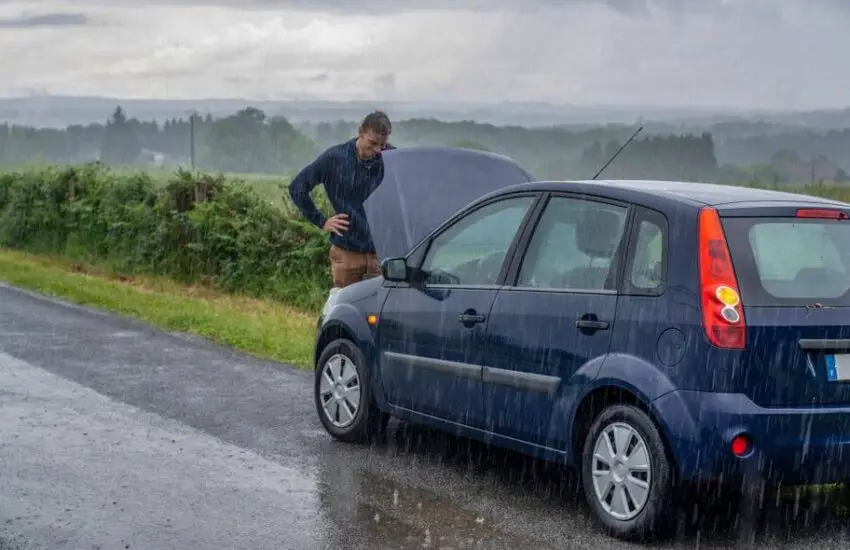
Driving your car in the rain is like a nightmare, but it’s even worse when you’re stuck in the middle of the road with a dead battery. So the question is, “Is it safe to jump-start a car in the rain?”
The common belief is that it’s very dangerous when water and electricity come into contact, so many drivers fear that jump-starting a car in the rain could damage electrical components and might even pose a risk. What is the truth?
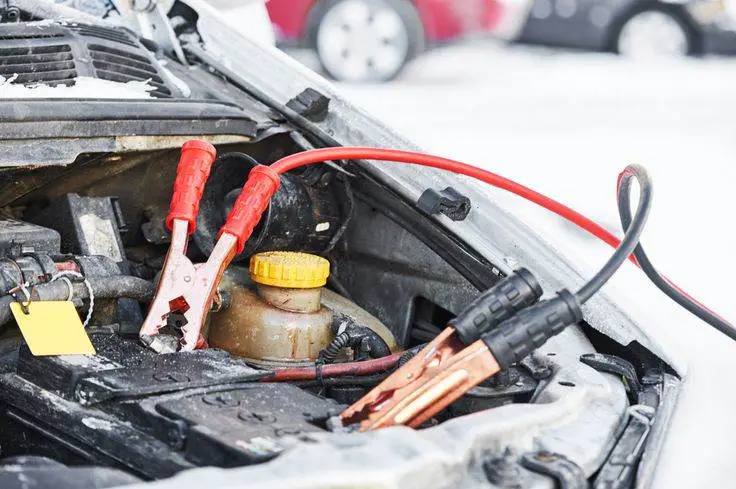
Is It Safe to Jump-Start a Car in the Rain?
Jump-starting a car is like a lifeline when your battery is dead, but can heavy rain prevent you from performing this process or not? This question has raised many concerns among drivers. Don’t worry! Let’s state it clearly in this article:
“You can jump-start a car in the rain if you perform the process with the right precautions,” that’s our answer, but why? As we know, the car’s electrical system typically has a very low voltage of about 12 volts, so this will limit the risk of electric shock. Therefore, jump-starting a car in the rain can be safe and less likely to pose a danger to the driver. It can be said that repairing or doing anything with electrical equipment in the rain or in damp conditions also poses a danger to the repairer. However, if you must jump-start your car in the rain, it cannot harm you.
Human resistance can be up to 10,000 ohms, while the maximum current of a 12-volt battery is 0.012 amperes or 12 milliamps; it’s too low to cause electrocution. However, also be aware that just because there are no serious risks doesn’t mean there’s no potential danger, but remember that water is a very good conductor of electricity. To ensure safety, let’s follow a few steps below:
Safety Precautions Before Jump-Starting Your Car in the Rain
Common beliefs might scare us when jump-starting a car in the rain. You don’t need to be afraid; during this process, you should note the tips to ensure your safety and that of the vehicle:
- Check the cable’s condition to ensure the insulation is working properly. This task is extremely important because when water seeps into a damaged cable, it will cause a short circuit.
- Ensure raindrops do not enter the battery terminals and inspect your battery to make sure it’s not cracked before starting to jump-start your car.
- Additionally, when trying to recharge the battery, keep it as dry as possible. Even if you run the least risk, the delicate electronics of the engine still don’t work well with water. Use an umbrella if you have one.
- Always wear rain gear and rubber gloves to protect yourself from electric shocks. Moreover, you should equip yourself with extra eye protection to wear when you must come into contact with dangerous explosive or corrosive materials.
- Connect the red wire to the positive terminal of the battery, marked with a (+) and a red cap. It should be noted that the red wire must not touch the ground or the vehicle’s body as it’s very dangerous. In general, please do not let the cables touch each other or any metal surface except your engine and the battery.
- When jump-starting a car, never forget not to let your body touch the car, as it could accidentally become an electrical bridge between the two vehicles and the current could pass through the person, thus endangering their life.
- Note that the terminals should always be cleaned and rust removed, ensuring electrical conductivity. You can use a dry cloth to clean the 2 terminals of the battery charger.
How to Properly Jump-Start Your Car in the Rain?
Although car batteries are only 12 volts DC, that doesn’t mean jump-starting a car is without risks, such as eye injuries or damage to your car. Jump-starting your car in the rain can be safe and manageable as long as you follow the correct steps. Except for a few precautions like those mentioned above, we want to emphasize that performing these operations is equivalent to jump-starting in normal weather.
Step 1: Prepare Your Car
Just like the normal jump-starting process, the first step is to disconnect all electrical equipment in the car, such as the radio, air conditioning system, and lights… please switch to auto-stop mode so that the sensors don’t operate to reduce battery power consumption as much as possible.
Note: When jump-starting your car in the rain, you should not open the hood too early; keep the hood closed until you find another car to start the jump-start process. Because if water or moisture enters the engine compartment too much, it will be dangerous for the car’s components and for the jump-starting process. You can use covers or waterproof items on the hood to prevent the parts under the hood from getting wet.
Step 2: Park the Vehicles
The parking positions should be safe, with warning signals on or using warning devices to ensure safety. You should park the 2 cars as close to each other as possible to ensure the cable ends can reach, but keep a short distance between the two vehicles so they don’t touch and cause potential hazards.
Step 3: Connect the Cables
Before connecting the cable ends to the car battery, dry the battery and the clamps because wet batteries can conduct too much electricity, thus endangering the driver and the vehicle. Additionally, you must ensure the battery terminals are always clean and eliminate rust, thus ensuring electrical conductivity.
Connect the red clamp of the jumper cable to the positive terminal (+) of the dead battery. And the other end of the red cable to the positive terminal of the good battery. Use black ends (color to avoid confusion) to connect the negative terminal (-) of the booster battery to any metal component (unpainted) in the engine compartment of the vehicle with the dead battery, such as the chassis or body… Absolutely do not connect to the negative terminal (-) of a dead battery, as this could cause ignition and start a fire.
Step 4: Start and Test Your Car
You will then start the assisting vehicle to power the vehicle with the dead battery. Start the car with a good battery to run the engine for 3 to 5 minutes, then start the car with the dead battery. Let both cars run for about 3 minutes before removing the cables. If your car doesn’t start, try waiting a few more minutes, then continue restarting the engine until the car restarts. If the car still doesn’t start, you can contact towing service for quick assistance.
Step 5: Disconnect the Cables
If your vehicle operates normally as expected, in this last step, you will proceed to remove the cable in the reverse order of connection (remove the negative terminal first, then the positive). Once the vehicle is running stably again, you should go to the nearest reputable car maintenance center to check and repair it in time. Additionally, to limit this problem of a dead battery in the middle of the road, you should pay attention to regularly checking the car battery and replacing it at the right time or when you detect strange signs.
Some Possible Risks of Jump-Starting a Car in the Rain
Can you jump-start a car in the rain? Yes, positive. You should note that the car’s electrical system is 12 volts, not 110 or 240 like home wiring, so it will be safe to perform the jump-start process in the rain. However, this process will always carry some potential risks, regardless of the weather conditions in which you do it.
According to experts, making mistakes during jump-starting can sometimes have serious consequences. It can cause a fire in the car’s computer system and, even more dangerously, can cause the battery to explode, leading to serious injuries or even death, as we know that the acid in the car battery can be particularly dangerous in terms of skin burns or blindness. The next risk you might take is that of the assisting vehicle, as you don’t know how the vehicle operates and the manual may not be available, which could result in damage to the assisting vehicle. Moreover, not following instructions or incorrect technique can lead to an electric shock for the person holding the cable or anyone nearby.