
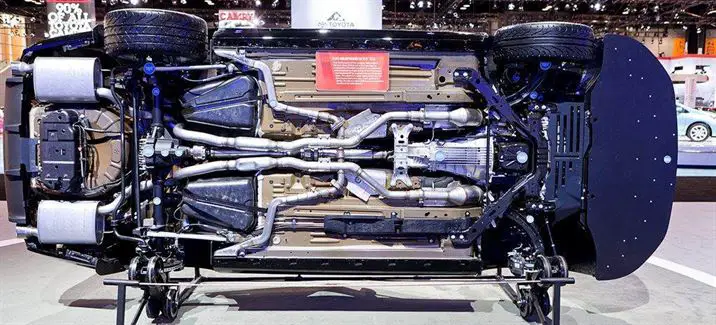
It is possible to install a manual transmission in an electric car. We have already seen an electric Ferrari get a makeover with an old-school manual transmission. But is it possible to convert a manual transmission to automatic?
It is possible to make any mechanical modification to almost any car provided enough money, time, and expertise have been invested. What you need to have on hand is a donor car that has all the parts identical to your car except for the automatic transmission (in case it is computerized like OBD or OBDII systems). It doesn’t have to be an exact match if it’s not computerized.
Is it possible to convert a manual transmission to automatic?
Well, you already have the answer. But how to do it? If it’s a modern car, dated from the mid-1990s or later, the process will require something more than just swapping transmissions to be complete. It will need a new ECU/computer in addition to a new wiring harness, transmission mount, engine mount, and firewall renovation.
To simplify things, what you will need to convert the transmission from manual to automatic are:
Transmission Reconfiguration
It is necessary to reconfigure the entire transmission because the functions of an automatic transmission are completely different from those of a manual transmission.
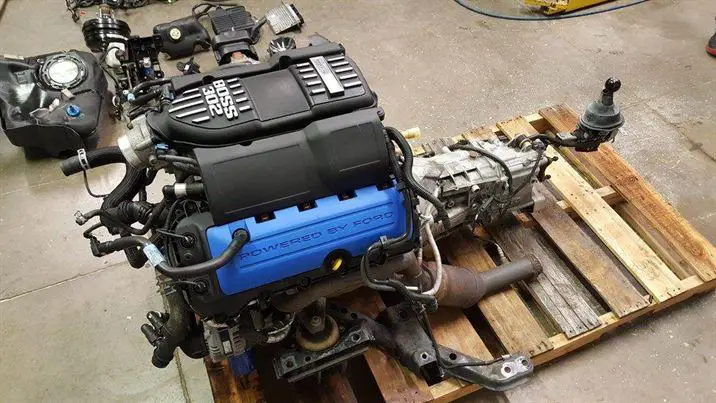
Gearbox Replacement
This is entirely logical because you are changing the type of transmission. It is not easy because you need to perform a series of modifications and repairs to place the new gearbox in your car. The newly added gearbox must be compatible with your car’s engine configuration.
Other Changes
You need to replace and modify a few other parts to install the new gearbox in the car. The body and engine wiring harness must be replaced if it is not compatible and cannot transmit signals and electrical power to the new transmission.
If the gear shift mechanism is floor-mounted, you must either remove the floor panel or drill a hole in the carpet. You need to do similar things for the column for a column-mounted mechanism.
You may also need to replace components like a pump, torque converter, and a few others for the housing and proper functioning of the new gearbox.
Converting Manual Transmission to Automatic – The Problems
The conversion is not a question of possibility but of feasibility. You should only undertake it if you have enough money and enthusiasm for such experiments. Otherwise, you will find a very large hole in your pocket after the project is finished.
Here are some other problems you will face:
Finding the Right Repair Shop
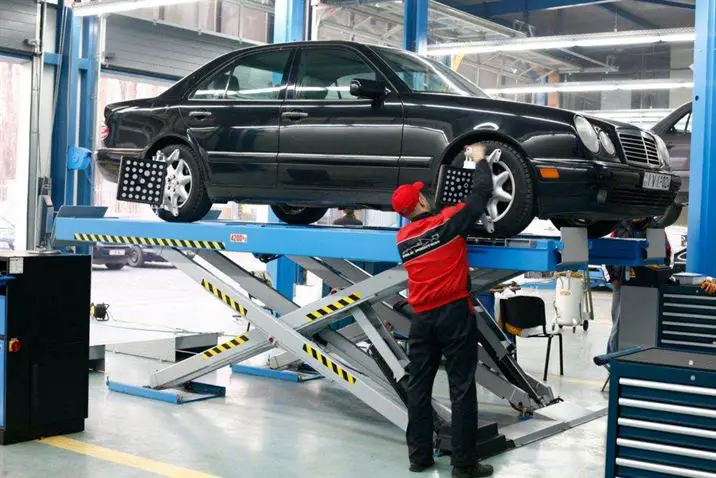
You won’t find many garages in the country with skilled mechanics to perform such a complex procedure. The possibility of finding an authorized service center for this job is almost out of the question. Even if you find one, the exorbitant expenses will make selling the car and buying an automatic a cheaper option. If you choose to do it in an unauthorized workshop, the vehicle’s warranty will be voided.
Some Components are Irreplaceable
Some parts cannot be replaced later because they come only from the manufacturers. For example, there is no way to replace the ABS or anti-lock braking system with an aftermarket product.
Modern Cars Don’t Have Enough Space
Nowadays, most vehicles are smaller than their older counterparts. They have the transmission and engine components installed in a small space. So, even a minor change could be impossible due to the space issue.
What Should You Remember When Converting a Manual Transmission to Automatic?
When switching from a manual transmission to an automatic transmission, many “new drivers” often make fundamental mistakes by operating the accelerator pedal and the brake pedal… which leads to a risk of insecurity and easily damages car parts.
Below are some notes to help drivers switching from a manual transmission to an automatic transmission to be safer and avoid accidents.
Use Both Feet to Control the Vehicle
For vehicles with automatic transmission, there will be no clutch pedal, only the accelerator and brake pedals. Therefore, when driving the car, the driver will only need their right foot to operate between the brake and the accelerator. The left leg will be completely free.
However, in reality, many people are so used to driving and using manual transmission cars that it is difficult to ignore the habit of using the left foot. Therefore, even if you are driving an automatic car, you still use your left foot to press the brake and your right foot to press the accelerator.
According to experts, when using both feet to drive an automatic car, in many unexpected cases, it is possible to mistakenly use the accelerator and brake pedals, causing sudden acceleration and loss of control…
Confusing the Accelerator Pedal with the Brake Pedal
There have been many cases where accidents occurred because drivers mistakenly pressed the accelerator and brake pedals. After all, they were not used to driving automatic transmission vehicles.
Therefore, experts advise that when driving an automatic transmission vehicle, if it is not necessary to press the pedal, the driver should apply light pressure to the brake pedal. This way, if an unexpected situation arises, the driver will not be surprised and mistakenly press the accelerator.
Shifting from D to N
According to the habit of manual transmission drivers, they often shift all gears to N when stopping at a red light or parking on a slope… However, this is something to give up when using an automatic transmission if you don’t want to reduce the lifespan of your transmission.