
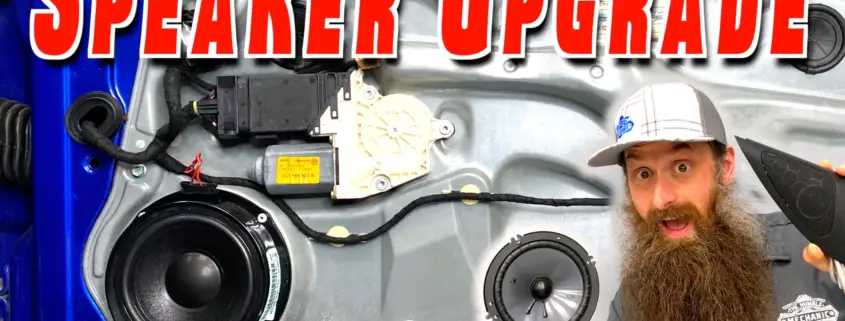
Replacing your car or pickup’s speakers is one of the most rewarding audio upgrades. This guide explains, step by step, how to remove the old original speakers often secured by rivets and how to install your new models professionally and durably.
Why Replace Original Speakers?
Car manufacturers often equip their vehicles with low-end speakers to reduce costs. Replacing them with quality aftermarket models is the most effective solution for achieving clearer sound reproduction, deeper bass, and much better audio immersion, all without changing the original car stereo.
Required Materials and Tools
Before starting, gather the following materials:
Tools
• An electric drill
• Metal drill bits (with a diameter suitable for the rivets)
• A Phillips screwdriver
• A drift or a punch
• A utility knife
Materials
• Your new speakers
• Adapter mounts or adapter rings (if necessary)
• Self-tapping screws and nuts
• Universal speaker connectors
Step 1: Remove the Old Speaker and Its Rivets
The first step is to access the speaker. Remove the grille or door panel that protects it. In many vehicles, especially VWs, the original speakers are held in place by rivets and not screws.
How to Cleanly Remove Rivets?
1. Use a drill with a drill bit slightly larger in diameter than the rivet’s center hole.
2. Place the tip of the drill bit in the center of the rivet.
3. Drill at medium speed until the rivet head comes off.
4. Once the head is removed, you can take out the remaining rivet and free the speaker.
5. Gently unplug the electrical connector.
Step 2: Prepare for the Installation of the New Speakers
Do not reuse the original rivets! For a robust and high-quality installation, use self-tapping screws and nuts on a suitable mount or directly on the door metal.
Using Adapter Mounts or Rings
Plastic or MDF adapter rings are essential to ensure perfect compatibility with the original locations and prevent any vibration. Securely screw the ring onto the door, then screw the new speaker onto the ring.
Step 3: Adapting Tweeters (MK4 Original Housing)
For tweeters, installation may require a small modification. For example, on a VW Golf MK4, it is possible to remove the original tweeter from its plastic housing using a utility knife to carefully cut it out. You can then place and glue your new tweeter inside it for an invisible and aesthetic installation.
Step 4: Connection and Final Test
Connect the cables to the terminals of your new speakers, respecting the polarity (+ and -). Reinstall the door panel and perform an audio test to ensure everything works perfectly before closing everything up permanently.
Conclusion
Replacing your car speakers is a project within reach for many DIY enthusiasts. By following this method for clean rivet removal and using suitable mounts, you ensure a solid installation and audio results far superior to the original equipment.