
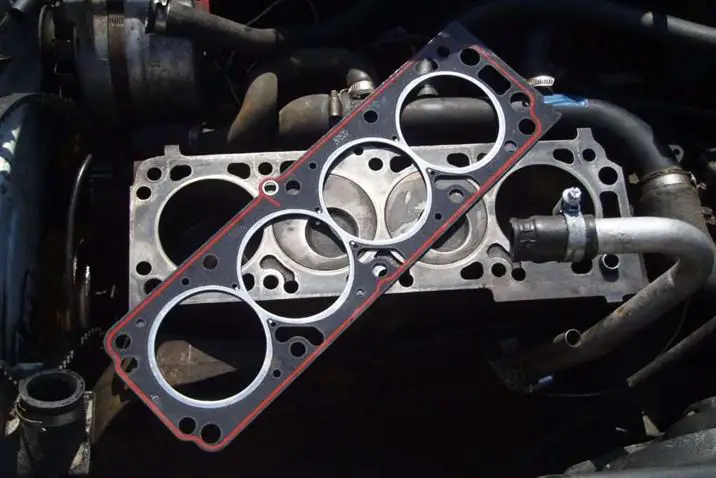
Imagine you’re driving to work one day and notice your car is sluggish or white smoke is coming from the exhaust pipe. What’s the culprit behind these issues? It’s the classic sign of a blown head gasket. And the question is how to fix a blown head gasket without replacing it. Ready to educate yourself!
What are the symptoms of a blown head gasket?
The purpose of the head gasket is to seal the combustion chamber, coolant passages, and engine oil passages. This prevents them from mixing or leaking from the engine. Some might say your engine can’t really run without a head gasket, so you’ll understand the important role this part plays in your car. What would happen if the head gasket blew? Before delving into the warning signs, we need to understand the term “blown head gasket.”
A blown head gasket occurs when the gasket that secures the cylinder head to the engine block is faulty. Coolant, oil, or combustion gases can leak from this bad head gasket. And the consequences can range from a visible oil or coolant leak to a noticeable reduction in performance and handling. We are going to explain 5 unmistakable symptoms of a blown head gasket:
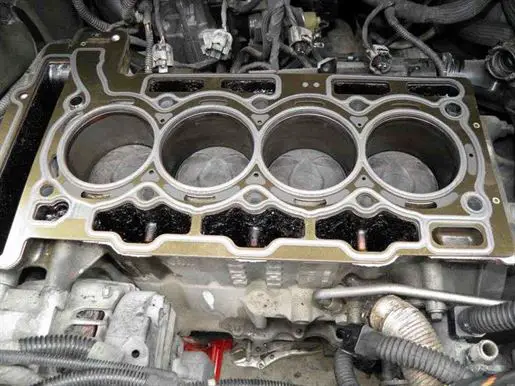
A mixture of oil and coolant
The first symptom you might experience with your car is a mixture of oil and coolant. You’ll notice the cappuccino color on the dipstick in some situations, and you can see the milky substance when you remove the engine cap. This happens when the head gasket is torn and coolant leaks into the oil passages or vice versa. While this is not conclusive proof of head gasket failure, it’s a sure sign that your engine needs to be disassembled to discover the contamination.
Engine overheating
A faulty head gasket might have been caused by the engine overheating too frequently (due to a clogged radiator, a bad fan, or a coolant leak), but you might not know that a blown head gasket is also responsible for engine overheating. At that point, you’ll notice the temperature gauge rising, and in the worst case, the engine will start smoking. If the head gasket is broken, hot exhaust gases can seep into the cooling system, or coolant can leak into the cylinders and be burned as steam. In any case, the end result is an overheating engine.
Thick white smoke
A bad head gasket most often results in large clouds of white, smelly smoke coming from the exhaust pipe. This is due to antifreeze leaking past the gasket and into the cylinders, where it’s turned into vapor as part of the combustion process. Less common but still possible is a leak from an oil passage to the cylinder, which will cause bluish smoke.
Loss of power (poor performance)
The fourth symptom is a noticeable reduction in engine power. If the head gasket fails in this way, it allows compressed air/fuel to escape, and the compression in that cylinder is reduced. This loss of compression results in a rough-running engine, and your car will be much slower than usual. In some situations, you also get a check engine light with misfire codes. You can read these codes with a scanner. This type of failure is usually accompanied by a noise similar to an exhaust leak.
External leaks
If a head gasket is faulty between the water or oil passage and the outside of the engine, the result can be a simple coolant or oil leak. This is the least disastrous version of a blown head gasket, but still serious. It may not manifest as an immediate problem (other than causing a mess), but if the coolant level drops too low, it can lead to serious engine problems.
What causes a blown head gasket?
The blown gasket problem usually comes from the following reasons:
- High engine temperature for a long period: The head gasket is primarily made of steel, silicone, or rubber. Therefore, when the vehicle’s engine temperature is too high, the part and the engine hood expand, compressing the engine’s head gasket, damaging this part.
- Details of the cooling system have problems such as a damaged water pump, a clogged car radiator, and a poor cooling process… This is also the cause of engine failure. The engine heats up, causing the head gasket to blow.
- Incorrect installation: When the technician installs the gasket in the wrong position or tightens the bolt, the gasket will be pinched and damaged.
- Detonation problem: This is a phenomenon where the spark plug did not fire, and the fuel in the combustion chamber ignites spontaneously due to the high temperature. This causes the pressures in the engine to clash, putting pressure on the gasket, damaging this part, and reducing its efficiency over time.
How to fix a blown head gasket without replacing it?
If you or your technician suspect a blown head gasket, diagnosis can take a long time, as a number of other faults can also cause similar symptoms. Compression pressure tests, leak-down tests, and cap inspection can determine if the head gasket is the cause or another fault, such as a cracked engine cap, fuel injection, ignition, broken valves, etc.
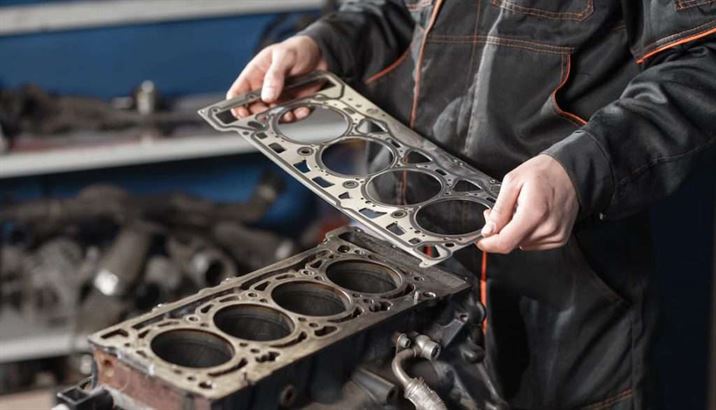
Although a head gasket is inexpensive, the replacement cost can be high because it requires almost a complete disassembly of the engine, including the cylinder head, camshafts, intake, exhaust valves, etc… Instead, they choose to repair this part. And of course, we must consider the case where your head gasket can be repaired. In some cases, the head gasket is irreparable, so replacing the blown head gasket is an unavoidable thing. In this part, we will show you the popular method to fix a blown head gasket without replacing it.
How to test for a blown head gasket?
Even if replacing a car’s head gasket costs a small fortune, in the case of this Lexus, it’s a large Quad-Cam V8. If you plan on doing head gasket work on this, expect to spend thousands of dollars to do it right. So to be sure you’re making the right decision, we’ll share with you how to test to find out if it’s blown or not.
- Look for bubbles: You just need to remove the radiator cap and start the engine. If you immediately see coolant and gas bubbling, it means your head gasket is truly blown. Because the engine sucks in air, gasoline burns and explodes inside the cylinders.
- Using the dipstick to check the oil: Engine oil is one of the clearest indications of the head gasket’s condition. First, you need to turn off the engine and let it cool down, then open the engine hood and use the dipstick to check the color of the engine oil. If the fluid has a color like a “milkshake,” it can be a sign that the head gasket is blown.
- Perform a cylinder compression test: Performing this test not only helps you know the condition of your head gasket but also informs you about the health of your engine. The first thing to do is remove the fuel pump relay if you can find it. Another thing that will also work is to disable the coil (the main power supply). At that point, your car has no fuel and no spark. Remember to tag the spark plug wires so you can install them in the correct position. Then you’ll screw the compression tester into the spark plug hole. Crank the car engine 5 to 10 times or until the compression gauge needle stops moving. You need to note the PSI value and move on to the next cylinder. A good cylinder will have compression of about 130 psi or more.
How to fix a blown head gasket with a sealer?
Before discovering the detailed method, we want to affirm that repairing a blown head gasket is still a temporary method because it cannot completely solve the problem. The most effective method is to replace the head gasket with a new one. However, in this topic, we will focus on how to fix a blown head gasket with a sealer to help you apply it in some special or emergency situations.
The most popular question on this topic is, “Can a blown head gasket be fixed with a bottle of head gasket sealer?” Yes, but head gasket sealers are only effective for certain types of damage, and when the head gaskets are not completely blown. Now, there are a dozen sealing products on the market, you need to make sure to choose the right type for your car. Some popular head gasket sealers you can refer to are Blue Devil, Steel Seal, or K Seal…
You need to start this process with a cold engine, and after that, you will remove the radiator cap. Obviously, we won’t remove it when this part is still hot. Then you pour the head gasket sealer into the radiator so that when the engine starts, the fluid flows into the cooling system. As the fluid circulates and heats up, the chemicals in the compound harden and seal the breaks and cracks in the head gasket.
Note: When adding the head gasket sealer, you must ensure there is enough room in the car’s reservoir to add the fluid.
Final thoughts
I hope you find useful information on this topic. To conclude, we want to emphasize that you only repair a blown head gasket when you are stuck somewhere, in an emergency, or unable to reach a mechanic. Replacing the blown head gasket is our recommendation. The best way to fix your blown head gasket is to remove the head gasket and clean it, then install a new head gasket.
By the way, you need to know the cost you have to pay to repair the blown head gasket. In reality, the cost can run into thousands of dollars. The average price will be between $1,000 and $2,000, including labor costs. That’s one of the reasons why many drivers think fixing a blown head gasket is like a nightmare. The main cost of this significant amount doesn’t come from the part cost but from the labor cost required to fix the problem.
It must be said that replacing the head gasket is the most time-consuming job because it requires the removal of many other parts. And the more time the mechanic spends on your problem, the more money you will pay. Our advice is that if you notice suspicious symptoms with the head gasket, you must handle it immediately and diagnose the problem quickly to limit the repair cost.