

People no longer use maps to navigate roads when driving their cars. GPS devices have long taken over that role. Additionally, they serve as anti-theft tools and for monitoring driving skills, and are an essential component in businesses like car rentals. Considering all the positives, you might consider equipping your vehicle with such a device. But do you know how to install a GPS tracker in a car?
A GPS system can provide real-time location information of an object. Furthermore, you’ll get data on the car’s speed, movements, and directions. A modern unit is equipped with many innovative features such as setting up a geo-fence, an alarm system for the car that deviates from predefined routes, providing information on stops, and much more.
GPS Tracker in a Car: Is It Necessary?
A GPS device is a data collection device that includes all information about your vehicle. Based on this, drivers can use it to monitor and manage their vehicle’s system via mobile phones/computers connected to the internet with information on the vehicle’s current location, driver, speed, distance traveled, current location, fuel, etc. This information will be continuously updated and displayed on the screen anytime and anywhere.
To answer the question of whether to install a GPS device, we need to understand that using GPS devices on cars can protect your car from theft. Additionally, the benefits of installing a GPS device can be mentioned as follows:
- A GPS can identify the location with 100% accuracy, helping to protect the car from theft. This equipment is an effective assistant in finding the vehicle’s coordinates to report to authorities for handling or assistance in case of an unexpected incident.
- Car GPS navigation also has the functionality to store detailed information about the vehicle’s route such as total mileage and fuel consumption… This is very useful when you need to control travel schedules and update the vehicle’s status in real-time.
- On the other hand, the GPS is designed to issue warnings when the vehicle exceeds speed or deviates from predefined routes to ensure passenger safety.
How to Install the GPS in the Car?
Installing a GPS in a motor vehicle is not complicated. Following these 3 steps to install the GPS in a car will help you understand the process in no time.
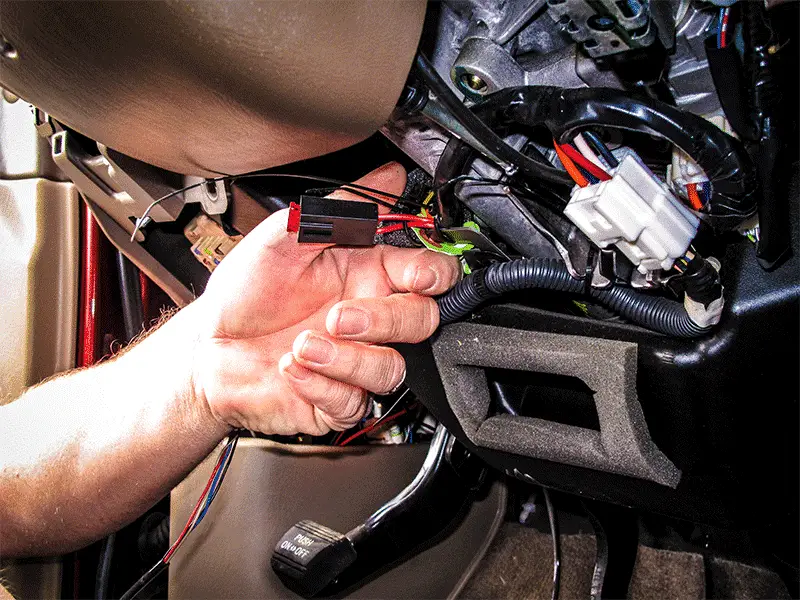
Step 1
The first step is to find a power source for the device. There are two ways to draw its power:
Wired – Attach it to the vehicle’s internal wiring by splicing a few wires. However, modifying the wiring could void the car manufacturer’s warranty. This means the manufacturer or authorized dealer will not cover repair costs or be responsible for replacing a part. Furthermore, the wiring must be done by a professional. Amateur work can damage the electronics and affect your car’s performance.
Plugged – The GPS device may come with a power cord and an adapter. In this case, you can simply plug it into the OBD port (located under the steering wheel). The plug of some devices might be compatible with the car’s cigarette lighter port.
Wireless GPS units for RVs with a plug-in function are easy to install and the process requires no professional skills. Additionally, it does not void the manufacturer’s warranty. The plug-in system is the best in terms of convenience and accuracy.
Step 2
Modern GPS devices likely come with a mount and an attached suction cup. You need to place the device in the mount and mount it on the dashboard or windshield.
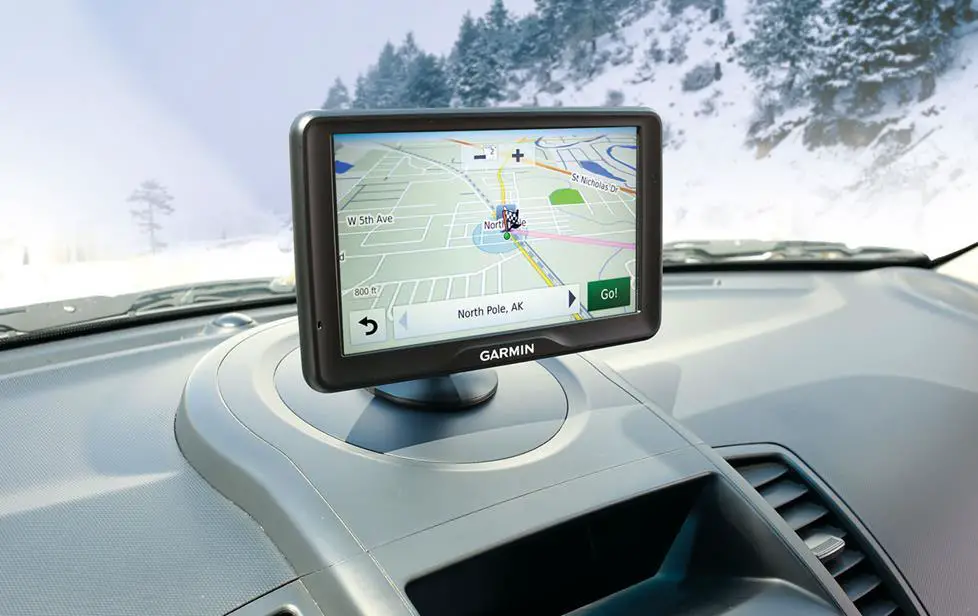
Securing the device with the windshield might not be a good idea as it can cause distraction and partially block the view. Attach it to the dashboard, in the center or away from the driver’s seat. The suction cup will firmly stick the device to the surface.
Step 3
After plugging the power cord into the designated location, store the extra length of the cable out of your sight using a cord organizer. The final part of installing the GPS in a car involves taking the car for a short drive to see if the device works.