

The need for speed is something that obsesses countless car owners and enthusiasts. Even those who own already fast cars try to extract maximum performance from them. From mild to wild, there are various ways to add extra power to your vehicle. Learn over 20 methods to increase horsepower, including highly effective but expensive methods as well as simple and affordable solutions.
Fun Fact: The Origin of “Horsepower”
Horsepower is a measure of how quickly work is done. Where does the term horsepower come from? Exactly what the word suggests: horses, and a man named James Watt, who used to observe mill horses walking in circles all day, powering the mills.
The origin of the term dates back to James Watt’s invention of a steam engine, which he believed would be at least 200 times more powerful than the horse mill, but he found it difficult to explain to millers the power of the steam engine compared to their horses. So he developed a formula to measure the workload, based on the estimate that a mill horse would pull/push the mill shafts in a 24-foot circle with a force of 180 pounds 144 times in an hour.
He then performed further calculations to prove that such a workload meant a mill horse could push 32,572 pounds (rounded to 33,000 pounds) a horizontal distance of one foot in one minute. This equals one horsepower.
Horsepower thus measures the power a horse gives in pulling, or more precisely, the power required to lift 550 pounds in one second a vertical distance of one foot, or the power needed to move 33,000 pounds in one minute a horizontal distance of one foot.
Factors to Consider When Trying to Increase Horsepower
A major concern for many car owners is how aftermarket modifications affect a vehicle’s warranty. It’s always best to discuss with your dealer how installing aftermarket parts might affect your warranty.
Indeed, car manufacturers are not thrilled about owners trying to rethink their vehicles, which cost a lot of time, money, and brainpower to optimize for aesthetics, performance, and safety. In some cases, certain car manufacturers allow the installation of in-house performance parts when installed by an authorized dealer.
Another aspect you need to consider before tuning your car with aftermarket performance parts is emissions regulations. Many countries and states, like California in the U.S., require certain aftermarket performance parts to comply with emissions standards for the vehicle in question to be considered road-legal.
Even if you choose to install non-compliant parts, it might compromise your ability to pass emissions tests. Therefore, you should take the time to check your local emissions laws before deciding on certain engine performance parts.
Finally, you need to be aware that your vehicle, as it left the factory, was already optimized as a whole, and any modification to one part can make other components less effective. While modifications like an exhaust or intake might have a minimal impact on overall performance and vehicle safety, more significant modifications like a supercharger can considerably alter fuel economy or the vehicle’s long-term reliability.
Therefore, consider all the trade-offs you might be making when making modifications for better power. Also, be prepared that when you opt for a drastic upgrade like a supercharger, you’ll likely need to spend a lot of money upgrading many other parts as well in a complete kit form so as not to sacrifice your car’s overall efficiency, handling, and safety.
How to Increase Horsepower: Effective but Expensive Methods
We’ll start our list of over 15 methods on how to increase horsepower with the most effective upgrades offering immediate and noticeable power gains.
If your vehicle’s engine is naturally aspirated, forced induction will lead to a considerable power increase. Forced induction is one of the most effective ways to increase horsepower. Forced induction can take the form of a turbocharger or a supercharger. These enhancements are popular with hardcore performance enthusiasts and street racers, and you might have seen one in one of the Fast and Furious movies.
This is one of the most expensive engine enhancement modifications, so feel free to skip it if you’re on a budget. But if you can afford it, go for this mod blindly, as a good supercharger will increase your horsepower by up to 625+ and your torque by up to 525+ lb-ft. Such numbers are surely staggering given you’re only benefiting from one set of upgrades.
Before determining if this mod is worth it, you need to understand the basics of superchargers and turbochargers.
To help the engine generate more power, two things are needed: more air and more fuel drawn into the engine’s combustion chamber. It’s worth noting that a specific ratio is required for the engine to operate: 14 parts air to one part fuel.
The air pumped into the combustion chamber is ordinary air at atmospheric pressure. Compression occurs later with the piston’s work, which rises to compress the air-fuel mixture, thus creating a “vacuum.”
The supercharger/turbocharger increases air intake simply by compressing the air to a pressure higher than atmospheric pressure before pumping it into the combustion chamber. With more air intake, more fuel can be pumped into the combustion chamber for the engine to burn and create more energy.
As mentioned above, an important reminder: since adding forced induction puts more strain on your engine and transmission, you might need to make additional modifications to handle such extra stress, like a stronger clutch or cooling system. This varies by each vehicle model, so you should consult a professional on what needs to be done.
Supercharger
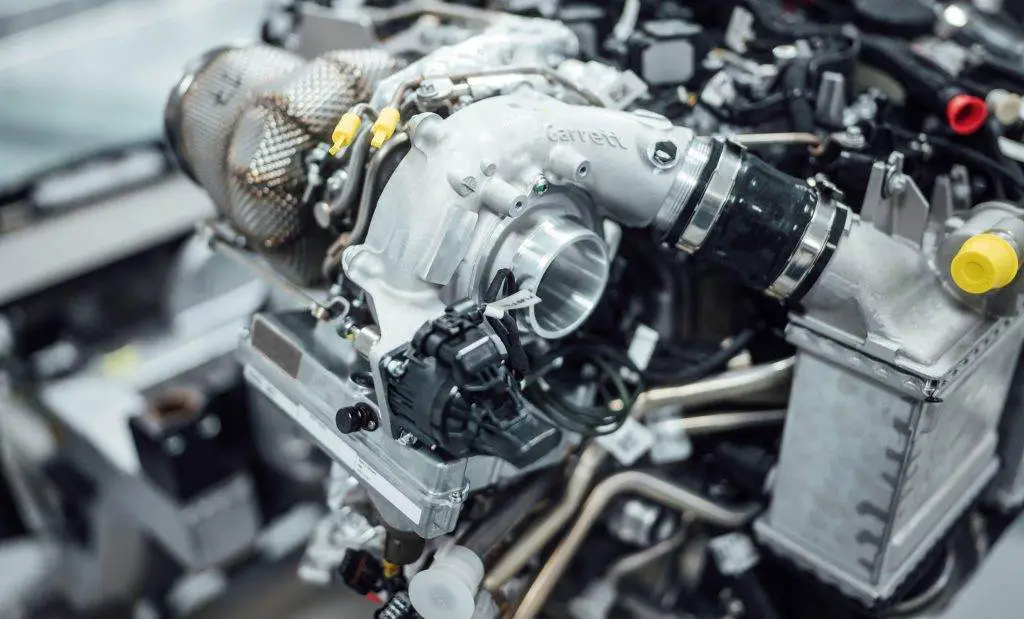
Forced induction systems compress the air flowing into your engine. By “forcing” more air, the engine can burn more fuel to produce more power. Later, you’ll encounter a few more aftermarket parts that also increase engine power through the same general mechanism.
A supercharger can add on average 46 to 50% more horsepower and 31% more torque, the rotational or twisting power of a car (as opposed to linear power like a push or pull).
When trying to increase horsepower, remember that this measure is mathematically related to torque. Torque is a crucial measure of an engine’s power, as it represents the load an engine can handle to generate a certain amount of power to turn the engine on its axis. Horsepower equals torque multiplied by RPM (revolutions per minute), divided by a constant. Since there’s usually a limit to how fast you can spin an engine, higher torque allows for greater power at lower RPMs.
Compared to their cousin the turbocharger below, superchargers are easier to install and give you a more instant surge when you press the accelerator. This is because they receive power from a belt connected directly to the engine at the intake. So, when the engine turns, a supercharger immediately gets to work.
This belt-drive function makes them more effective on six-cylinder engines, as opposed to four-cylinder engines. They also don’t require an intercooler as an essential complementary modification, so you’re less likely to encounter overheating or failure issues.
Turbocharger
A turbocharger “recycles” energy from the exhaust flow to power itself, so compared to superchargers, they are extremely efficient. However, due to the nature of this mechanism, there will be a delay or “turbo lag” before you can notice a power increase. This lag during boost buildup doesn’t mean instant response like with a supercharger.
With a turbocharger, you’re typically looking at a 25% horsepower increase, although the peak power might be higher than a supercharger’s in some cases.
Nitrous
Essentially a portable supercharger/turbocharger, this upgrade is another favorite from Fast-and-Furious. It’s also expensive, but many find it more advantageous than a supercharger/turbocharger due to its portability. This might be the most appealing, even decisive, feature since you can carry the kit from one car to another without losing your significant investment.
Being another mod that deals with the air your engine “breathes,” Nitrous is like a can of “air generator.” It essentially creates more air for combustion in the engine, thus generating more power from those combustions.
Note that this engine enhancement is illegal in many countries and states, so check your local regulations carefully before making an investment, and a quite significant one at that. A Nitrous kit can cost you between $900 and over $3,000. On the positive side, however, they can be used as a support for a turbocharger or supercharger to reduce turbo lag and increase final power.
Performance Chips/Aftermarket Software
For almost all factory-turbo cars, a performance chip or tuner is by far the best value for money when it comes to getting more power and efficiency from your vehicle. Pair one of these performance chips with other modifications from this list, and your beastly machine will be spitting fire in no time.
In addition to power, these tuners can also improve throttle response, fuel economy, towing power, gear ratio, air intake index, and much more. Some chips are designed primarily to unlock the engine’s hidden power, which would require more fuel, while others are designed to increase your vehicle’s fuel consumption by optimizing other parameters.
One of the purposes of factory-installed chips, or the Engine Control Unit (ECU), is to ensure everything operates within specifications to comply with emissions regulations. From the factory, the ECU is often tuned conservatively to allow for the use of lower-quality fuels and minimize stress on the engine’s internal components. You can alter these specifications with the aim of optimizing power by installing a performance chip.
A performance chip is aftermarket software, also called a “flash,” and installing a performance chip is also referred to as “flashing your car’s computer.” It’s designed to take full advantage of your engine by adjusting ignition timing to smooth out the power delivery, which would often require premium gasoline to do the job.
Furthermore, they also allow you to easily modify the fuel/air ratio and turbo boost, resulting in an instant power increase without you having to get under the hood and get your hands dirty. Just connect the chip to the OBD-II port to access the information.
These small kits allow for more power, torque, and even better gasoline consumption. Depending on the engine, you can see quite significant power gains. This is a modification often done in conjunction with a turbocharger or supercharger, as the aftermarket software also allows the turbocharger to produce more boost pressure, equating to more engine power.
An important reminder is that if you choose to install a performance chip, make sure to buy it from a reputable tuner, as engines are very sensitive to changes. Also note that software upgrades are often available in stages, where at each stage, you’ll need to select the upgrades that best match your engine’s current setup.
How to Increase Horsepower: Air-Related Methods
You might have noticed a recurring theme by this point: an effective way to increase horsepower has a lot to do with air, and more specifically, as you’ll see later, with both the air your engine “inhales” and the air it “exhales” as exhaust.
Essentially, your car’s engine is a big air pump with a series of deliberate combustions that push as much air in and out as possible to achieve optimal power. Ultimately, the faster, more efficiently, and cleaner your car can inhale and exhale, the more potential you have for power gain.
In other words, if you want to increase horsepower, you’ll essentially need to find different ways to supply air in a larger volume through your engine, and cleaner air at that, while helping your engine exhale more easily. More air means the engine will burn more fuel, and burning more air-fuel mixture means more power generated from the combustions.
The engine enhancement mods below will deal with air intake and exhaust to achieve this general goal.
Velocity Stack
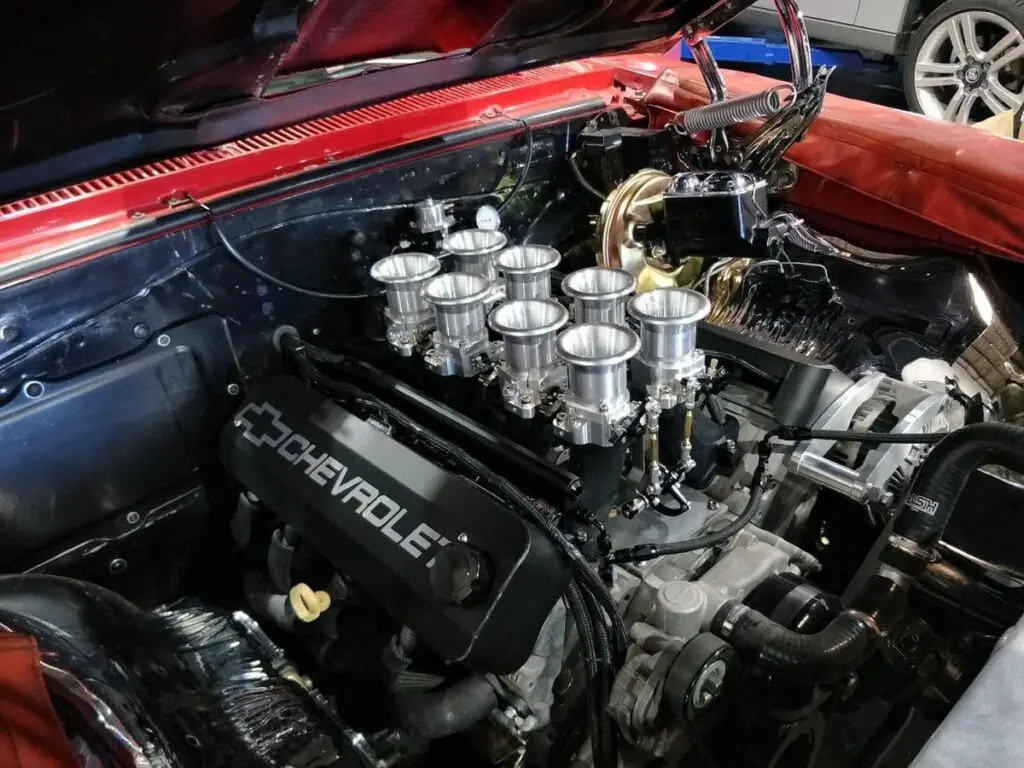
A velocity stack, also called an intake trumpet, is a trumpet-shaped aftermarket part installed on the air inlet of an engine’s intake system, carburetor, or fuel injector to improve airflow.
Velocity stacks improve airflow into the engine’s combustion chamber in three ways.
First, the trumpet shape smoothens the airflow into the intake, allowing the maximum possible amount of air to flow through the given volume of the intake. Second, they smooth the airflow rushing into your intake, and smoother airflow means more air is flowing at any given time. Finally, these small devices purify the air and prevent carburetors without a plenum from vomiting fuel and catching fire.
Although this upgrade is simple and affordable, a properly tuned intake velocity stack would only add about 3% horsepower gain on average as a standalone installation, so it’s usually done with other engine enhancements.
Why are these intake trumpets also installed on the carburetor or fuel injector? Quick recap. A carburetor used to be the most common and basic way for older car engines to get fuel, before the era of fuel injectors or fuel pumps. It mixes air and fuel before being drawn into your engine.
High-Performance Air Filter and Intake
Another quick, cheap, and easy way to give your engine a few extra horses, also used as a support mod, is to replace your air filter with a high-performance filter. It allows your engine to breathe cleaner air, smoothens airflow, and thus generates a small amount of extra power.
Keep in mind that you need to check your state’s regulations, as not all performance air filters are legal in all countries and states.
High-Performance Cold Air Intake
As mentioned above, the colder the air, the denser it is, meaning there’s more air in a given volume. For the same reason, you’ll notice that a balloon might seem to deflate when you take it outside in cold weather, or your car’s tires seem to lose air in winter (the opposite is true, which is why it’s recommended not to overinflate tires in hot weather, as they could burst due to hot, less dense air).
In other words, if you somehow manage to make the air entering your car’s engine denser, there will be more air molecules present to mix with fuel to be ignited for power production.
That’s exactly what a high-performance cold air intake does. Cold air intakes draw colder air into the engine from outside the vehicle. High-performance cold air intakes feature special filters that reduce resistance and unwanted turbulence that would otherwise prevent a steady airflow to the engine. In addition to smoothing airflow, these filters also increase the surface area through which air is drawn into the engine, sometimes up to three times larger than your standard factory air intakes.
Intercooler Kit
As above, an intercooler kit is often installed to complement a turbocharger. Similar to a high-performance cold air intake, installing an intercooler kit will also allow your engine to breathe more air. It does this with the same mechanism: cooling the air supplied to the engine to condense it.
An intercooler, or “charge air cooler,” is an air-to-air or air-to-liquid heat exchange device used on turbocharged and supercharged internal combustion engines to improve their volumetric efficiency by increasing the charge air density through isochoric cooling.
Simply put, a heat exchanger is a device designed to efficiently transfer or “exchange” heat from one matter to another. When a fluid is used to transfer heat, the fluid can be a liquid, such as water or oil, or moving air.
Basically, an intercooler uses air from the atmosphere, circulating it over and around a large number of finned tubes to remove heat from the intake air charge, meaning it reduces the temperature of the air that has been pressurized by the supercharger/turbocharger passing through the intake tubes.
When using an