
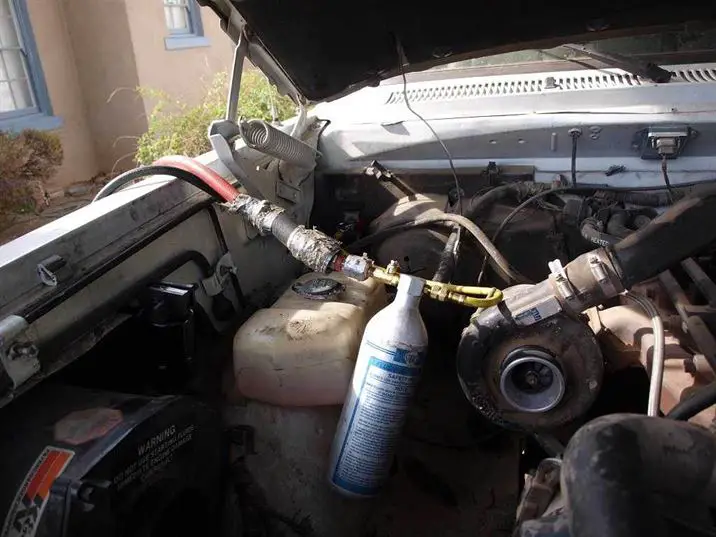
How to Flush the Air Conditioning System After a Compressor Failure? Well, there are several ways to proceed. But is it necessary to do so when you will be replacing the faulty compressor anyway? We will discuss the importance of flushing the system and how to do it.
Why Should You Flush the Air Conditioning Unit?
A compressor failure in your car’s air conditioning system means you need to install a new one. But flushing the system is necessary before installation.
Solid substances can form over time in the refrigerant circuit and damage several components. Moreover, a compressor can send tiny metal fragments into the system if it fails.
These fragments are likely to clog the small passages in the system, which will remain even after changing the compressor. These metal chips can also damage the new compressor.
For these reasons, you should always flush the air conditioning unit to remove metal particles and other solids whenever you replace the faulty compressor.
How to Flush the AC System After a Compressor Failure?
You should flush the AC system’s condenser before replacing the compressor. However, most car manufacturers, including Toyota, recommend replacing the condenser and hoses instead of flushing in case of contamination.
GM and Ford are two car manufacturers that recommend flushing the condenser. GM suggests using only R-134a for the process. They also want you to do it in a recharge machine to reduce refrigerant loss. In contrast, Ford approves the use of VSL338 terpene-based solvent for flushing.
Here are several methods for flushing the air conditioning system after a compressor failure. Remember that you should only flush the condenser, pipes, and evaporator.
Before flushing the system, it is necessary to check the refrigerant using a gas analyzer. The refrigerant is pumped out using a service station.
Use an AC Flushing Equipment.
There are many flushing kits available to perform an open-loop flushing process. The flush includes a tank, a recovery pan, a hose, and adapters. Using such a kit is one of the easiest ways to flush the air conditioning system, and the entire process takes only about 15 minutes. Use a solvent that does not corrode or damage internal components. Once cleaning is complete, let these components air dry.
If you want deep cleaning and to reduce flushing time, purchase an electric flushing kit. It dislodges hardened particles and completes the cleaning quickly. However, such a machine is expensive, costing between $2,000 and $3,000.

Use Flushing Liquid.
Instead of using a cleaning solvent, you can also use a flushing liquid (such as a chemical-based or water-based liquid). This process works best for R1234yf air conditioning systems and for systems being converted from R12 to R134a.
You need to use nitrogen to dry the components once cleaning is complete. Blow each part and pipe one by one with nitrogen.
This is how to flush the air conditioning system after a compressor failure. Flushing is done to remove not only solid buildups from the air conditioning unit but also residues of dirty liquid and lubricating oil.
Watch more:
After flushing, the system must be filled with the correct amount of freon. Connect the high and low pressure lines and evacuate the system. Then pump the correct amount of freon by setting the parameters at the service station.